
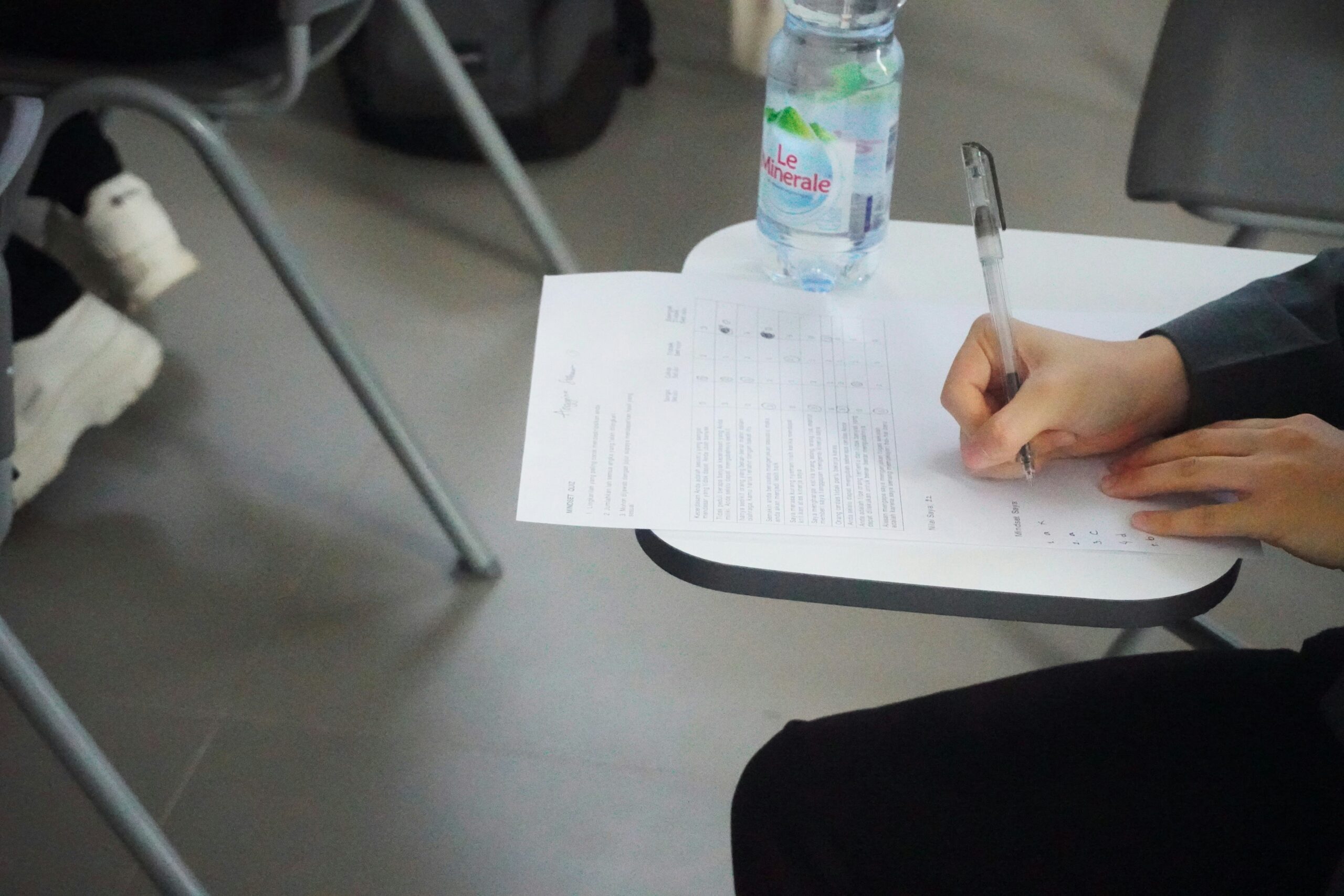
The spiral usually starts with something ordinary. You glance at the syllabus and realize one lecture slid past you. You check your grade on a quiz and feel that quick heat in your face. Later, the room is quiet, your screen is too bright, and you keep reopening the same tabs because starting feels heavier than scrolling. Your mind begins drafting disaster scenarios.
Good tips to manage exam stress begin with the practical stuff: time, energy, and the pile of tasks competing for both. When the week is packed tight, students start making trades. Some cut social plans. Some try to move a shift at work. Some use an online essay writing service to save a few hours for studying and practice. That choice, even if you never act on it, tells you something useful: your workload needs a plan you can actually live inside.
Online advice loves lofty mindset talk. Exam prep rarely does. What helps is a set of repeatable moves you can use on a normal Tuesday, then again in the hallway outside the classroom.
8 Exam Stress Tips That Stop the Spiral Before It Starts
Tip 1: Name the Spiral Early, Then Choose One Next Action
The spiral feels persuasive because it sounds like responsibility. It points at everything you have not done yet and demands a full inventory. Your job is to shrink the frame.
Try this: take a sticky note and write one sentence that starts with “Next, I will.” Make the task small enough that your hands can begin it within sixty seconds. One page of notes. One practice question. One formula set.
The mind will keep talking. Let it. Start anyway.
Tip 2: Use a Two-Minute Body Reset You Can Repeat Anywhere
Stress is physical before it becomes philosophical. Use the same sequence every time so your body learns it:
- Press your feet into the floor for five slow counts.
- Exhale longer than you inhale for eight breaths.
- Relax your jaw and soften your shoulders by a small amount.
- Look around and label three objects with plain words.
- Sip water, slowly, as if you are demonstrating calm to someone else.
This is not a performance. It is a cue: “I am safe enough to think.”
Tip 3: Build a Study Plan That Still Works on a Bad Day
A perfect plan collapses the first time you miss a block. A good plan has slack in the system. It assumes you will have a day when the bus is late, the group project blows up, or your brain feels like wet cotton.
Aim for a structure with a clear start, a clear stop, and one visible output per session. If you keep a note of how to deal with exam stress tips, prioritize the ones that force a concrete decision about what you will do next.
Tip 4: Practice Under Exam Conditions, Not Comfort Conditions
Reading feels smooth. Smooth work can trick you into thinking you own the material. Exams ask for recall, under time pressure, in language that may feel unfamiliar.
So rehearse the friction. Set a timer. Do questions cold. Explain a concept out loud, then check where you hesitate. That is the spot to revisit, not the section you already love rereading.
This is the core of exam stress tips for students: train the exact skill you will be tested on, even when it feels slower at first.
Tip 5: Match Your Practice to the Exam Format
A multiple-choice test rewards fast recognition and elimination. A problem set exam rewards step discipline. An essay-based exam rewards structure, evidence choice, and speed.
Choose a practice that mirrors the format:
- If the exam is quantitative, do timed sets with full working shown.
- If it is conceptual, write short explanations from memory, then correct them.
- If it is mixed, alternate question types to train gear-shifting.
You will feel the anxiety loosen when your practice starts looking like the real event.

Tip 6: Protect Your Energy Like It Is Part of the Syllabus
Fatigue makes everything feel more dramatic. It also makes memory feel slippery. This is one reason exam stress in students rises late at night, when the room is quiet and the brain runs loud. Treat energy as a resource you schedule. Eat before deep work. Drink water early.
Use this short checklist before a long study block:
- A meal or snack that will not spike and crash you
- Water within reach
- One defined task for the first ten minutes
- A timer for your work block
- A planned stop time you will respect
Tip 7: Reduce Finals-Week Noise With Simple Boundaries
Finals week can turn campus into a pressure chamber. People trade rumors, compare how late they stayed up, and share “helpful” panic that spreads fast. College final exam stress often grows socially, not privately.
Build boundaries that are concrete. Silence notifications during work blocks. Pick one study location you can tolerate and return to it. Keep your materials simple, so you are not constantly hunting for the right tab, the right notebook, the right file.
Your goal is a quieter mind, then you can do real work inside it.
Tip 8: Ask for Targeted Support Before the Workload Turns Foggy
Sometimes the stress is accurate. Too many deadlines land in the same week. One class demands extra labs. Another assigns writing on the same day your exam schedule tightens.
This is when you ask for precise help. Go to the office hours with one question. Ask a TA what the exam emphasizes. Use tutoring for the one concept that keeps collapsing. And when writing assignments pile up during exam week, Daniel Walker, a Studyfy contributor, suggests using an online essay writing service selectively so your limited energy stays available for the highest-stakes prep.
Final Thoughts
The spiral thrives on big promises and late-night bargaining. A steadier approach works better: reset your body quickly, choose one next action you can finish, then practice with the same constraints you will face on test day. Over time, you stop negotiating with panic. You move. And the exam becomes a moment you can handle, not a cliff you have to stare at.