
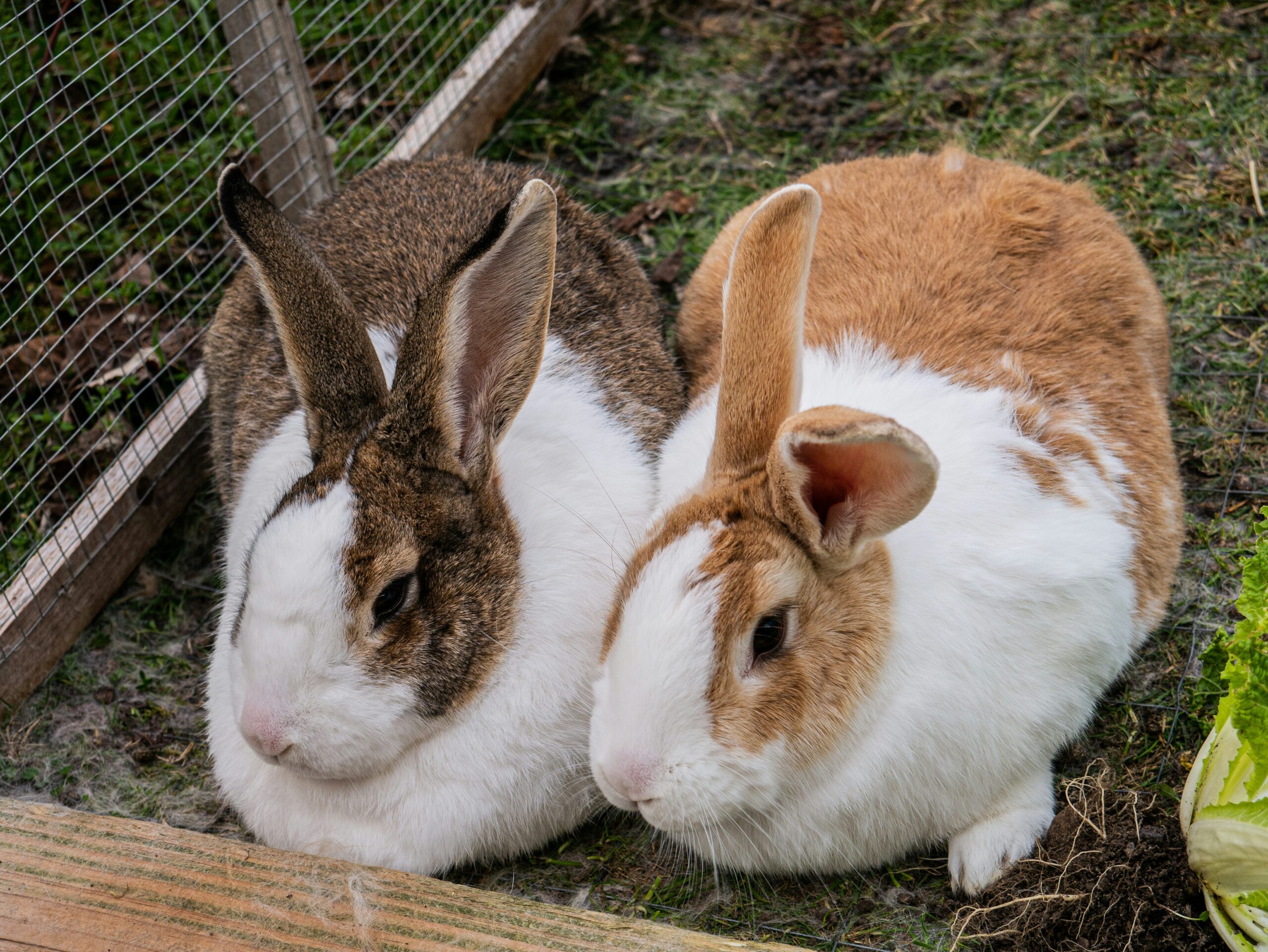
Rabbits are prey to other animals and can suffer from extremes of heat and cold.
Therefore, if you’re going to keep a rabbit outdoors, you must, at the very least, provide it with a secure, temperature-controlled living space.
You will also need to give it an exercise area, or run, that it can use to explore its surroundings.
Below, we take a look at some of the main aspects of keeping your outdoor rabbit safe and secure.
Prey Protection
Rabbits have lots of natural predators.
That means you must make sure you do your utmost to ensure your pet is protected against them.
The types of predators differ depending on the region you live in, but the main rabbit predators include:
- Foxes
- Hawks
- Owls
- Dogs
- Rats
- Snakes
The Hutch
To keep the rabbit safe when it’s sleeping, you need to invest in a strong hutch.
Rabbit hutches come in different shapes and sizes, but they all tend to feature the following:
- A solid wood or metal frame
- A solid waterproof roof
- A solid floor
- Small ventilation openings
And while buying a secure hutch with a decent latch is a good start, it’s important to remember that it’s the finishing touches that will really keep your pet rabbit safe.
This means that you need to apply heavy-gauge wire (not chicken wire) to any gaps, spaces or ventilation windows in the hutch where a predator might try to enter.
Secure the Run
As important as it is to secure the hutch, you also need to make sure that any exercise area (or run) attached to the hutch is also secure.
To do this, you need to make sure you bury the heavy-gauge wire that makes up the run at least 12–18 inches underground.
This will prevent the rabbit from escaping as it digs and tunnels, and will also ensure that other animals can’t burrow into the enclosure to attack the rabbit.
Weather Protection
A rabbit is not just vulnerable to other animals – the weather can play a big part in how well it survives outdoors.
A rabbit is sensitive to the cold and even more so to heat.
As such, you must make sure that the hutch is protected against the elements according to the season.
Hot
Once temperatures rise above ~80°F (27°C), rabbits are prone to overheating rapidly, so you need to make sure they have the right amount of shade.
If you can, try to position the hutch in a naturally shady part of the garden, so it has consistent shade throughout the day.
A solid roof on the hutch and part of the run is also essential – corrugated plastic, metal, or plywood with a waterproof covering works well here.
Frozen water bottles, ceramic tiles to lie on, frozen ceramic feeding bowls, and misters can also be used if you want to go the extra mile for your pet when the sun is blazing.
Cold
Rabbits aren’t as badly affected by the cold as they are by heat, but you still need to ensure they are protected against frigid temperatures in winter.
The hutch needs to be off the ground so it doesn’t absorb ground moisture, and you should use straw, not hay, for the bedding, as straw is great at trapping heat and can easily be replaced when it gets damp.
It might be tempting to wrap the entire hutch in a protective insulating layer during the cold season, but the hutch needs ventilation at all times, even when the temperatures tumble.
So face the hutch opening away from prevailing winds and add removable clear plexiglass to wind-facing sides.
And use tarps on one or two sides of the hutch only, leaving the other sides open so the air can flow freely and keep the rabbit well ventilated.
Conclusion
Above, we have gone over the main aspects of keeping your rabbit physically safe and secure when housed outdoors.
However, the emotional life of your rabbit shouldn’t be overlooked.
The best way you can make sure it doesn’t suffer is by pairing it with another rabbit – they thrive with companionship.