
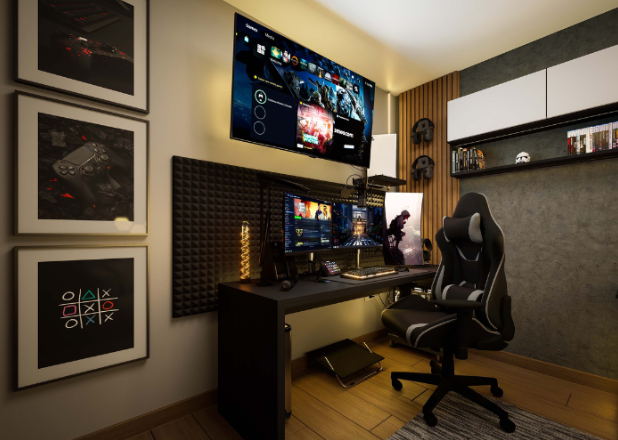
You’re not alone if you’ve ever glanced at your smart meter mid–boss battle and felt your stomach flip. You finally get the kids settled, and you’ve carved out an hour to dive into that gorgeous new indie title everyone’s whispering about. But in the back of your mind? There’s that niggling thought about the electricity bill. The “tech-tax” seems to creep up the more joy you squeeze out of your gaming den. And yet… gaming matters to you. Of course, it’s your wind-down time. It’s also a good way to connect with your kids over a co-op platformer or discover a hidden gem from a tiny dev team that poured their heart into it. So how do you balance high-performance tech with a home that doesn’t bleed energy or trigger eco-guilt every time you press the power button? Let’s talk about what a sustainable gaming den really looks like in a busy UK home.
When Loving Games Meets Loving Your Planet
You want practical changes that make sense. Start with how your space actually functions. Is your gaming set-up tucked into a corner of the lounge? A spare room that doubles as craft chaos central? Most of us are carving out corners between toy boxes and half-finished Crystal Art kits. That’s why sustainability is about being intentional. Switching your PC to energy-saving modes when you’re browsing instead of gaming. Turning off consoles at the wall rather than leaving them snoozing indefinitely. Choosing LED lighting for that cosy glow instead of heat-pumping halogens. Small tweaks, yes, but they add up. And when you’re upgrading hardware, matching your tech to what you actually play saves money and power.
The Cost of Performance And How to Rethink It
Energy prices in the UK haven’t exactly been gentle lately. For households running multiple consoles, it’s easy to feel like your hobbies are expensive luxuries. But here’s the shift: performance is about how your home runs as a whole. If your gaming den sits in a draughty room that needs an electric heater blasting through winter, your PC isn’t the only energy drain. Insulation, efficient heating systems, and smarter home layouts can make a bigger difference than obsessing over wattage alone. That’s where bigger-picture thinking comes in. You can look at how your home operates as a system rather than tweaking one plug socket at a time. If you’re exploring ways to improve energy efficiency more broadly, resources like cinergi.co.uk can give you a clearer view of what’s actually possible in a UK home, from smarter heating to renewable options that don’t feel overwhelming. It’s about creating a space where you can enjoy your hobbies without feeling like you’re burning pounds every evening.
Screen Time Guilt and the “Wholesome” Balance
Now let’s talk about the other side of the equation. You love gaming. Your kids love gaming. But sometimes, after a long day of screens at school and work, you feel that tug. Should we be doing something else? This is where the sustainable gaming den becomes a hybrid space. Imagine this: your desk hosts your PC, yes, but it also has a basket of mindful crafts. A half-finished keyring project. A sketchbook for game ideas. A puzzle waiting for a rainy afternoon. The same space supports digital adventures and tactile creativity. It reframes gaming as part of a varied life, showing your children that balance: that games sit alongside books and crafts. And honestly, that takes the edge off your guilt. You’re not banning screens. You’re modelling moderation.
Teaching Gaming Literacy in a Sustainable Den
Sustainability is about habits. With ongoing UK discussions around in-game purchases, parents are rightly cautious. A “free” game can quietly nudge a child towards spending without them even realising what’s happening. Your gaming den can become a place of open conversation. When you try a new indie title together, talk about how it makes money. You’re curating experiences that align with your values when you review or discover games, especially in an overcrowded indie market. No manipulative hooks designed to extract cash. That’s sustainable play too.
Tackling the Discovery Deficit Without Overconsumption
The indie scene moves quickly. Game jams, surprise launches, early access projects, it can feel like thousands of games appear overnight. You don’t want to miss a hidden gem. But you also don’t want to buy everything “just in case”. A sustainable approach to gaming consumption means slowing down. Wishlist thoughtfully. Read trusted reviews. Watch actual gameplay instead of cinematic trailers. Let your purchases be intentional rather than reactive. When you do buy a game, sink into it. Finish it. Discuss it. Share it with your kids or friends. Treat it as an experience rather than a disposable download. That mindset reduces digital clutter and financial waste in one go.
Designing a Cosy, Efficient Gaming Space
Let’s bring it back to the physical space. A sustainable gaming den feels cosy without being cluttered. You don’t need LED strips in every colour under the sun (unless that genuinely brings you joy). Soft lighting, natural textures, and thoughtful storage make a difference. Use shelving that keeps cables organised and off the floor. Choose furniture that serves more than one purpose, a desk that doubles as a craft station, for example. And think about airflow. High-performance tech generates heat. If your space ventilates well, you reduce the need for extra cooling, which in turn reduces energy use. It’s surprisingly satisfying when your setup feels calm.
Sustainable Gaming Is About Control
At the heart of it, you want control. Control over your bills. Control over your children’s exposure to questionable mechanics. Control over how much you consume and why. A sustainable gaming den is about aligning your hobby with your broader life, like your values. You should feel excitement when you power on your console or boot up your PC. Not a flicker of dread about the smart meter. Not a wave of guilt about screen time. Only a lovely, familiar sense of stepping into a world someone created with care.
Final Thoughts
You don’t have to choose between being a mindful, eco-aware mum and being an enthusiastic gamer. You can have the high-performance tech. You can build a cosy little corner that feels like yours. The key is intention. Look at how your home runs. Make small energy-conscious tweaks. Think carefully about what you buy and play. Keep conversations open with your kids. Blend screens with crafts and shared experiences. That’s your sustainable gaming den, not perfect but balanced. And when it works, it feels more like designing a life that fits you properly.