
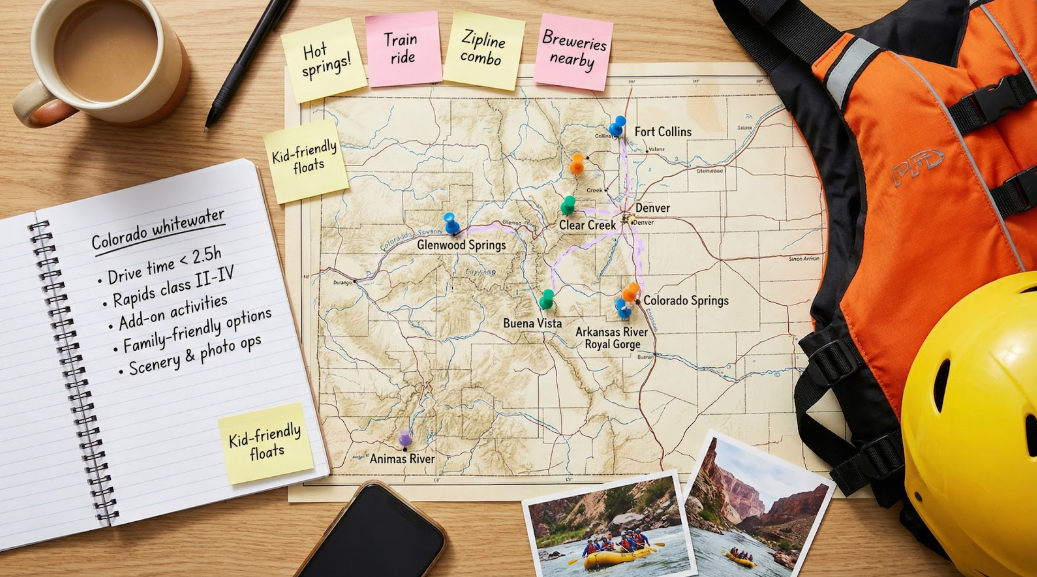
Colorado puts adventure within arm’s reach. Jagged peaks, pine-scented air, and rivers that never sit still let you pack a month’s worth of thrills into a single weekend—especially when white-water rafting takes center stage. According to a 2024 KRDO News report, about 550,000 people climb into commercial rafts here each year, while state reports average five rafting fatalities—evidence of a well-regulated, guide-driven industry.
Rafting is only the opening act. Pair a half-day run with a sunset soak in natural hot springs, a cliff-side via ferrata, or a historic steam-train ride and you’ve got a story your crew will retell for years. Thanks to strategic reservoir releases, marquee rivers like the Arkansas and Colorado should stay lively through late summer 2026, and newly opened ziplines plus refreshed campgrounds make timing ideal.
Our goal: hand you eight plug-and-play itineraries ranked for scenery, thrill factor, and drive-time sanity. Buckle your PFD, pack a quick-dry layer, and let’s plan a weekend you’ll never forget.
How we chose the top Colorado adventures
We mapped every commercially rafted river section in Colorado and cross-checked drive times from Denver and Colorado Springs to balance convenience with scenery.
Next, we scored each spot for variety. To make the cut, a destination needed at least one add-on activity (think a hot-spring soak or cliffside zipline) so your crew can pivot if weather shifts or legs feel rubbery after paddling.
We weighed difficulty too. Families need dependable Class II–III water, while thrill seekers look for true Class IV hits. We also reviewed recent guest feedback and 2025–2026 flow forecasts to confirm each pick will deliver this season.
The outcome: eight itineraries that blend beauty, adrenaline, and practicality better than any single-activity list.
1. Royal Gorge rafting & via ferrata (Cañon City)
The Royal Gorge feels purpose built for big-moment memories. Sheer granite walls climb 1,000 feet above a ribbon of white water, and the suspension bridge hangs like a tightrope between sky and stone. Paddling below that skyline delivers Colorado drama at full volume.
Morning trips open with a safety brief, then your guide calls the first paddle stroke. Rapids such as Sunshine Falls and Sledgehammer arrive in quick succession, throwing spray and wide smiles across the boat. At peak June flows the drops reach solid Class IV, yet seasoned guides keep even ambitious first-timers on line. Last spring a storm-moved boulder reshaped one marquee rapid and crews rewrote their lines within days. The 2025 Colorado Rafting Review calls it the first major change to the Gorge in roughly twenty years and praises how the new feature now runs clean whether flows sit at spring peaks or late-season lows.
When the white water ends, swap paddles for carabiners. A guided via ferrata lets you clip into iron rungs and climb the same walls you just floated beneath. The exposure is genuine, but the harness and steel cable turn cliffside nerves into pure thrill. Still buzzing? The nearby zipline launches you 1,200 feet above the river for one last rush.
Logistics stay simple. Cañon City lies 2 hours south of Denver and 1 hour from Colorado Springs. Many outfitters bundle half-day rafting with a via ferrata or zip package; plan on about $150 for the river segment and $120 for the climb, with combo discounts available. Sleep in one of Echo Canyon River Expeditions’ nine mountain-modern Royal Gorge Cabins—with gas fireplace, spa shower, and a private patio starting around $419—or opt for their furnished glamping tents from about $219 before raising a local IPA at the riverside 8 Mile Bar & Grill while guides trade rapid tales.
Aim for the first boat of the day. Dawn light turns the canyon gold, wildlife stays active, and you’ll beat selfie traffic on the bridge above.
2. Browns Canyon rafting & hot springs (Buena Vista)
If the Royal Gorge feels like a roller coaster, Browns Canyon rides like a scenic train with surprise drops. Granite spires tighten around the river, the Collegiate Peaks tower overhead, and Class III waves keep paddles moving without demanding heroics. It is the Arkansas River’s sweet spot: powerful enough to thrill yet gentle enough for first-timers.
Launch mid-morning to allow a picnic on a sandy bank halfway through, then paddle through crowd-pleasers such as Zoom Flume and Big Drop with renewed energy. Quiet pools between rapids invite quick swims or a chance to spot bighorn sheep stepping across the cliffs.
Take out at Stone Bridge if possible. Outfitters who run the full stretch save Seidel’s Suckhole for last, ending the day with the canyon’s sharpest hit.
The adventure continues after the river. A 15-minute drive delivers 104 °F bliss at Mount Princeton Hot Springs. Steam loosens shoulders that pulled a thousand strokes, and sunset turns Chalk Cliffs pink while you soak.
Overnight options range from Buena Vista’s Surf Hotel to campsites along Cottonwood Creek. At sunrise, grab a pastry at the Roastery, wander Main Street, or hike a beginner-friendly 14er trail. By lunchtime you’ll be rolling toward Denver, equal parts tired and recharged.
3. Glenwood Springs: raft the Colorado River & soak in hot springs
Glenwood Springs lets you chase rapids in the morning and relax in mineral water by night. The town straddles Interstate 70 yet feels far removed once you slide into the canyon.
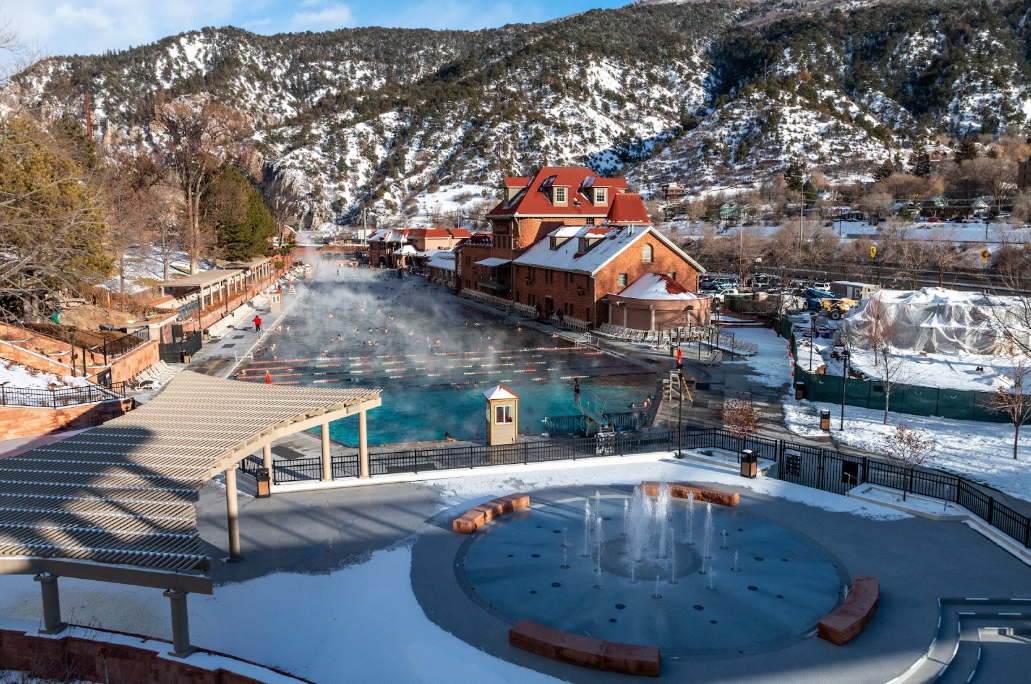
Guides launch at the Shoshone put-in, a two-mile sprint of Class III waves with playful names such as Tombstone and Superstition. Spring runoff can nudge them toward Class IV; by midsummer the river settles into splash trains that kids as young as five can handle.
Downstream the canyon widens. Paddles rest on gunwales, walls tower overhead, and guides often edge boats onto riverside rocks where natural hot vents bubble up. It is a fleeting foot bath before the current carries you to the Glenwood take-out.
Swap life jacket for swimsuit and head to Iron Mountain Hot Springs or the historic Glenwood Hot Springs Pool. Soaking beneath Storm King Mountain erases any chill the river left behind.
Have energy to spare? Ride the gondola to Glenwood Caverns Adventure Park for cave tours and a mountain coaster that drops off the cliff edge. If you prefer a hike, pick up late-day permits for Hanging Lake, a 1.2-mile climb to a turquoise bowl fed by feather-fine waterfalls.
Hotels cluster downtown, while riverside campsites keep you close to the water’s lullaby. Wake early, claim a cinnamon roll at Sweet Coloradough, and watch steam rise off the springs before cruising east through Glenwood Canyon’s limestone walls.
Adventure overview at a glance
You’ve met our first three stars. Before we look ahead, let’s compare all eight weekends side by side. The snapshot below answers the planner’s key questions: how far, how hard, and how much?
| Adventure | From Denver | Rapids class | Days needed | Typical cost (per person) | Difficulty | Best months |
|---|---|---|---|---|---|---|
| Royal Gorge + Via Ferrata | 2h | III–IV+ | 2 | $270 | Advanced | May–Aug |
| Browns Canyon + Hot Springs | 2h 30m | III | 2 | $180 | Moderate | Jun–Aug |
| Glenwood Springs Combo | 3h | II–IV | 2 | $165 | Easy–Moderate | Jun–Sep |
| Clear Creek + Zipline | 40m | II–V | 1–2 | $200 | Moderate–Advanced | May–Jul |
| Poudre Canyon + FoCo | 1h 30m | III–IV | 2 | $160 | Moderate | Jun–Jul |
| Durango + Train | 6h | II–III | 3 | $150 | Easy | Jun–Aug |
| Overnight Ark Expedition | 2h | III–IV | 2 | $500* | Moderate | Jun–Aug |
| Bighorn Sheep + Colo Springs | 2h | II–III | 2 | $150 | Easy | May–Sep |
*Two-day all-inclusive with meals and camping gear.
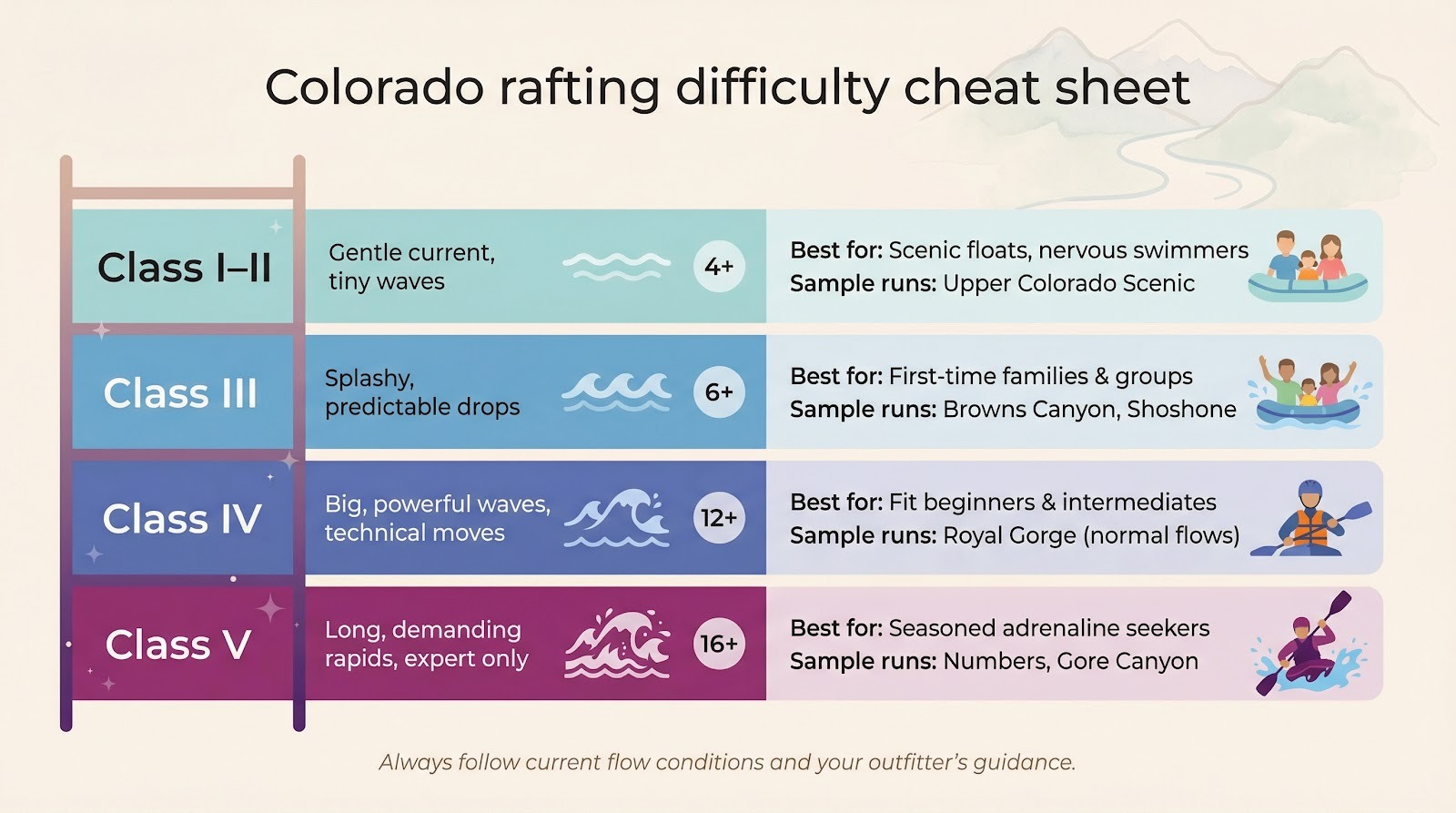
Choosing for kids or uncertain about rapid ratings? The chart below pairs river classes with age guidelines so you can match comfort level to canyon.
| Rapid class | What it feels like | Minimum age | Best for | Sample runs |
|---|---|---|---|---|
| I–II | Gentle current, tiny waves | 4 | Scenic floats, nervous swimmers | Upper Colorado Scenic |
| III | Splashy, predictable drops | 6 | First-time families, groups | Browns Canyon, Shoshone |
| IV | Powerful waves, technical lines | 12 | Fit beginners, intermediates | Royal Gorge (normal flow) |
| V | Long, demanding rapids, rescue skills required | 16 | Adrenaline seekers with prior experience | Numbers, Gore Canyon |
Keep these cheat sheets handy as we dive into the rest of the list. They’ll help you zero in on the perfect river and quiet any back-seat trip critics on the drive.
4. Idaho Springs: Clear Creek rafting & cliffside ziplining
Need thrills but only have a single free day? Point the car west on I-70 and in 40 minutes you’re gearing up beside Clear Creek, a narrow ribbon that drops 100 feet per mile through mining-era hills.
The beginner run (often called Gold Rush) starts with bouncy Class II–III waves, ideal for families or anyone still learning “forward three.” Upstream, the advanced stretch wastes no time. Rapids such as Phoenix and Outer Limits stack one after another, turning the half-day into a cardio sprint of paddle calls and cheers.
Spring runoff fades quickly here, so guides pack the season’s power into May and June. They loan thick neoprene and booties because snowmelt water stays brisk, while hot summer sun balances the chill. Safety talks feel serious, yet the mood on the river stays high-five friendly.
Back on shore, swap your PFD for a secure climbing belt on the cliffside zip line just up the gulch. Six lines leapfrog the creek—some skim treetops, others send you across a yawning ravine in a blur. By late afternoon you’ve conquered water and air, with time left to recharge on Colorado-style pizza in downtown Idaho Springs before heading home.
5. Poudre Canyon: wild & scenic rafting plus Fort Collins flavor
The Cache la Poudre bursts out of Rocky Mountain National Park as if it has a deadline. Free flowing, damless, and federally protected, the river feels raw beside its Arkansas cousins. You hear it before you see it, a steady roar echoing off granite walls while you wind up Highway 14 from Fort Collins.
Guides favor the Lower Mishawaka run for most visitors. Class III rapids such as Pinball and Rollercoaster bounce boats through tight channels, pine forest brushing the banks. No slow stretches here; the water twists, drops, and repeats. Because flows depend on snowmelt, June is prime. By late July the river shrinks, rapids mellow, and wildlife steps closer to drink.
If your crew craves more adrenaline, outfitters also run Upper Mishawaka or the Narrows, Class IV water that slings boats between boulders at video-game speed. Space is limited; Wild & Scenic permits cap daily boat counts, so book weeks ahead.
After the take-out, roll back to town, ditch river shoes, and slip into brewery mode. Fort Collins hosts more than twenty craft taps within a few blocks; New Belgium and Odell headline, but half the fun is wandering Old Town and following the hop aroma.
Sunday morning, balance the beer with fresh air. Greyrock Trail starts twenty minutes up-canyon and climbs to a bald summit overlooking the rapids you ran. Pack a breakfast burrito, top out before the sun heats the granite, and you’ll still be home for lunch—tired, satisfied, and smelling faintly of river.
6. Durango & Silverton: raft the Animas, ride the steam train
Southwest Colorado feels like another state altogether. Red-rock mesas collide with the jagged San Juans, and the pace drops to trail time. Base yourself in Durango, where the Animas River threads through downtown and steam whistles echo off brick storefronts.
Start with a half-day on the Lower Animas. It’s a family-friendly Class II–III float: enough splash to spark smiles, gentle pauses to spot trout in emerald water, and one marquee rapid, Smelter, where photographers stake out the action shot. Guides weave local lore into the trip, pointing to old smelter stacks still guarding the bank.
Trade paddles for train tickets the next morning. The Durango & Silverton Narrow Gauge Railroad chugs 45 miles north along the same canyon you rafted, steam curling over open-air gondola cars. About three and a half hours later it rolls into Silverton, a frozen-in-time mining town sitting 9,300 feet above sea level. Grab elk chili, wander the wooden boardwalks, then ride the rails or hop a shuttle back to Durango before sunset paints the peaks rose gold.
Durango evenings invite a stroll. Musicians busk on Main Avenue, and saloons pour craft whiskey flights that warm the high-country chill. Sleep at the historic Strater Hotel if you love Victorian wallpaper, or pitch a tent beside the river for the sound of current as lullaby.
Stretch the weekend with a side trip to Mesa Verde’s cliff dwellings or hike the Animas Mountain Trail for a sunrise overlook. Either way, you’ll leave with coal soot on your jacket, river sand in your shoes, and a grin that lasts past Farmington.
7. Overnight raft expedition: camp beside the Arkansas
Day trips excite, but two days on the river resets your internal clock. You wake to canyon songbirds, paddle rapids before breakfast, and swap smartphones for starlight. Outfitters keep it simple: tents pitched, steaks sizzling, and a drybag waiting for your sleeping bag.
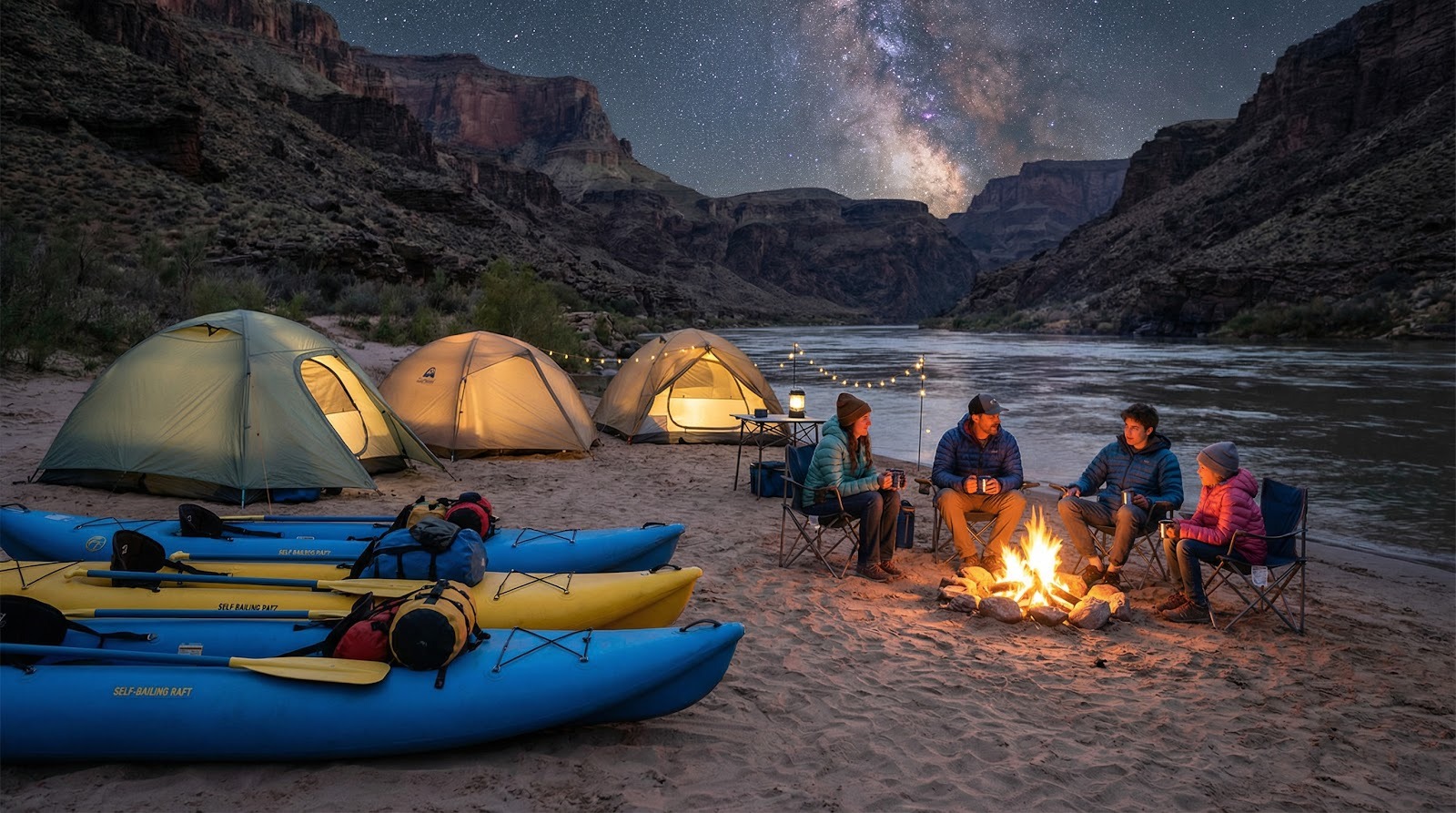
Most overnighters launch in Bighorn Sheep Canyon, easing you in with splashy Class II–III water. By mid-afternoon the flotilla noses onto a sandy bar. Guides unfold camp chairs, kids skip stones, and anglers cast for brown trout rising in the fading light. After dinner the Milky Way glows bright enough to read by.
Morning delivers stronger coffee than you brew at home, followed by bigger water. Browns Canyon’s Zoom Flume and Big Drop feel sharper when you’ve already paddled a full day. Confidence rises, teamwork clicks, and the boat threads rapids that looked menacing twenty-four hours earlier.
Cost runs higher at about $500 per person, covering permits, meals, and every essential beyond your toothbrush. Value shows at sunset when talk drifts from rapid names to life goals and no one checks a watch. By the time the van rolls back to town, river grit hides in every cuff, and part of you still floats downstream.
8. Colorado Springs weekend: Bighorn Sheep Canyon & front range icons
Sometimes you want rapids that excite without intimidating and a city plan that pleases every age in the car. Colorado Springs paired with Bighorn Sheep Canyon checks both boxes.
Meet your guide at the put-in near Cañon City. Helmets snug, you push into swift Class II water that soon builds to playful Class III. Five Points and Spike Buck soak the crew, yet the canyon stays friendly, its sandstone shelves perfect for spotting the namesake sheep. Kids laugh instead of white-knuckle, and grandparents grin when the guide spins the raft for an extra splash.
By noon you’re back on pavement with the whole afternoon open. Drive north for an hour and Pikes Peak fills the windshield. Ride the cog railway to 14,115 feet, bite into a summit doughnut still warm from the fryer, then scan the plains you couldn’t see from river level.
On the descent, drop into Garden of the Gods. Towering red fins frame the peak you just stood on, and paved paths let every family member wander among balanced rocks and juniper without breaking a sweat. Sunset turns the sandstone neon; phones come out, but photos never match the glow.
Colorado Springs weekend with Bighorn Sheep Canyon, Pikes Peak, and Garden of the Gods
Evening options abound. Manitou Springs’ penny arcade charms kids while parents sample naturally carbonated spring water at sidewalk fountains. Or head downtown for craft burgers before checking into a budget-friendly hotel. Early risers can slip in Cave of the Winds or the Manitou Incline before pointing home.
The mileage is short, the memories large, and everyone in the car gets to boast: some about rapids, others about a fourteener, all about the doughnuts.
FAQs – your Colorado rafting questions, answered
When is the best time to raft in Colorado?
June delivers the biggest water: snowmelt peaks, rapids surge, and guides grin from ear to ear. July keeps the splash but adds warmer air and water. By August flows taper on smaller rivers, yet dam-managed stretches like the Arkansas still roll dependably (TripOutside 2025 guide).
Is rafting safe?
On guided trips, yes. Every guest wears a Coast Guard–approved vest, listens to a mandatory safety talk, and rides with professionals who train all spring. Commercial rafting records only a handful of serious incidents each year among more than half a million participants statewide. Follow instructions and your biggest risk is raccoon-eye tan lines.
Do I need to know how to swim?
Comfort in water helps, but it isn’t mandatory on beginner runs. Your vest keeps you afloat, and guides are close if you take an unexpected dip. Nervous? Start with Class II–III sections such as Bighorn Sheep Canyon and tell your guide upfront; they’ll seat you toward the middle and review the “nose and toes” float position.
What should I wear?
Think quick-dry layers: swimsuit or athletic shorts, synthetic shirt, and river sandals that won’t bail at the first wave. Spring and early-summer trips often include a free wetsuit; fleece underlayers beat cotton every time. Pack a complete change for the ride home. A soggy car seat is no one’s idea of victory.
How young can kids go?
Age rules depend on rapid class and river level. Scenic floats allow children as young as 4, most Class III trips start at 5 or 6, and big-water adventures like the Royal Gorge require teens with strong swimming skills. Outfitters post exact minimums when you book and raise ages if flows spike.
Still deciding? Call any Colorado outfitter. They live this daily and relish guiding first-timer nerves into paddle-ready excitement.
Conclusion
Buckle your PFD, pack a quick-dry layer, and get ready for a Colorado weekend you’ll never forget.