
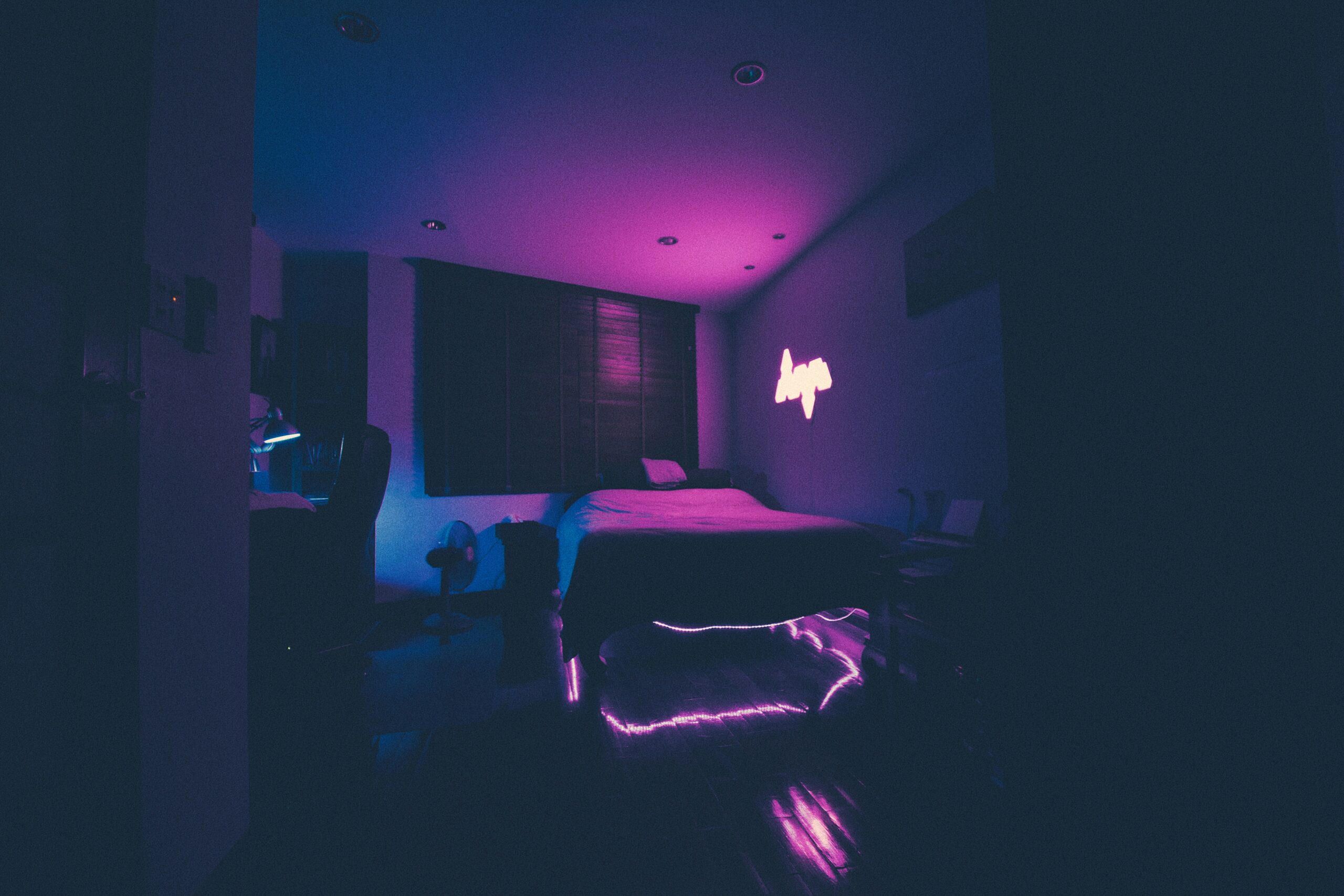
LED strip lights have quietly become one of the most versatile tools in home decor. Flexible, affordable, and endlessly customizable, they can transform a space in minutes without any major renovation. Whether you’re chasing a moody bedroom glow, a futuristic gaming setup, or a garden that feels magical after dark, strip lights adapt to almost any surface and mood. Here’s a room-by-room look at how to use them well.
Under the Bed: Soft, Floating Ambiance
Tucking a strip light along the underside of your bed frame is one of the simplest upgrades with an outsized visual payoff. The light spills outward and downward, creating the illusion that the bed is floating just above the floor. This works especially well with platform beds or frames with a few inches of clearance underneath.
For this application, warm white or soft pastel tones tend to feel the coziest, though RGB strips let you match the glow to your mood — a deep blue for winding down, or a warm amber for reading before sleep.
Lamomo offers options for every version of this setup: simple single-color strips for a clean, understated glow, dimmable LED strip lights for anyone who wants precise control over brightness at different times of night, and full RGB strips for those who like to switch things up with color. It’s an easy way to find the right fit for your under-bed lighting without overcomplicating the install.
The Ceiling: A Statement Without the Commitment
Ceiling lighting used to mean a fixed fixture and an electrician. LED Strip Lights change that equation entirely. Running a strip around the perimeter of the ceiling, hidden behind a small lip of crown molding or a cove channel, creates what’s often called “cove lighting” — an indirect wash of color that makes a room feel taller and more atmospheric.
For renters or anyone who wants flexibility, adhesive-backed strips can be applied directly to ceiling trim without drilling. Color-changing RGB strips are especially popular here because they let a single ceiling installation serve multiple purposes: bright white for daily use, a party-ready color cycle for gatherings, or a slow-shifting gradient for background ambiance while watching a movie.
The Gaming Desk: Function Meets Flair
Gaming setups have arguably done more than any other trend to popularize LED strip lighting. Around a desk, strips serve a genuinely practical purpose alongside the aesthetic one — bias lighting behind a monitor reduces eye strain by softening the contrast between a bright screen and a dark room.
The most effective setups layer light in a few places: a strip along the back edge of the desk for an ambient backdrop, another traced around the underside of desk shelving or a monitor stand, and sometimes a short segment inside a PC case for a look that matches through a tempered-glass panel.
The Garden: Extending the Day Outdoors
Outdoors, strip lights take on a different job: guiding movement and defining space once the sun goes down. Along a garden path, low-profile strips tucked into edging or planter borders provide just enough light to walk safely without the harsh glare of traditional floodlights. Wrapped around a pergola beam or strung along a fence line, they can turn a patio into an evening gathering spot that feels intentional rather than accidental.
The key consideration outdoors is durability. Look for strips with a weatherproof rating (IP65 or higher for exposure to rain, IP67 or IP68 for anything that might sit in standing water) and connectors designed to keep moisture out. Warm white remains the most popular choice for garden dining areas and seating nooks, since it flatters plants and skin tones alike, while color-changing strips are a fun option for a fire pit area or a kids’ play space.
A Few Universal Tips
Regardless of where you’re installing strip lights, a few habits make the results look far more polished. Always measure the run length before ordering, and account for corners — most strips can bend around a corner, but sharp 90-degree turns are easier with connector clips than by folding the strip itself.
Regardless of where you’re installing strip lights, a few habits make the results look far more polished. Always measure the run length before ordering, and account for corners — most strips can bend around a corner, but sharp 90-degree turns are easier with connector clips than by folding the strip itself. Hiding the light source, rather than the light itself, is usually what separates a professional-looking installation from an obviously DIY one; channels, coves, and trim pieces do a lot of the visual work.
Finally, don’t underestimate the difference between a basic single-color strip and an RGB model. The latter allows individual segments of a single strip to display different colors simultaneously, which opens up far more creative possibilities — gradients, chasing effects, and scene-setting that a single-tone strip simply can’t match.
From the quiet glow under a bed frame to the reactive chaos of a gaming rig, LED strip lights prove that big atmosphere doesn’t require big renovations — just a little creativity about where to place the light.