
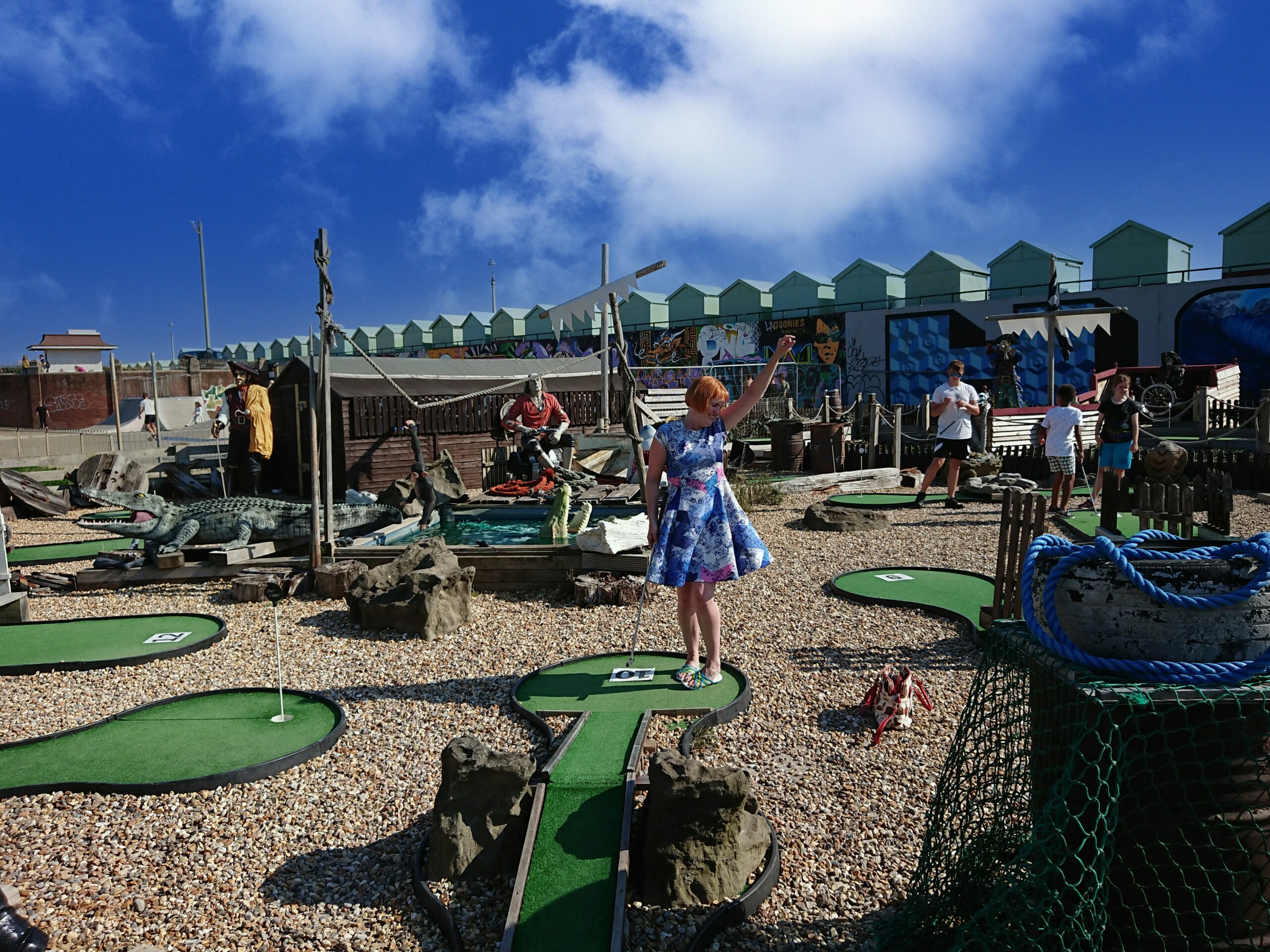
Almost every British child meets golf the same way. There’s a birthday party or a rainy afternoon, somebody suggests adventure golf, and two hours later they’ve had a brilliant time knocking a ball through a windmill. They ask when you can go again. Then nothing happens, because the distance between a themed crazy golf course and an actual golf club feels enormous, and most parents quietly assume it involves membership fees, a full bag of clubs and a dress code.
It doesn’t have to work like that. Here are five steps that take a child from “that was fun” to actually playing, without spending much to find out whether the interest is real.
1. Start with the part they already like
Putting is the one golf skill children arrive with. A round of adventure golf is putting with obstacles, so by the time they’ve played a few courses they’ve built a decent feel for pace, aim and how hard to hit something. That’s a genuine head start, and it’s worth using.
Lean into it before you go anywhere near a full swing. A putter and a plastic cup on the kitchen floor will hold a seven-year-old’s attention for longer than you’d expect, and it keeps the bit they enjoyed at the front of their mind. Indoor courses like the Lego-themed one at Windsor are useful for the same reason, because British weather makes outdoor courses an unreliable plan between October and March.
2. Swap the crazy golf course for a driving range
The driving range is the most underrated step in the whole process, and the one most families skip straight past. There’s no round to finish, no booking, no etiquette to worry about and nobody waiting behind you. You buy a basket of balls, you hit them, you go home. Prices vary by area, but a basket usually works out cheaper than a family round of adventure golf.
Ranges suit children because the format forgives everything. A bad shot costs nothing and the next ball is sitting right there. England Golf notes that children can start golf from around age five, with sessions built around games and movement rather than technique, and an hour at a range runs on exactly that logic. Let them hit badly. Let them hit the ceiling of the bay. Nobody minds.
3. Give them somewhere to hit balls at home
This is the step that decides whether the interest survives. A trip to the range is an event: it needs a free afternoon, a car and a parent who fancies it, which realistically means once a fortnight at best. Children’s enthusiasm doesn’t run on a fortnightly cycle, so if the gap between wanting to hit some balls and actually hitting some balls is three days long, the whole thing fades before it gets going.
Something set up at home closes that gap completely. What it buys you is frequency rather than better practice. Ten minutes after school, three or four times a week, will do more for a child’s swing and their appetite for the game than one long session a fortnight ever manages. Specialist suppliers such as Golf Swing Systems offer practice nets built for garden use, sized for a normal back garden rather than a driving bay, and several of them fold away when you want the space back for everything else.
Two practical things to sort before you set anything up. You need a few metres of clear ground behind where they’re standing, because a young child’s backswing goes further than you might imagine and the greenhouse is closer than you think. Soft practice balls are also worth having for the first few months, since they travel a fraction of the distance if a shot escapes, so are far kinder to fence panels.
4. Hold off on buying a full set of clubs
Parents tend to assume golf starts with an outlay of a few hundred pounds, but in reality a child learning the game needs three clubs at most. Something to putt with, something to chip with, and something to hit properly.
Length matters far more than brand. A club that’s too long teaches a child a swing they’ll spend years unlearning, so buy for the height they are now, accept you’ll be replacing it as they grow, and take the second-hand route while you’re at it. Plenty of clubs lend equipment for beginner junior sessions too, which means you can put off buying anything at all until you’re reasonably sure it’s going to stick.
5. Find a junior session and keep it social
Children stay with sports where they know somebody. A junior group session at a local club will do more for lasting interest than private coaching at twice the price. It turns golf into something they do alongside other kids rather than a skill they’re being assessed on. Most run in blocks of six or eight weeks and lean on challenges and small competitions rather than drills, which is closer to how children learn anything.
It’s worth remembering that all of this counts, too. Golf is a walking sport played outdoors, and it feeds into the daily hour of activity children are meant to get. This is handy leverage when you’re weighing up what the family week looks like. A net at the bottom of the garden helps on the same front, particularly when it’s worked into a space that already has other things going on rather than swallowing the whole lawn.
Give it a season
The honest test is whether they ask to go. Set up the cheap version, run it through a spring and a summer, and see what happens. Some children will play three times and move on to something else entirely, which is fine and costs almost nothing to discover. Others will still be out there hitting balls into a net in the rain in November, and by then you’ll know the clubs are worth buying.