
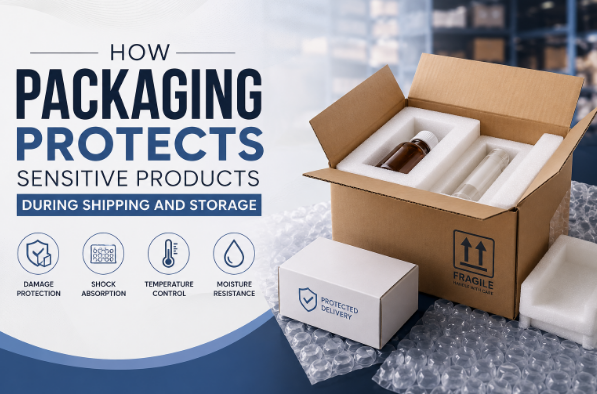
Shipping and storing products can be more challenging than it first appears. A product may leave a manufacturing facility in perfect condition but arrive at a warehouse, retailer, or customer damaged because of impact, vibration, compression, moisture, or excessive movement inside its package.
For sensitive products, packaging needs to do more than hold the item. It needs to create a controlled protective environment around the product while also making handling, storage, identification, and transportation easier.
The right packaging strategy considers the product itself, the conditions it may encounter, and the entire journey from production to final delivery.
What Makes a Product Sensitive?
Not every product requires the same level of protection. A lightweight, durable item may only need a basic carton, while fragile containers, small bottles, vials, or products with specialized storage requirements may need several layers of protection.
Products can be considered sensitive when they are particularly vulnerable to:
- Physical impact or drops
- Vibration during transportation
- Compression from stacked packages
- Moisture and humidity
- Light exposure
- Scratching or surface damage
- Movement inside the package
- Improper handling or storage
The packaging should therefore be designed around the actual characteristics of the product rather than relying on a one-size-fits-all solution.
Common Risks Products Face During Shipping
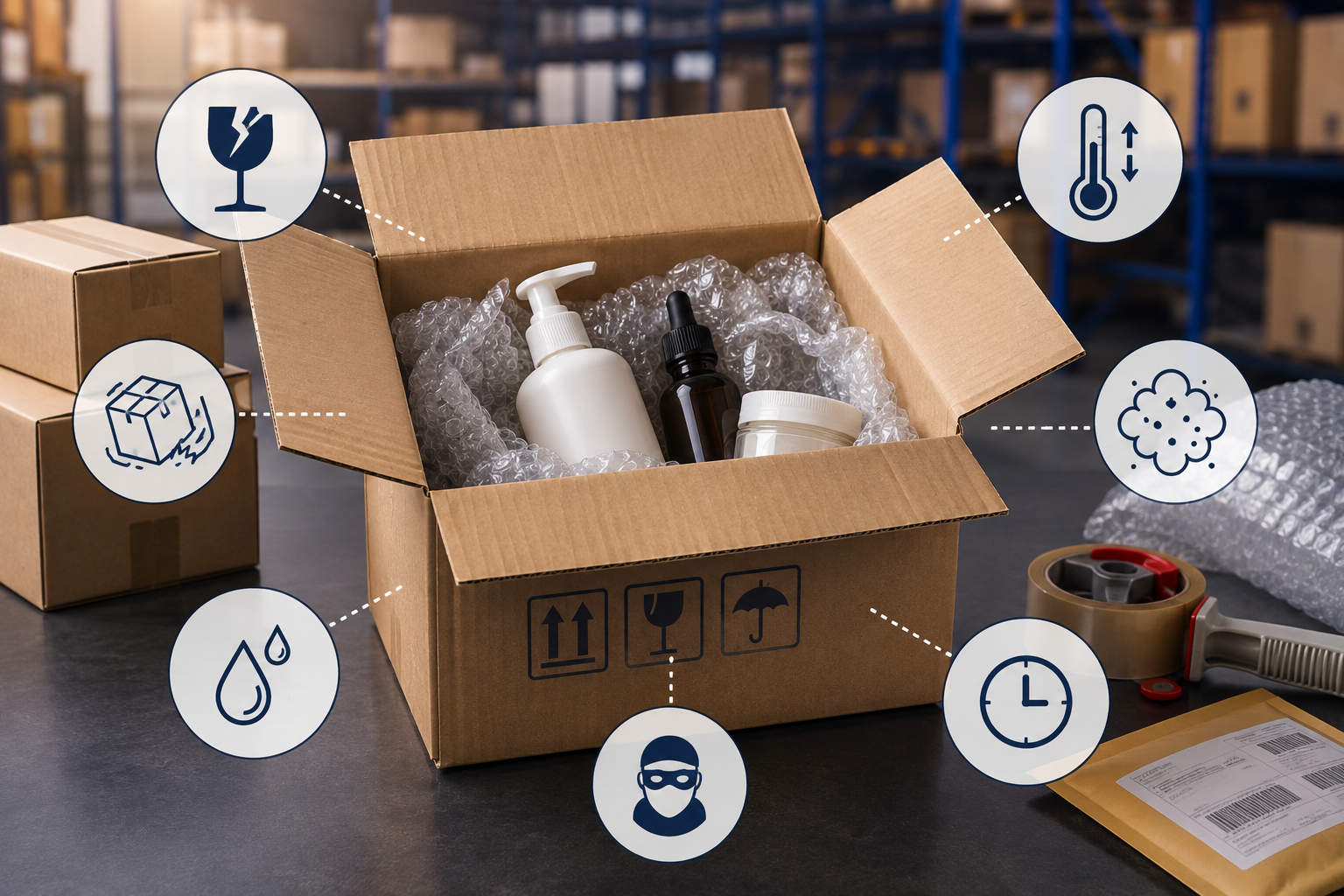
Products can experience many different conditions between the time they are packaged and the time they reach their destination. Understanding these risks is the first step toward designing effective protection.
Impact and Vibration
Packages are frequently moved through warehouses, delivery vehicles, sorting facilities, and distribution centers. During this process, they can experience drops, bumps, sudden movements, and continuous vibration.
Even when the outer box looks undamaged, repeated movement can cause products inside to collide with one another. Fragile containers may crack, labels may become damaged, or components may become loose.
Internal inserts, dividers, and cushioning materials can reduce this risk by keeping individual items separated and limiting movement.
Compression and Stacking
Shipping cartons are often placed underneath other packages. If the packaging structure is not strong enough, continuous pressure can deform the box and eventually affect the products inside.
The weight of the products, stacking conditions, transportation duration, and box material all influence how much compression protection is required.
For heavier products or shipments that will be stacked for extended periods, stronger corrugated or rigid structures may provide better protection than lightweight packaging.
Moisture and Environmental Exposure
Humidity and moisture can affect both products and packaging materials. Paper-based packaging may weaken when exposed to excessive moisture, while certain products can be affected by unsuitable environmental conditions.
Packaging design should therefore consider the expected storage and transportation environment. Depending on the product, additional protective layers, appropriate materials, or moisture-resistant solutions may be necessary.
Movement Inside the Package
One of the simplest but most common packaging problems is excess empty space.
If a product can move freely inside a box, it has more opportunities to experience impact. Multiple products may also collide with each other during transportation.
A properly fitted package reduces unnecessary movement while still leaving enough room for protective components where required.
How Packaging Provides Protection
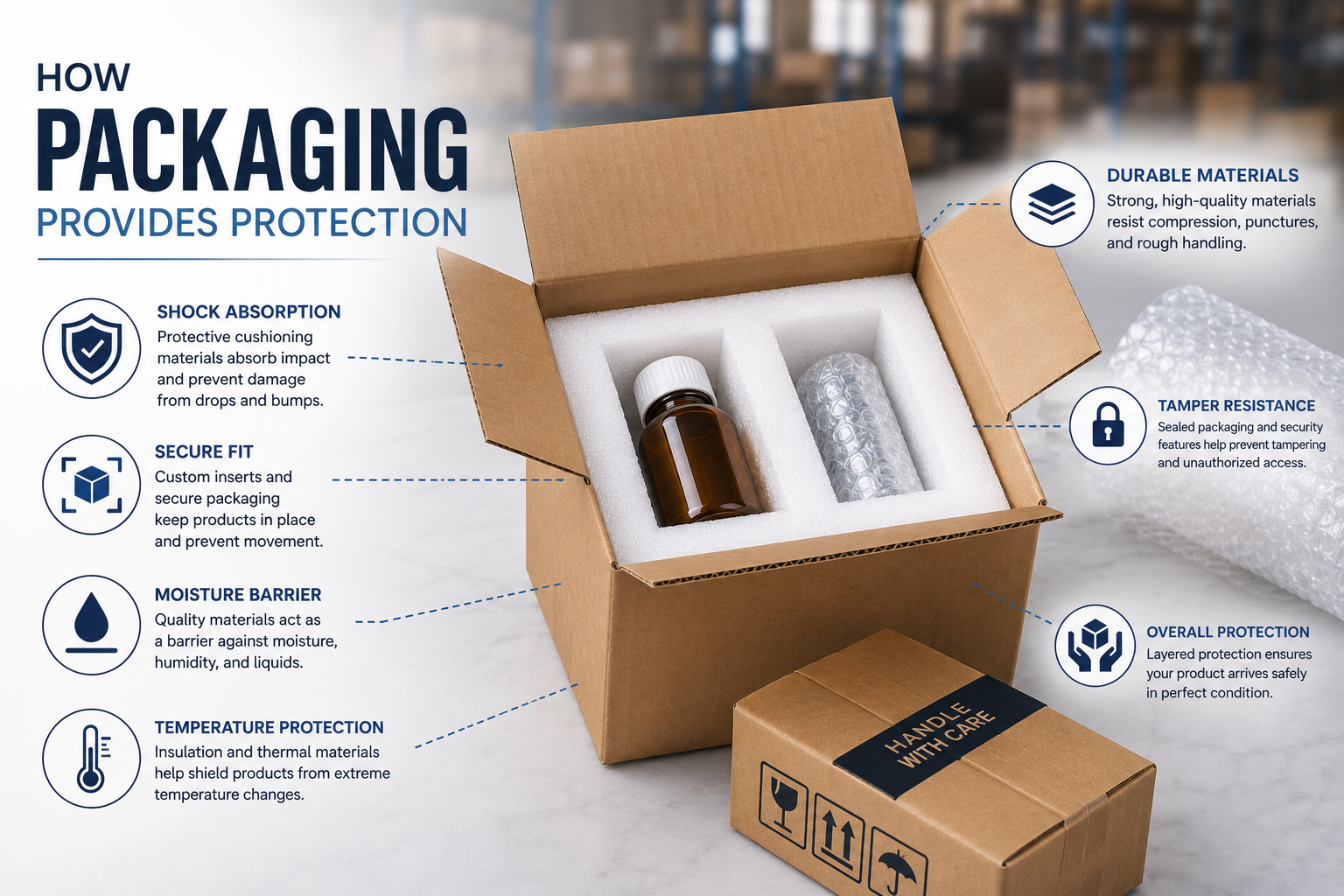
Effective protective packaging usually combines several elements rather than depending on one feature.
Choosing the Right Packaging Material
The material determines much of the package’s structural strength and performance.
Paperboard is commonly used for lightweight retail packaging because it provides a balance between structure, printability, and efficient use of material. Corrugated board is widely used for shipping because its fluted construction provides additional strength without making the package excessively heavy.
Rigid boxes can provide a more substantial structure and are often selected when both protection and presentation are important.
The appropriate choice depends on the product’s weight, dimensions, fragility, shipping conditions, and storage requirements.
Using Inserts and Dividers
An insert can turn an ordinary box into a much more controlled protective system.
Inserts and dividers can:
- Separate individual products
- Prevent items from moving
- Reduce product-to-product contact
- Maintain consistent positioning
- Add cushioning around vulnerable areas
- Improve organization inside the package
For products supplied in small containers, individual compartments can be particularly useful because they reduce the likelihood of multiple units striking one another during transportation.
Right-Sizing the Package
A larger box does not automatically provide better protection.
Excess space allows products to move, increases the amount of internal cushioning required, and can increase shipping volume. On the other hand, packaging that is too small may place unnecessary pressure on the product.
The goal is to create a package that provides sufficient clearance and protection without introducing unnecessary empty space.
Primary, Secondary, and Tertiary Packaging
Many sensitive products use multiple packaging layers, with each layer serving a different purpose.
| Packaging Level | Main Purpose | Typical Example |
| Primary | Directly contains the product | Vial, bottle, pouch, tube |
| Secondary | Organizes and protects the primary container | Carton, rigid box, protective tray |
| Tertiary | Protects grouped products during transportation | Shipping carton, pallet |
Primary packaging comes into direct contact with the product. Secondary packaging surrounds and protects the primary container while often providing labeling and presentation. Tertiary packaging is generally concerned with transportation, distribution, and handling.
Using these layers strategically can provide protection without requiring every individual component to be heavily packaged.
Why Custom Packaging Can Be Important for Sensitive Products
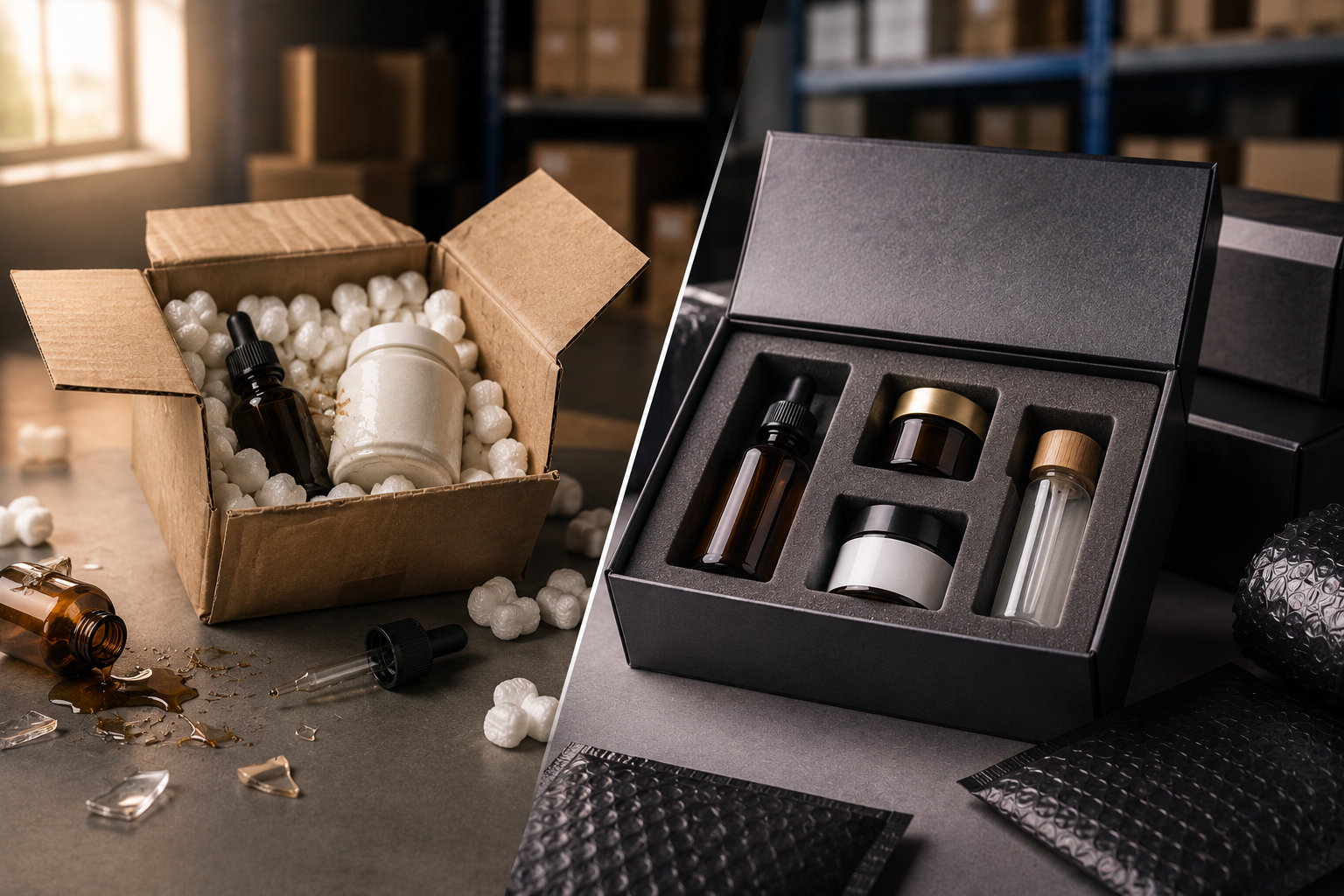
Standard packaging can work well for products with common dimensions and relatively simple protection requirements. However, specialized products may benefit from packaging designed specifically around their size, shape, quantity, and handling needs.
For example, custom peptide packaging may be designed around small vial-based products, allowing individual containers to be organized within dedicated compartments or inserts. The same design principle can apply to cosmetics, laboratory products, electronics, samples, and other small or fragile items.
Peptides boxes are one example of specialized packaging where dimensions, internal organization, labeling space, and product protection can all influence the final structure.
Custom design can also reduce unnecessary empty space and help businesses select materials according to the actual product rather than adapting the product to a generic box.
Comparing Common Protective Packaging Materials
Different materials offer different combinations of strength, appearance, flexibility, and protection.
| Material | Protection Level | Common Applications | Main Benefit |
| Paperboard | Moderate | Retail cartons, lightweight products | Lightweight and highly printable |
| Corrugated Board | High | Shipping and distribution | Strong with relatively low weight |
| Rigid Board | High | Premium and specialized packaging | Strong structure and presentation |
| Foam/EVA Inserts | High | Fragile individual products | Holds products securely in position |
The best solution may also combine materials. For example, a rigid or corrugated outer structure can be paired with a custom insert to protect individual products inside.
Designing Product Packaging Boxes for Safer Shipping
When developing product packaging boxes, businesses should look beyond appearance and consider the entire distribution process.
Important factors include:
Product Dimensions
Measure the product accurately, including its height, width, depth, and any components that extend beyond its main body.
Product Weight
Heavier products require packaging structures that can withstand their weight during handling and stacking.
Fragility
Glass, thin containers, delicate components, and products with easily damaged surfaces may require additional internal protection.
Number of Units
Packaging several units together requires careful organization. Dividers or individual compartments can help prevent contact and movement.
Shipping Distance
A package traveling across a local delivery route may experience different handling conditions than one transported through multiple distribution centers.
Storage Conditions
The package may spend days or months in a warehouse before reaching the end user. Its material and structure should be suitable for the expected storage environment.
Packaging Protection Doesn’t End After Delivery
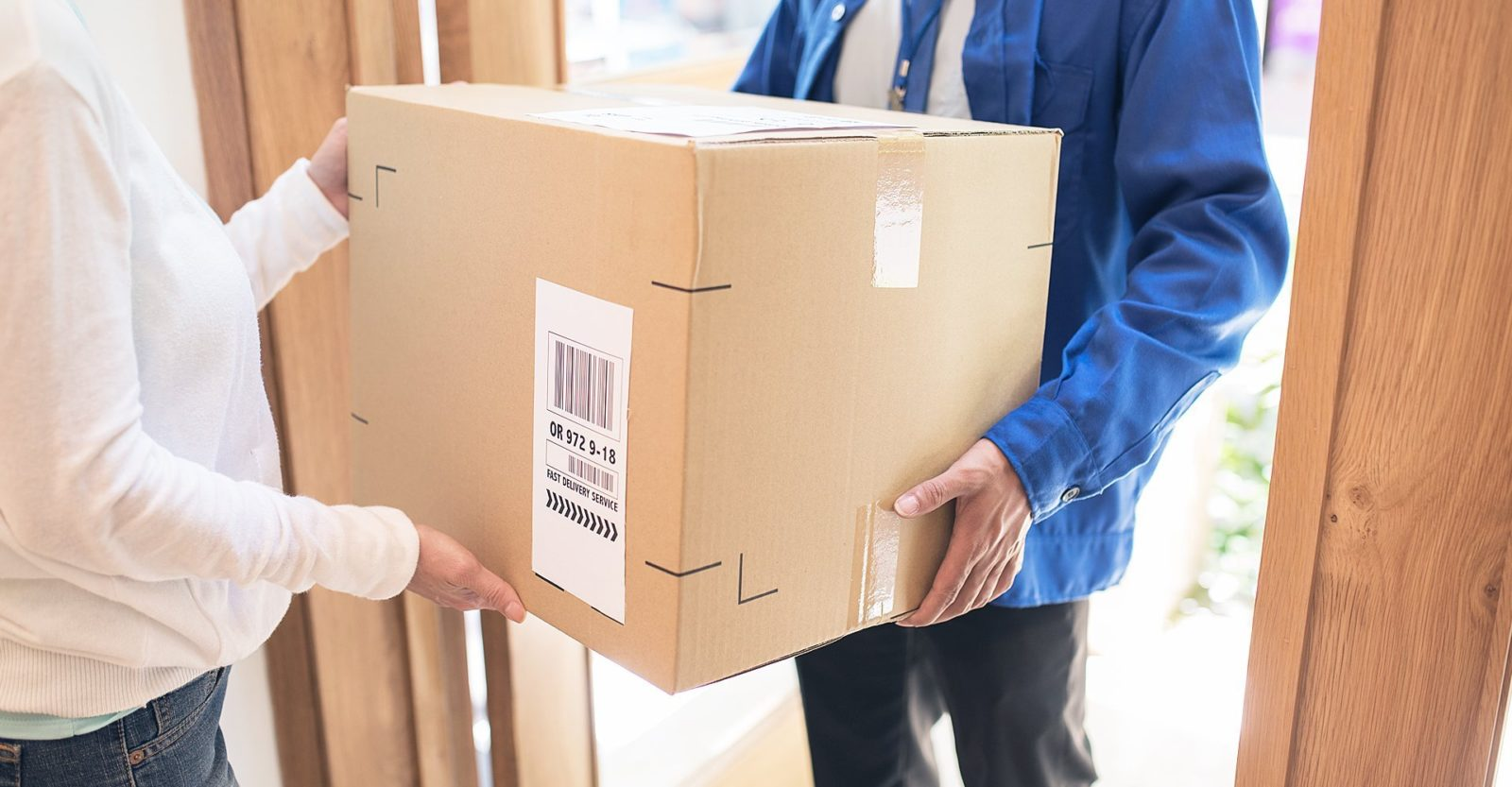
Packaging also plays an important role during storage.
Products may remain in warehouses, stockrooms, retail facilities, or distribution centers for extended periods. During this time, packaging needs to protect the contents while allowing efficient organization and handling.
Proper storage packaging can help with:
- Stacking and space utilization
- Inventory identification
- Dust protection
- Product organization
- Handling efficiency
- Protection from environmental exposure
A well-designed package should therefore work throughout the product’s lifecycle, not just during transportation.
How to Test Packaging Before Large-Scale Production
Testing is an important part of developing protective packaging. A package that looks strong during a visual inspection may perform differently under actual shipping conditions.
Depending on the product and distribution environment, businesses may consider several forms of testing.
Drop testing evaluates how the package and its contents respond to sudden impact.
Compression testing helps determine whether the package can withstand stacking pressure.
Vibration testing simulates repeated movement that may occur during transportation.
Fit testing checks whether products remain correctly positioned inside the package.
Insert testing verifies that internal supports hold products securely without creating excessive pressure.
Testing a prototype before committing to large-scale production can identify structural weaknesses early and reduce the risk of costly product damage later.
Balancing Protection, Cost, and Sustainability

The strongest possible packaging is not necessarily the best packaging.
Using excessive material can increase production costs, shipping weight, storage requirements, and material consumption. At the same time, reducing packaging too aggressively can increase the likelihood of product damage.
The objective is to find the right balance between protection and efficiency.
A well-designed package can often achieve this by using accurate dimensions, appropriate board strength, strategically placed inserts, and fewer unnecessary components.
Right-sized packaging can also reduce wasted internal space and make transportation and storage more efficient.
Final Takeaway
Protecting sensitive products during shipping and storage requires more than simply placing an item inside a sturdy box. Effective packaging considers the product’s size, weight, fragility, environmental sensitivity, transportation conditions, storage requirements, and handling process. Materials provide structural protection, while inserts and dividers can control movement inside the package. Correct dimensions help prevent unnecessary empty space, and multiple packaging layers can provide protection at different stages of the supply chain.
For specialized products, custom-designed solutions can provide a more precise fit and better organization. Whether the application involves small vials, fragile containers, electronics, cosmetics, or other sensitive products, packaging works best when it is designed around the actual requirements of the product. Ultimately, the goal is not simply to create a package that looks good or feels strong. The goal is to create packaging that protects the product reliably from the moment it leaves production until it reaches its final destination.