
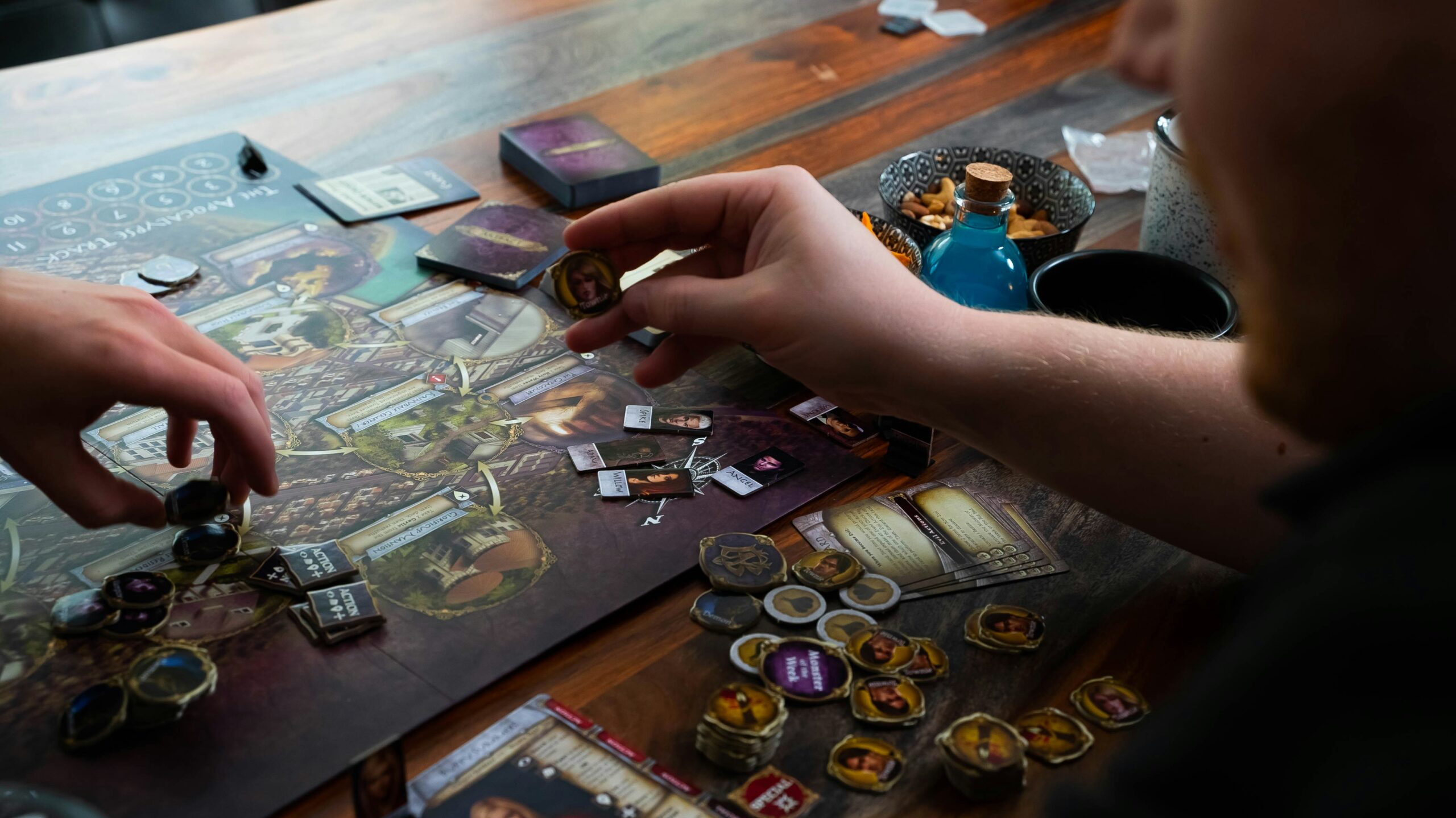
If you have kids, then you’ve been through many family game nights. And we don’t strictly mean something deep like a D&D session (even though there’s a D&D version for kids which works great).
The idea of a family game night seems super fun, but usually, it comes down to playing 1 of the 3 games you own, and the night isn’t exactly idyllic all the time. You pull out the game, one kid whines that they wanted another one, another kid loses interest before you even set up, and your partner is already reaching for their phone.
Games aren’t bad, though. It’s just that you’ve played through every possible scenario so many times that there’s no excitement left. And you could buy a new game, sure, but it’s not exactly necessary.
You could also figure out some ways to make what you already have feel like new.
Turn the Games You Have Into a Quest
Family games are excellent for healthy development, so try to have one at least once a week. Probably the easiest way to make this work/happen is to look at the games you own and pick 2 or 3.
And don’t make the mistake of looking at them as just some random boxes that have nothing to do with each other because you’ll use all of them (all of them).
The idea is to have each game have a job, but within one adventure. So, let’s say you have a racing game. That game could decide whether a character escapes from the monster or not, and then a card game can decide whether a character gets a magical item.
Here’s a closer look at this.
Everyone Should Have a Character
Before you start playing, have everyone choose a character for themselves. You don’t need any sheets or stats for this; just take 20 minutes and let everybody explain their character.
A name, a role, a trait that makes them special, a weapon, a trick, and so on. One person could be a goblin, another one an anxious knight, a wizard who’s too confident for their own good, a deity who’s lost all their powers and is now trying to get them back, etc.
You can get names from books or folklore, and if you want a mythological feel, ancient God names are great for that.
Every Result Is Important
When a game is over, you’d usually count everyone’s points and see who won.
But if you’re having a FANTASY game night, the game will be a lot more interesting if those results carry forward. If someone won, then that might mean their character has earned a key or a part of a map. There shouldn’t be losers in the sense that someone is out of the game if they lose. This makes for a boring game mechanic where one player sits there fiddling their thumbs and doing nothing, while others get to have fun. The entire game should be fun for everyone involved from start to finish.
Instead of ruining everyone’s fun, why not have a low score cause some kind of trouble, like the dragon waking up early or the bridge falling apart?
As far as rewards go, nobody should have too many of those, or they’ll have too big of an advantage.
Use Mini Challenges Between Games
Instead of putting the pieces back in the box when you’re in between games, use that time to keep the adventure going. It’s best to do a bit of prep work before the actual game (k)night to avoid awkward pauses and interruptions.
Riddles are pretty much perfect for this, or you could invent a ridiculous spell that’ll make everyone laugh. Don’t make this into a game of its own, though. It’s just something that connects one part of the evening to another.
But with that said, if what happens in the mini-game has some sort of an effect on the main game, that’ll be super fun.
It’s Okay If the Story Goes Off Script
As far as preparing goes, it’s perfectly fine to start off with a basic quest. Don’t make it too complicated, and whatever you do, don’t try to control everything that happens.
The best parts usually come from the stuff you haven’t planned. Maybe someone will have terrible luck all night and have one terrible roll after another and end up as a proud knight who’s so clumsy that they can’t open doors.
These moments are gold because silly mistakes and strange objects make the game special. They’re also great material for inside jokes.
Don’t Forget About the Villain
I honestly don’t think that there should be too many rules, but there should still be a villain. Later you can get to decide how the villain is paid; will it be some sort of automation, or will a player randomly be revealed to be a villain later (e.g., like in the Betrayal at House on the Hill board game).
Adding a villain gives the story a clear direction; It’s the driving force behind why the hero does what the hero does. Stopping the villain is the goal that any protagonist wants to achieve; otherwise, you don’t know what you’re working towards. And a villain could be anyone. Literally anyone, even the one you least expect to be. You could go with an ancient red dragon, or perhaps an evil wizard looking to gain power at any cost. Perhaps it’s a tragic fallen knight who strayed from his oath of righteousness once the love of his life fell due to an unfortunate accident (which you later learn was planned).
If you want to go deeper, you can even go with a more mythological villain such as Fenrir or Loki. Any option you choose is a good option.
The point is that the villain needs to have a backstory and a motive. Why is the villain doing what he/she/it is doing? The answer to this question will definitely be the villain.
That way, you’re more motivated, and you’re not just solving random challenges.
That might be fun here and there, but for the most part, even the loosest fantasy game needs some sort of direction.
Conclusion
Basically, think of a couple of main points and work from there. DON’T forget a villain. Once you’ve got those bases covered, let the night take you where it’s meant to. Sure, you’ll never be able to plan EVERYTHING, but you shouldn’t even try to. The best games are the ones that are unexpected, filled with plot twists and surprises.
The only goal you should have is to have fun and make the game feel like you’re not just going through another routine.