
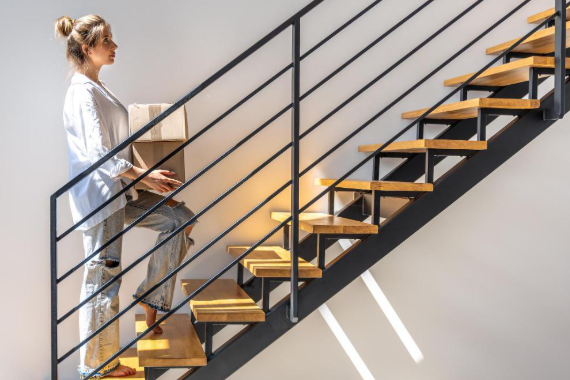
To make wooden stairs less slippery when you’ve got toddlers, combine a non-slip surface treatment (carpet runner, clear anti-slip coating, or stick-on treads) with hardware-mounted stair gates at the top and bottom. This layered approach addresses both the cause of the slip and the consequence of a fall.
Polished hardwood looks beautiful, yet the same glossy finish that designers love turns treads into a hazard the moment a sock-footed toddler starts climbing. The risk peaks between 10 and 24 months, when balance is shaky and grip strength is low.
The right fix in 2026 depends on your priorities: maximum cushion, preserved wood grain, or a quick weekend job. Below, each option is compared on safety, aesthetics, and cost so you can match the solution to your staircase, your toddler, and your timber.
Why Wooden Stairs Become Slippery (Especially with Toddlers)
Three culprits make timber treads slippery: high-gloss polyurethane finishes, silicone-based furniture polish residue, and worn lacquer that has buffed itself smooth under years of foot traffic. Each one lowers the friction coefficient between sole and surface, turning a stairway into a slide.
Dark, glossy stains add a second problem. The reflective sheen visually masks the tread nosing edge, stripping away the depth cue adults rely on to judge each step. Misjudge the nosing once with a baby in your arms, and the fall is already happening.
Toddlers face this hazard with none of the defences adults have. Their stride is too short to span a tread comfortably, their balance reflexes are still developing, and the handrail sits well above their reach. Sock-feet remove the last bit of grip.
And it isn’t only a toddler problem. Parent communities consistently report adults slipping while carrying a child downstairs, which makes a slick wooden staircase a two-person hazard.
Shoes-off households compound the risk because cotton socks on satin-smooth oak or pine produce the lowest friction combination anywhere in the home. The fix therefore needs to address surface, footwear, and barriers together.
Best Non-Slip Solutions to Compare: Runner vs. Coating vs. Treads
Three solutions dominate toddler-proofing: carpet runners win on cushion during a fall, anti-slip coatings win on aesthetics, and stick-on treads win on speed and cost.
Decision logic depends on tenure and priority. Renters lean toward stick-on treads because they peel off without damaging the timber. Homeowners who want the wood grain visible choose a clear anti-slip coating. Families prioritising fall protection over looks fit a full runner.
Most toddler households combine two layers rather than picking one. A runner paired with a child-height handrail covers both grip and grab, while a clear coating across the full flight plus rubber-backed treads on the top three steps targets the riskiest zone. Layering works because surface friction and physical support address different failure modes.
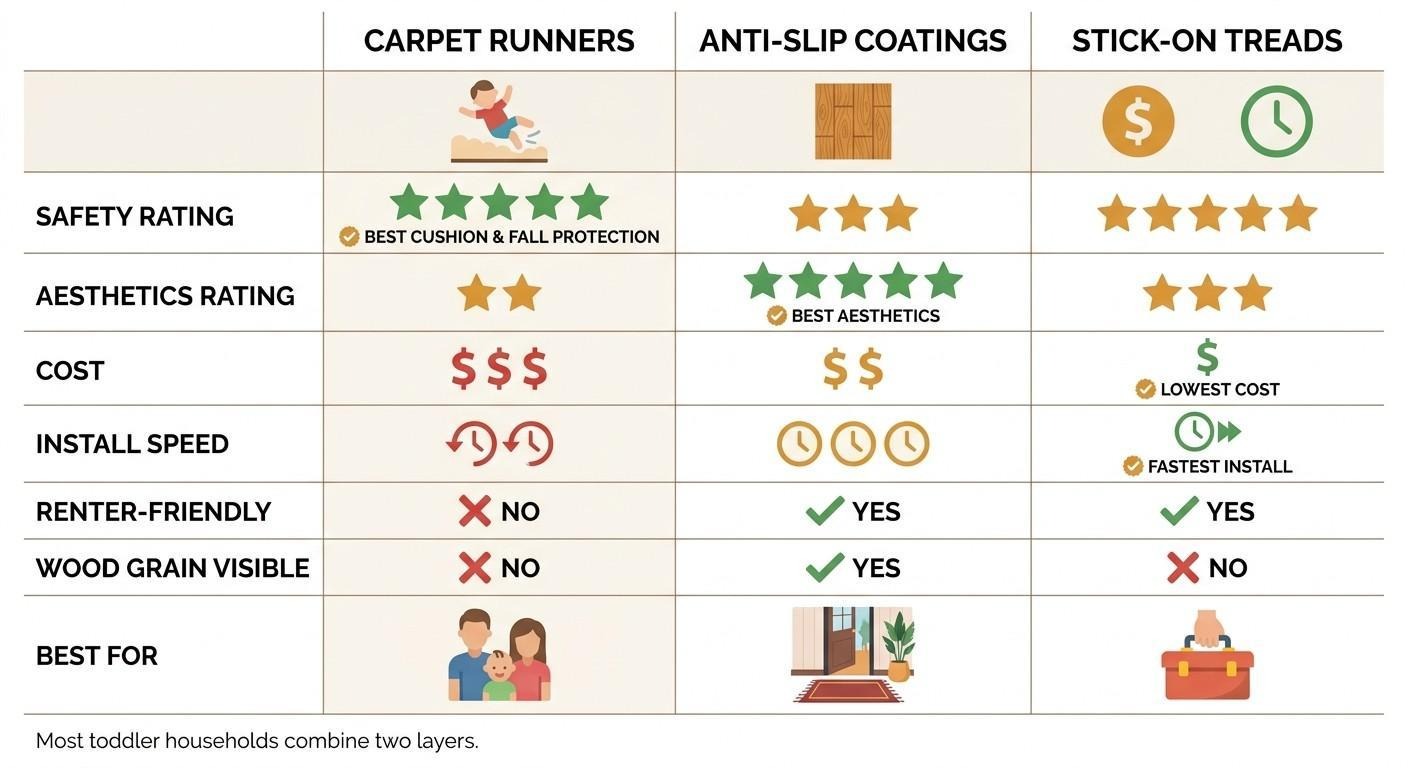
Comparison chart of carpet runners vs anti-slip coatings vs stick-on stair treads for toddler safety on wooden stairs, rated by safety, cost, aesthetics, and renter-friendliness
Carpet Runners and Stair Rods
A carpet runner provides the softest landing surface in a fall, making it the most forgiving option for a toddler tumbling down two or three steps before a parent can catch them. The pile absorbs impact that bare timber simply cannot.
Brass stair rods are the wood-friendly compromise: they pin the runner along each riser while leaving a few inches of timber grain visible at either side, so the staircase still reads as a wooden feature rather than a fully carpeted one.
The maintenance trade-off is real. Runners trap dust, crumbs, and pet hair, needing vacuuming two or three times more often than bare treads.
For longevity, choose dense wool or sisal blends from established suppliers such as Colonial Mills, since tighter weaves resist crushing under daily traffic.
Clear and Textured Anti-Slip Coatings
Clear anti-slip coatings such as Bona Traffic Anti-Slip or Dura Grip suspend fine micro-aggregates inside a transparent topcoat, adding traction without altering the visible wood tone. The grain stays on display, which suits homeowners who refinished their solid oak treads precisely to show them off.
Textured anti-slip paint and Rust-Oleum textured spray work differently because they are opaque. Reserve them for already-painted staircases, basement steps, or utility flights where the wood appearance is not the priority.
Preparation determines whether the coating lasts or peels within months. Strip every trace of furniture polish with a degreaser, lightly sand the treads to dull the gloss, and let the surface dry completely before brushing on the first coat.
High-traffic family stairs typically need a refresh every 2–3 years as the micro-texture wears smooth.
Stick-On Stair Treads and Grip Tape
Adhesive products come in two formats: clear anti-slip tape strips applied along the front edge of each tread for a discreet finish, and rubber-backed carpeted treads that cover most of the step surface for maximum cushion.
Parents in stairway baby-proofing forums report three honest downsides. Edges peel after several months of foot traffic, dust and pet hair collect along the adhesive borders, and thin oval grip pads can catch on socks and lift mid-step.
For toddler households, rubber-backed carpeted treads secured with double-sided carpet tape outperform thin adhesive strips because the wider footprint resists edge lift under daily use.
The damage worry is largely overstated. Quality residue-free adhesives release cleanly from sealed hardwood, but always test on a hidden tread first, since older shellac or wax finishes occasionally bond with the glue.
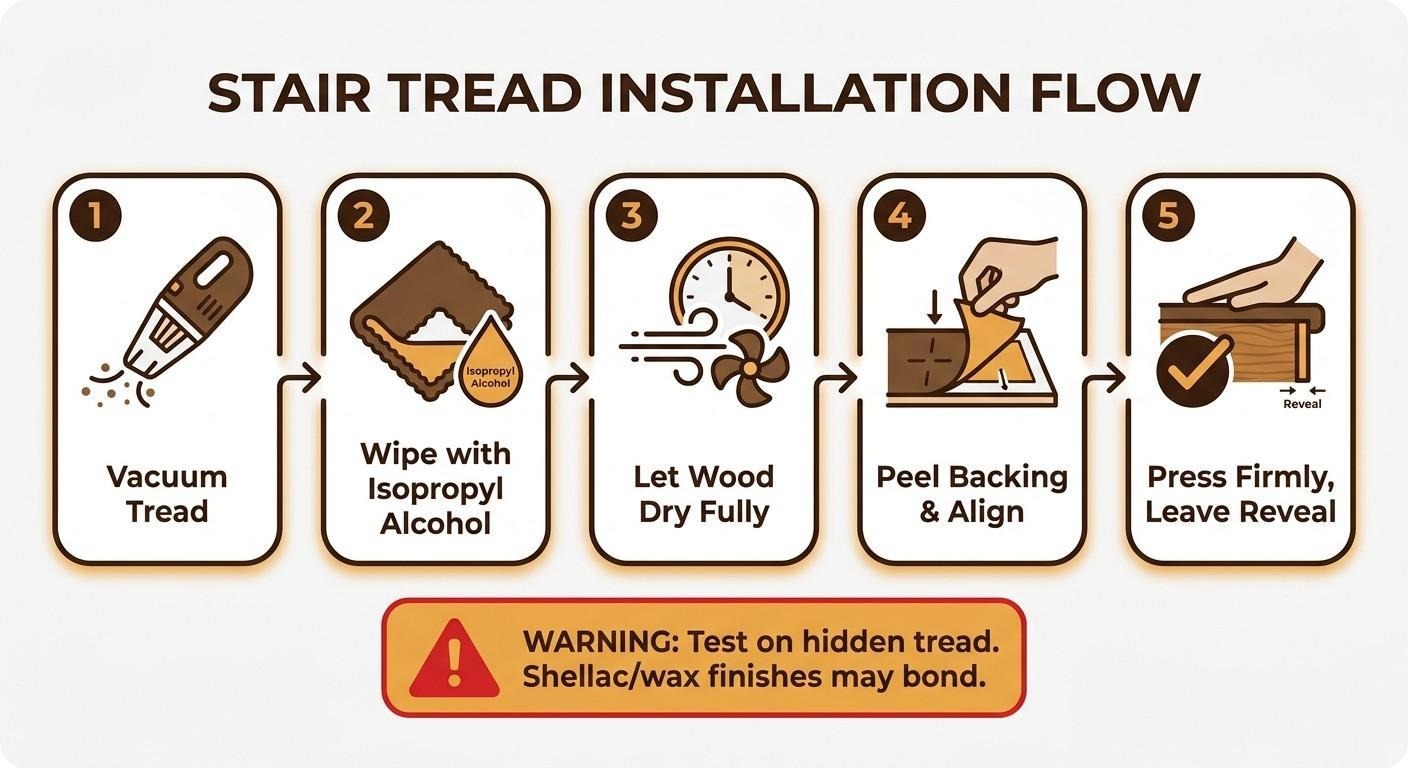
Step-by-step process flow for safely installing stick-on stair treads and grip tape on wooden stairs, including surface prep with isopropyl alcohol and adhesion test warning
Install Stair Treads and Grip Tape Safely
Correct installation starts with a clean, dry surface. Vacuum each tread, then wipe with a microfiber cloth dampened in isopropyl alcohol to lift any polish residue that would prevent adhesion. Let the wood dry fully before peeling the backing.
Position the tread squarely, leaving only a small reveal of timber at each side, and press from the centre outward with a J-roller to push out air bubbles. A tread should cover nearly the full width of the step so a toddler’s foot lands on grip, not bare wood at the edge.
The toddler-specific failure mode is a tread that bunches, lifts at a corner, or slides underfoot. That becomes a worse trip hazard than the slick wood it replaced.
Inspect every tread weekly during the first month and re-press or replace any with edge lift. For cleaning, vacuum with a brush attachment and spot-clean with mild soap and water. Never soak, mop, or steam-clean adhesive treads, because moisture works under the backing and breaks the bond within days.
Install Stair Gates at the Top and Bottom
Surface grip alone will not stop a 14-month-old from launching down the staircase, so physical barriers complete the safety stack. The two-gate rule is the standard: fit a hardware-mounted gate at the top and accept a pressure-fit gate at the bottom.
Hardware-mounted gates screw into the wall studs or newel post and cannot be pushed loose, which matters at the top because a failed gate there causes the worst falls. Pressure-fit gates rely on tension against the walls and a determined toddler can shift them, so reserve them for the bottom step.
Choose a gate that opens with one hand. Parents carrying a baby, a laundry basket, or a coffee cannot set the child down to fumble a two-handed latch.
Three formats cover most homes:
- Hardware-mounted swing gates for standard openings at the top of the flight
- Pressure-fit gates for the bottom step
- Retractable mesh gates for wide hallways or angled walls
Check the banister too. Any spindle gap wider than roughly 10 cm lets a toddler’s head wedge through, so fit a clear plastic banister guard or mesh netting. Keep gates in place until the child reliably uses the handrail, usually around age two.
Maintain Stair Condition and Refinish Glossy Surfaces
High-gloss polyurethane is the single biggest reason older hardwood stairs feel slick, since the mirror-smooth film offers almost no surface texture for a sock or soft sole to grip. Recoating with satin or matte polyurethane lowers the sheen without bleaching out the grain, so the timber still reads as natural wood.
For built-in traction, mix a fine anti-slip additive (or sieved silica sand) into the second-to-last coat while it is still wet. The micro-aggregate suspends in the film and creates a barely visible grit underfoot, a fix DIY parents on Reddit recommend after trying tape and runners.
Plan around the cure window. Each coat needs 24 to 48 hours before foot traffic, so most families coat alternating treads to keep one side walkable, or decamp for a weekend.
Ongoing care matters as much as the refinish itself. Skip silicone-based furniture polish on treads because it leaves a slick film, wipe spills immediately, and re-coat busy family staircases every 3 to 5 years.
Between bigger projects, two free habits cut risk fast: rubber-soled indoor slippers for everyone, and a strict no-socks-on-stairs rule.
Best Wooden Stairs for Toddlers: FAQ
How Do You Make Hardwood Stairs Safer for Toddlers?
Combine a non-slip surface with toddler hardware. That means a carpet runner, clear anti-slip coating, or rubber-backed treads on the steps, plus a hardware-mounted gate at the top, a child-height handrail at roughly 60 cm, and a banister guard for wide spindles.
No single product covers every risk, so surface grip and physical barriers work as a layered system. Skipping either layer leaves a gap a determined toddler will find.
What Can I Put on Wooden Stairs to Make Them Less Slippery?
Three options dominate for toddler households. A carpet runner offers the best fall cushion, a clear anti-slip coating like Bona Traffic Anti-Slip preserves the wood look, and stick-on treads or grip tape are the cheapest and fastest fix.
Grip tape adds traction underfoot but can catch on socks, so families with shoes-off rules often prefer rubber-backed carpeted treads instead.
Are Stick-On Stair Treads Safe for Toddlers?
Yes, when properly installed and inspected weekly. The two real risks are peeling edges that become trip hazards and bunched treads that shift under a small foot, both of which are worse than the bare wood they replaced.
Rubber-backed carpeted treads secured with double-sided carpet tape outperform thin adhesive ovals in busy households, because the larger contact area resists lifting at the corners.
Should I Refinish Glossy Wooden Stairs to Make Them Less Slippery?
Recoating high-gloss polyurethane with a satin or matte finish is one of the most effective fixes, because lower sheen correlates with higher surface texture. Mixing fine silica sand or an anti-slip additive into the wet topcoat builds in extra traction without changing the visible wood tone.
Plan around the family schedule, since each coat needs 24 to 48 hours of cure time and the staircase must stay unused while it sets.
Childproofing wooden stairs is one part of a wider commitment to making timber surfaces both safe and beautiful throughout the home. TimberSol craft charred wood products that pair textured, slip-resistant surfaces with the refined character only authentic Yakisugi can offer, giving parents and designers a material that performs as well as it looks.
If you’re planning a 2026 renovation where safety, durability, and timeless aesthetics matter equally, explore stone grey spruce cladding and discover how charred timber can elevate stairwells, hallways, and feature walls alike. Reach out to our team for tailored advice on selecting the right finish for family-friendly spaces.