
Living with a dog is one of the best things you can do for your mental health – and one of the worst things you can do for your flooring. Between muddy paws, random zoomies and the occasional accident, it doesn’t take much for a peaceful home to start feeling like pure chaos.
The good news is that you don’t have to choose between a happy, high‑energy dog and a calm, clean home. With a few smart routines and the right tools, you can keep your space under control while still letting your dog be their joyful, slightly ridiculous self.
In this article, we’ll look at where the “chaos” really comes from and how to tackle it: from burning off extra energy to better toilet habits and simple tricks that keep mud, fur and smells in check.
Understand Where the Chaos Comes From
Too Much Energy, Not Enough Outlet
Most “naughty” behaviour is just energy with nowhere to go. Puppies and young dogs in particular have a limited ability to settle if they haven’t had a proper outlet for running, sniffing and playing. If your dog is chewing, stealing socks or bouncing off the furniture, it’s often a sign they’re under‑exercised rather than badly behaved.
Boredom and Lack of Structure
Dogs are creatures of habit. When there’s no clear routine, they’ll create their own entertainment – usually the kind you don’t want. Ripping up tissues, raiding bins and pestering you when you need to work are all classic boredom behaviours. A predictable pattern of walks, meals, play and rest makes it much easier for a dog to relax.
Toilet Accidents and Mess
Even the best‑trained dogs can struggle sometimes. Puppies, elderly dogs and dogs in new environments are especially likely to have accidents indoors. Add in British weather, dark winter evenings and long work days, and you have plenty of reasons why toilet habits can slip and floors can suffer.
Burn Off Energy the Smart Way
Daily Walks That Actually Tire Your Dog
A quick five‑minute loop around the block rarely cuts it. What tires dogs out isn’t just distance – it’s also variety and mental stimulation. Try mixing in different routes, letting your dog sniff properly rather than rushing them along, and weaving in little bits of training (sit, wait, heel, recall) during the walk.
Short, focused walks where your dog’s brain is engaged will usually calm them down more than a long but boring plod.
Indoor Games for Rainy Days
This is the UK – there will be days when the rain is Biblical and the park is a mud bath. On those days, a handful of simple indoor games can save your sanity:
- Nose work: hide treats around one room and let your dog sniff them out.
- Snuffle mats or rolled‑up towels: scatter kibble and let them “forage”.
- Basic trick training: spin, paw, touch, roll over – five minutes at a time.
- Puzzle toys or stuffed Kongs: great for when you’re on a call and need them occupied.
All of this burns mental energy and leaves your dog more inclined to nap than redecorate your living room.
Short Play Breaks for Busy Owners
If you work from home or keep a busy schedule, think in terms of micro‑sessions. Two or three five‑minute bursts of training or tug spread through the day are often easier to fit in than one long session, and they still make a big difference to how settled your dog is overall.
Create Calm Zones at Home
A Safe Space Your Dog Can Settle In
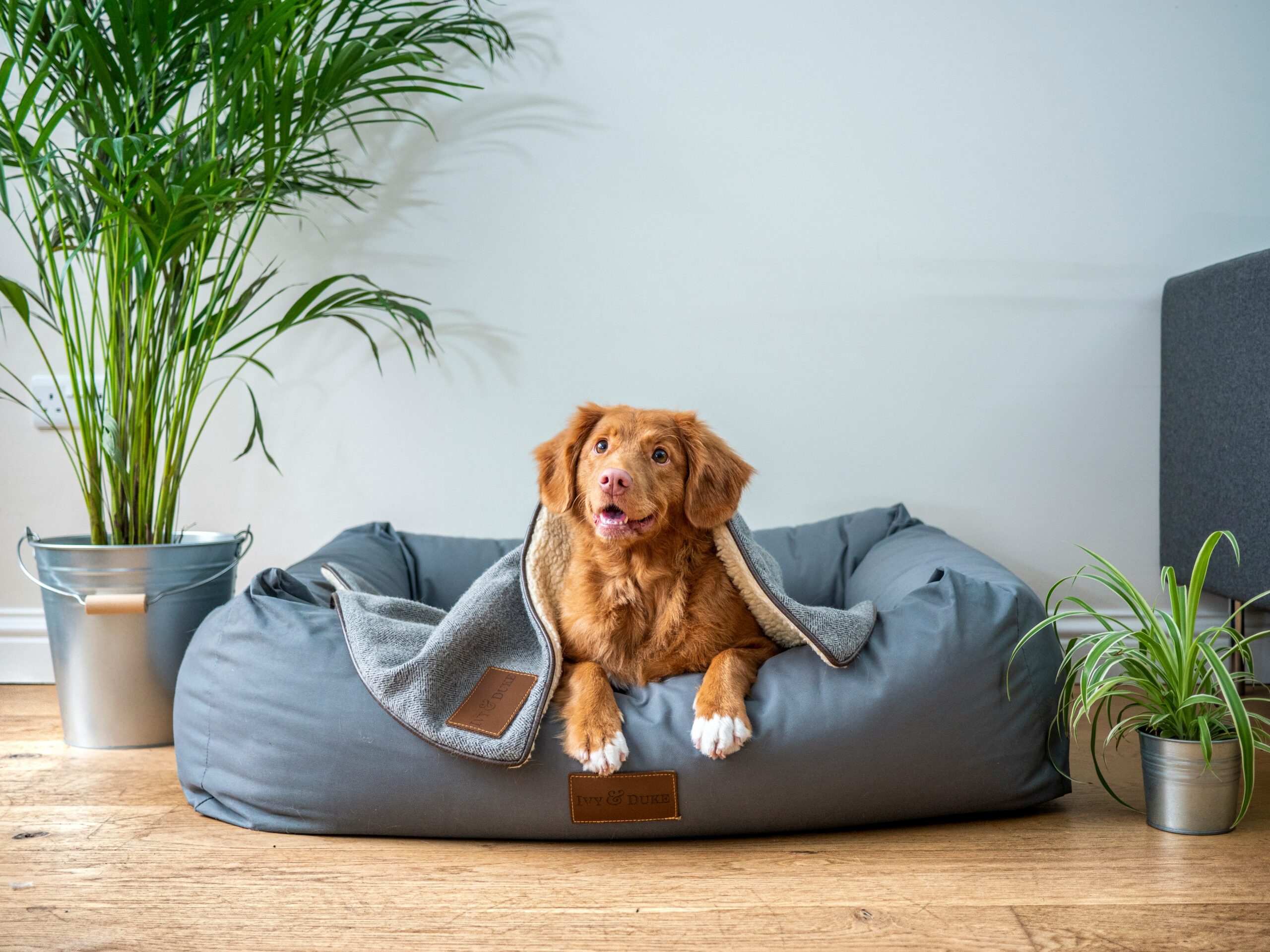
Every dog benefits from a “home base” – a bed, crate or mat where they can relax and know they won’t be bothered. This isn’t a punishment corner; it’s more like a bedroom.
Teach your dog that good things happen there: chews, stuffed toys, praise for choosing to lie down. Over time, you’ll find they put themselves there when they’re tired rather than pacing around looking for trouble.
Managing Access to Certain Rooms
It’s much easier to prevent chaos than to clean it up afterwards. Baby gates, closed doors and simple rules about which rooms are dog‑free can dramatically reduce the amount of potential damage.
If your dog can’t reach the kitchen bin or your favourite shoes, they can’t rip them up. Limiting access isn’t unkind; it’s part of setting them up to succeed.
Tidying Up Dog Gear
Toys, leads, towels and grooming bits have a way of multiplying. A couple of baskets or a small cupboard near the door can keep everything contained and make your home feel instantly less cluttered. It also makes it easier to grab what you need quickly before walks, which means less frantic rushing and a more calm routine.
Toilet Habits That Don’t Destroy Your Floors
Be Realistic About Life in the UK
In an ideal world, every dog would toilet outside, every time. In the real world, British weather exists. So do city flats on the top floor, shift work and puppies who physically cannot hold it yet. For many owners, having an indoor toilet strategy is the difference between manageable and constant stress.
It’s not “cheating” to plan for indoor accidents – it’s being practical and kind to both your dog and your flooring.
Pick One Toilet Strategy and Stick to It
Dogs thrive on consistency. Decide what you want your dog to do and stick with that plan as much as possible:
- Outdoor only: frequent trips at predictable times, especially after meals, play and naps.
- Outdoor plus a designated indoor spot: great for puppies, elderly dogs, those with medical issues or dogs in high‑rise flats.
Use the same cue word, take your dog to the same spot, and praise them warmly when they get it right. Mixed messages (sometimes indoors, sometimes told off for it) only slow everything down.
Indoor Toilet Options That Actually Work
If you’re going to allow or expect your dog to toilet indoors sometimes, give them a clear, consistent spot. Training pads and similar options can work well for this – but disposable pads stack up quickly in the bin and aren’t exactly friendly to your budget or the environment.
Reusable training pads are a smarter alternative for many homes. They’re designed to:
- Absorb more liquid than standard puppy pads.
- Lock in smells better.
- Be thrown in the washing machine and used again.
Reusable training pads like Potty Buddy’s washable dog pads can give your dog a reliable indoor toilet spot without filling your bin with disposable pads. By assigning that one area as the “allowed” place to go, you protect the rest of your floors and make cleaning‑up a routine rather than a drama.
Keep Mud, Fur and Smells Under Control
Mud Management at the Door
The battle against mess is often won or lost in the hallway. A sturdy doormat outside and inside the front door plus an old towel or dedicated dog cloth can transform your life on wet days.
Get into the habit of a quick wipe‑down of paws and legs before your dog charges through the house. It takes 30 seconds and can save 30 minutes of mopping later.
A Simple Grooming Routine
Regular brushing dramatically reduces the amount of hair on your furniture and clothes. Even short‑haired dogs benefit from a quick once‑over a few times a week. Combine this with a washable dog bed and, if you’re using them, washable toilet pads, and most of the “dog smell” in the home becomes easy to manage.
Washing Bedding and Pads
Set a simple schedule: beds and blankets every week or two, reusable pads as needed and at least once a week. Use a pet‑safe detergent and dry everything thoroughly to avoid damp smells. When your dog’s things are clean, your home feels fresher too.
Build Routines You Can Stick To
A Morning and Evening Checklist
It’s easier to keep chaos at bay when your day has a rhythm. For example:
- Morning: toilet, walk, breakfast, short play or training, settle.
- Midday (if possible): toilet break, quick sniffy walk or indoor game, settle.
- Evening: walk, dinner, calm play or cuddles, last toilet trip, settle.
You don’t have to follow it perfectly every day, but a loose structure helps your dog know what to expect and when to relax.
Training Calm Behaviour at Home
We often accidentally reward our dogs for being over‑excited: they bark, jump or nudge us, and we talk to them, look at them or push them away. To encourage calm instead, quietly reward the moments when they choose to lie down, chew a toy or sit politely.
Teaching a simple “settle” or “place” cue – where your dog goes to their bed or mat and relaxes – can be a game‑changer for busy households.
When to Ask for Help
If your dog’s behaviour feels overwhelming, if they’re having constant accidents or if you suspect anxiety or pain, it’s worth speaking to a qualified trainer or vet. Sometimes a small tweak in training or a medical check can make a huge difference to life at home.
Final Thoughts
Sharing your home with a dog doesn’t have to mean living in permanent chaos. With a bit of structure, some realistic expectations and a few thoughtful upgrades – from calm zones and indoor games to smarter toilet solutions like reusable pads – you can create a space that works for both of you.
Your dog gets to be happy, playful and loved. You get to enjoy them without constantly tripping over toys, scrubbing carpets or wondering what on earth that smell is. That’s a win all round.