
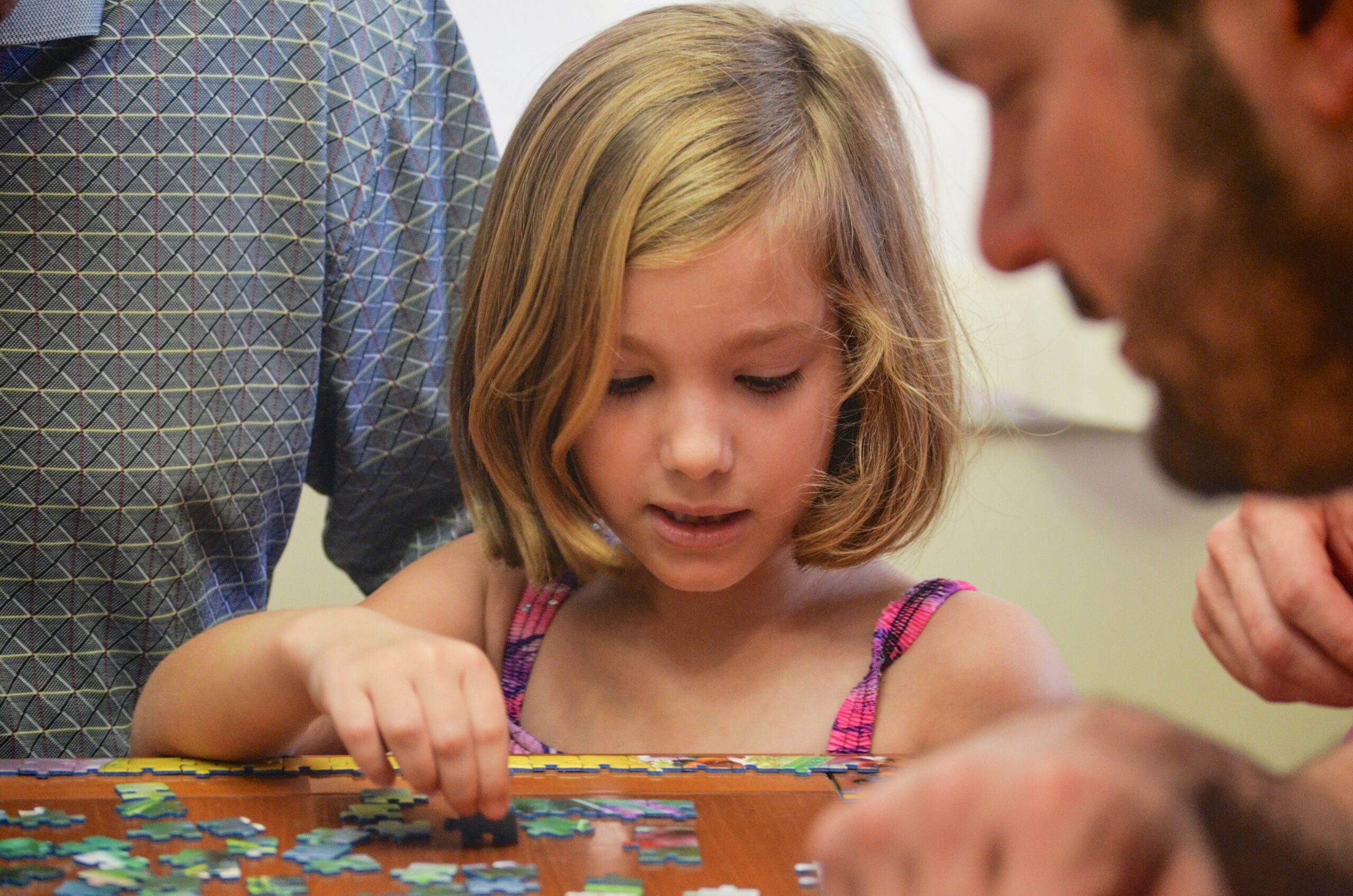
There’s a certain kind of quiet parenting win that happens when your child is completely focused on an activity and doesn’t realize they’re learning something valuable at the same time.
Not every educational activity feels that way, of course.
Some games advertised as “learning tools” feel suspiciously like homework with brighter colors. Kids notice that immediately. Parents do too.
The activities that tend to stick are the ones that feel genuinely fun first. The learning sneaks in afterward.
Over the past few years, I’ve started paying more attention to the kinds of games that naturally pull families together instead of turning into another thing parents have to supervise. Surprisingly, the best educational games usually create conversations, teamwork, and even a little healthy frustration along the way.
And honestly, those moments are often more valuable than the game itself.
Why Shared Games Matter More Than We Think
Kids remember experiences far more than instructions.
Most adults probably don’t remember random worksheets from childhood, but they do remember building forts, solving puzzles with siblings, or beating a parent at a board game for the first time.
Educational games work best when they create interaction rather than passive entertainment.
That’s one reason family game nights still matter, even with tablets and streaming everywhere. Sitting together and solving problems as a group teaches children things that are difficult to explain directly: patience, communication, persistence, and flexibility.
Sometimes a simple game can reveal a lot about how kids think.
One child wants to rush through every challenge. Another studies every detail before making a move. Some kids love competition. Others prefer cooperative games where everyone works toward the same goal.
Watching those differences play out naturally can actually help parents understand how their children learn best.
Board Games That Build Real Skills
Classic board games still hold up surprisingly well.
Games like Ticket to Ride, Blokus, and Sequence encourage planning, strategy, and decision-making without feeling overly educational. Even younger kids start learning how to think ahead and adapt when things don’t go according to plan.
And then there are the moments every parent recognizes.
Your child confidently announces they’ve figured out the “perfect strategy,” only to realize three turns later that they missed something obvious. There’s disappointment for about ten seconds, followed by immediate determination to try again.
That cycle is important.
Games teach resilience in a way lectures usually can’t.
Children become more comfortable making mistakes when the environment feels playful rather than evaluative.
Puzzle Games Encourage Patience
Some kids naturally enjoy puzzles. Others avoid them the second they feel difficult.
But puzzle-based games often become more enjoyable when parents participate too.
Jigsaw puzzles, escape-room games, scavenger hunts, and logic challenges create opportunities for collaboration instead of pressure. Kids who normally shut down during difficult tasks often stay engaged longer when they feel like they’re solving something together with someone else.
I’ve noticed this especially with kids who are nervous about being “wrong.”
When adults casually think out loud during a puzzle – “Hmm, maybe this piece belongs over here… nope, that didn’t work either” – children start seeing problem-solving as experimentation instead of performance.
That shift matters more than most people realize.
Sudoku is a great puzzle to bring into this mix, especially for slightly older kids. Filling the grid so each row, column, and box holds the numbers 1 to 9 is a gentle, screen-free way to build logic and patience, and it’s easy to scale the difficulty up as your child grows more confident. You can play it free online or print off puzzles to work through together at the kitchen table on sites like Sudoku Bliss, so there’s always a fresh challenge ready whenever the mood strikes.
Creative Building Games Never Really Go Out of Style
There’s a reason building toys stick around generation after generation.
Whether it’s LEGO sets, magnetic tiles, marble runs, or even improvised cardboard creations, kids love activities where they can test ideas and physically see results.
Building games naturally combine creativity with problem-solving.
A tower collapses. A bridge doesn’t hold weight. A design doesn’t work the way they imagined.
Instead of quitting, most kids instinctively rebuild.
That process quietly teaches engineering concepts, spatial awareness, and persistence without requiring formal instruction.
And sometimes the conversations that happen during those projects become the best part.
You start helping with a small structure and somehow end up spending forty minutes debating whether a cardboard elevator needs “emergency buttons.”
Coding Games Can Feel Surprisingly Creative
A lot of parents still assume coding activities are too technical for younger kids, but many modern coding games are designed more like puzzles or adventures than formal lessons.
That’s probably why they tend to hold kids’ attention better than expected.
Instead of memorizing commands, children experiment with sequencing, patterns, logic, and trial-and-error thinking. For many kids, it feels closer to solving a game than learning a technical skill.
My friend’s daughter started using simple coding games mostly because she liked customizing characters and unlocking new levels. A few months later, she was casually explaining loops and commands at dinner without realizing how much she’d absorbed.
That’s usually the sweet spot for learning.
When children are curious first, confidence tends to follow naturally.
Some families even use platforms designed to help kids learn coding through games as part of their regular screen time, especially when they want something more interactive than passive videos or endless scrolling.
Cooperative Games Often Work Better Than Competitive Ones
Not every child enjoys direct competition.
Some kids thrive on it. Others get discouraged quickly, especially if older siblings dominate every game.
That’s where cooperative games can make a huge difference.
Games where players solve challenges together tend to create a more relaxed atmosphere while still encouraging critical thinking and communication.
Kids learn how to contribute ideas, listen to others, and adapt strategies together instead of focusing entirely on winning.
And honestly, cooperative games usually lead to fewer dramatic family game-night meltdowns too.
Which parents appreciate just as much as the educational value.
The Best Educational Games Leave Room for Conversation
One thing I’ve started noticing is that the most memorable games are rarely the flashiest ones.
They’re the games that spark discussions afterward.
Kids start asking questions. They explain strategies. They imagine alternative outcomes. Sometimes they even continue the game long after it’s technically over.
That lingering curiosity is usually a sign the activity connected with them in a meaningful way.
Educational games don’t need to feel serious to be valuable.
In fact, the lighter and more natural the experience feels, the more likely children are to stay engaged.
It’s Really About Connection
Parents spend a lot of time worrying about screen time, learning gaps, productivity, and whether activities are “good enough.”
But children often remember simpler things.
They remember laughing during a ridiculous round of charades. They remember solving something difficult together. They remember feeling capable.
Educational games create opportunities for all of that at once.
Not perfectly every time, of course. Some nights end with unfinished puzzles and frustrated kids wandering off halfway through a board game.
But even those moments have value.
Because confidence, curiosity, and problem-solving skills usually grow slowly, through ordinary interactions that don’t seem particularly important at the time.
And sometimes a simple game around the kitchen table ends up teaching more than we expected.