
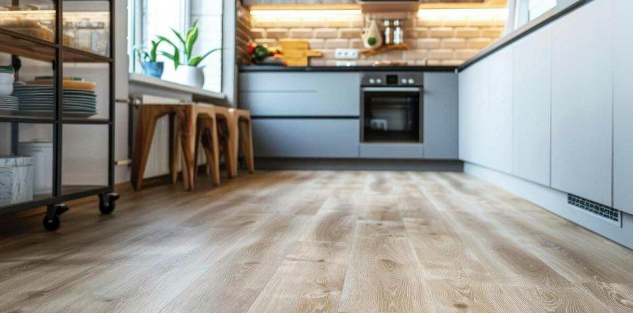
Choosing the right waterproof flooring for the kitchen is essential due to constant exposure to spills, moisture, and heavy traffic. The most reliable options include Luxury Vinyl Flooring, porcelain tiles, and sealed natural stone. These materials are fully or highly water-resistant, durable, and easy to maintain, making them ideal for long-term use in busy kitchens.
Among these, Waterproof Luxury Vinyl stands out for its fully sealed surface, which prevents water penetration while maintaining a realistic wood or stone appearance. It is also softer underfoot, making it more comfortable for extended use.
When comparing luxury vinyl flooring prices, it is considered a cost-effective option due to its durability, ease of installation, and low maintenance requirements. For homeowners seeking long-term value, it offers an excellent balance of cost, aesthetics, and performance, especially in high-moisture environments such as kitchens and utility spaces.
Best waterproof flooring for the kitchen: key options
The best waterproof flooring for the kitchen should combine durability, ease of cleaning, and high resistance to moisture, stains, and daily wear. It should also be suitable for underfloor heating and maintain stability in changing indoor conditions.
Top choices include:
• Luxury Vinyl Flooring (LVT) – Fully waterproof with a multi-layer core that resists expansion and moisture penetration. It offers excellent impact resistance, realistic wood or stone finishes, and works well in click or glue-down systems, making it ideal for both residential and high-traffic kitchens.
• Porcelain tiles – One of the most durable and water-resistant options available. With very low porosity, they prevent water absorption and are highly resistant to scratches and heat, making them perfect for demanding kitchen environments. Proper grouting and sealing are essential for long-term waterproof performance.
• Vinyl sheet flooring – A seamless installation reduces joints where water can enter, offering strong protection against spills and leaks. It is a cost-effective solution with good flexibility, making it suitable for irregular subfloors and easier installation in larger kitchen areas.
These materials provide long-term protection against water damage while maintaining hygiene, durability, and a modern aesthetic suitable for contemporary kitchen designs.
Waterproof flooring for kitchen and bathroom: core considerations
When selecting waterproof flooring for the kitchen and bathroom, it is important to evaluate:
- Water resistance level (fully waterproof vs water-resistant)
- Slip resistance, especially for bathrooms
- Durability and resistance to stains
- Ease of maintenance
- Compatibility with underfloor heating
Proper installation is equally critical. Even the best materials can fail if seams are not sealed correctly or if subfloor preparation is inadequate.
Waterproof flooring for bathroom: performance matters
In bathrooms, waterproof flooring must handle high humidity, frequent water exposure, and potential temperature changes.
The best-performing materials include:
- Waterproof Luxury Vinyl
- Porcelain tiles
- Natural stone (properly sealed)
These options prevent water absorption, reducing the risk of mould, swelling, and structural damage. Among them, vinyl flooring is particularly popular due to its flexibility and comfort.
Best waterproof flooring for bathroom: top solutions
The best waterproof flooring for a bathroom should provide both safety and durability.
Key features to look for:
- Slip-resistant surface
- Fully waterproof structure
- Anti-microbial or low-maintenance finish
- Thermal compatibility with heated floors
Waterproof Luxury Vinyl is often the preferred choice because it combines comfort, safety, and modern design. Tiles remain a strong competitor, especially for high-end bathroom designs.
Waterproof flooring for bathrooms: design and function
When choosing waterproof flooring for bathrooms, balancing design and functionality is essential. Bathrooms are high-moisture environments, so the flooring must resist water penetration, prevent mould growth, remain stable under humidity and temperature changes, and contribute to the overall interior design.
Popular design choices include:
• Stone-effect porcelain tiles – Highly durable with very low water absorption, making them ideal for wet areas. They offer a premium, natural stone look while providing excellent slip resistance when finished with textured surfaces.
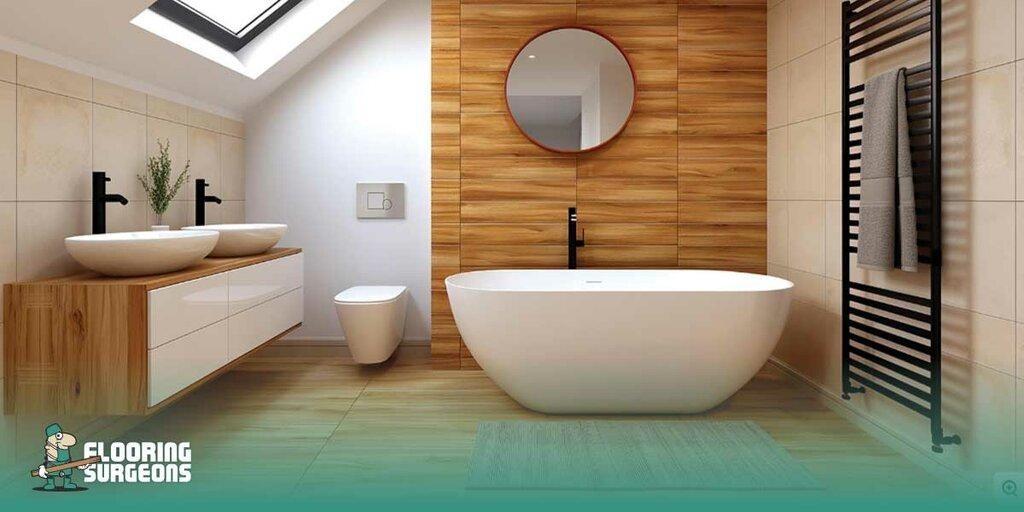
• Wood-effect vinyl flooring – A modern solution, such as Waterproof Luxury Vinyl, that replicates the appearance of real wood while offering a fully waterproof core. It is softer underfoot, quieter, and easier to maintain, making it ideal for residential bathrooms.
• Matte or textured finishes for slip resistance – These finishes improve safety by reducing the risk of slipping, especially in wet conditions, while still maintaining a contemporary and minimal aesthetic.
Additional considerations include proper subfloor preparation, sealed joints, and compatibility with underfloor heating systems. Choosing high-quality materials and correct installation ensures long-term durability, water resistance, and a stylish bathroom finish.
Cheap waterproof flooring for bathroom: budget-friendly options
For those seeking cheap waterproof flooring for the bathroom, there are several affordable yet effective solutions:
- Vinyl sheet flooring – cost-effective and seamless
- Basic LVT ranges – affordable versions still offering waterproof performance
- Ceramic tiles – budget-friendly with good durability
These options are ideal for rental properties, renovation projects, or cost-conscious homeowners who still want reliable water resistance.
Choosing the right material: expert tips.
When choosing waterproof flooring for bathrooms, balancing design and functionality is essential. Bathrooms are high-moisture environments, so the flooring must resist water penetration, prevent mould growth, remain stable under humidity and temperature changes, and contribute to the overall interior design.
Popular design choices include:
• Stone-effect porcelain tiles – Highly durable with very low water absorption, making them ideal for wet areas. They offer a premium, natural stone look while providing excellent slip resistance when finished with textured surfaces.
• Wood-effect vinyl flooring – A modern solution, such as Waterproof Luxury Vinyl, that replicates the appearance of real wood while offering a fully waterproof core. It is softer underfoot, quieter, and easier to maintain, making it ideal for residential bathrooms.
• Matte or textured finishes for slip resistance – These finishes improve safety by reducing the risk of slipping, especially in wet conditions, while still maintaining a contemporary and minimal aesthetic.
Additional considerations include proper subfloor preparation, sealed joints, and compatibility with underfloor heating systems. Choosing high-quality materials and correct installation ensures long-term durability, water resistance, and a stylish bathroom finish.
Final thoughts
Selecting the right waterproof flooring is essential for protecting your home from moisture damage while maintaining a stylish appearance. Whether for kitchens or bathrooms, materials such as LVT, porcelain tiles, and sealed vinyl offer reliable performance.
By carefully evaluating your needs, budget, and design preferences, you can choose the best flooring solution that ensures both functionality and long-term value for your home.
FAQs
Do you need to waterproof a bathroom floor?
Yes. Bathroom floors are exposed to constant moisture, so waterproofing is essential to prevent water damage, mould growth, and structural issues. Even with waterproof materials like Waterproof Luxury Vinyl, proper sealing and installation are still important.
How to waterproof a bathroom floor in the UK?
In the UK, waterproofing a bathroom floor typically involves installing a waterproof membrane or tanking system before laying the flooring. Using fully waterproof materials such as LVT, sealed tiles, or vinyl, along with properly sealed joints and edges, ensures long-term protection.
How do you waterproof laminate flooring in a bathroom?
Standard laminate is not waterproof, so it’s not recommended for bathrooms. However, if used, it must be treated with waterproof sealants at the joints and edges. Even then, it remains vulnerable, and a fully waterproof option, such as luxury vinyl flooring, is a better choice.
Can waterproof flooring be used in a shower?
Some waterproof flooring can be used in shower areas, but only specific products designed for wet zones, such as sealed tiles or specialised vinyl systems. Proper installation and full waterproofing of the subfloor are critical to prevent leakage.