
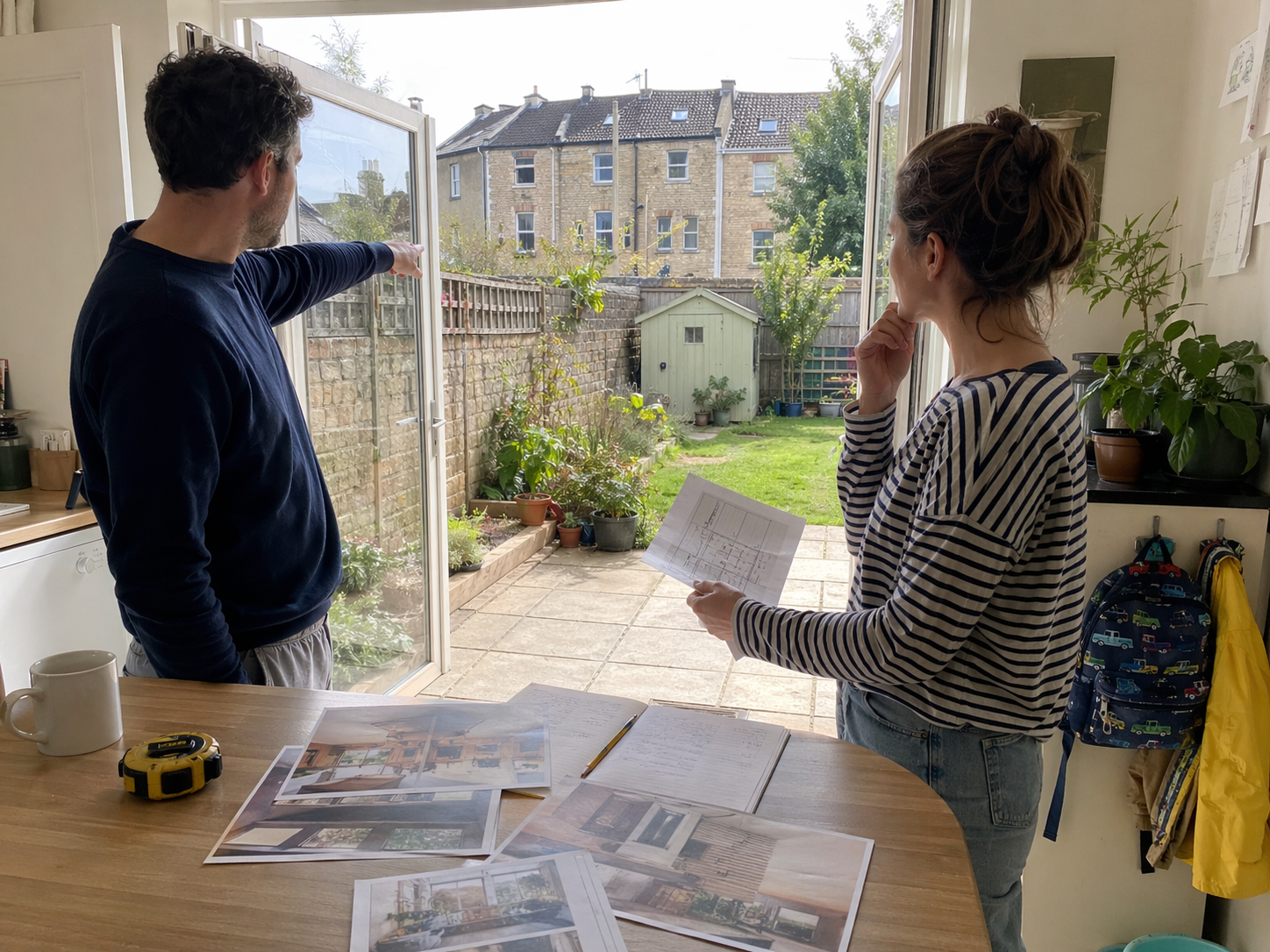
When you first start thinking about a home extension, it rarely begins with paperwork.
It usually starts with something much more ordinary.
Maybe the kitchen feels too small every time the whole family is in there. Maybe the dining table has become a work desk, homework station and dumping ground for post. Maybe you have stood in the garden with a cup of tea and thought, “We could build out a little bit here.”
That is how a lot of home projects begin. Not with architects, builders or council forms, but with everyday frustration.
You need more space. The house is nearly right, but not quite. So you start looking at ideas. You save a few pictures. You measure a wall. You talk about roof lights, bigger doors, better storage and where the sofa might go.
Then, at some point, someone asks the question that makes everything feel more serious:
“Do we need planning permission?”
That is often when people discover that a home extension is not just about what you want to build. It is also about showing exactly where it will go.
And that is where planning maps come in.
The extension idea that sounded simple
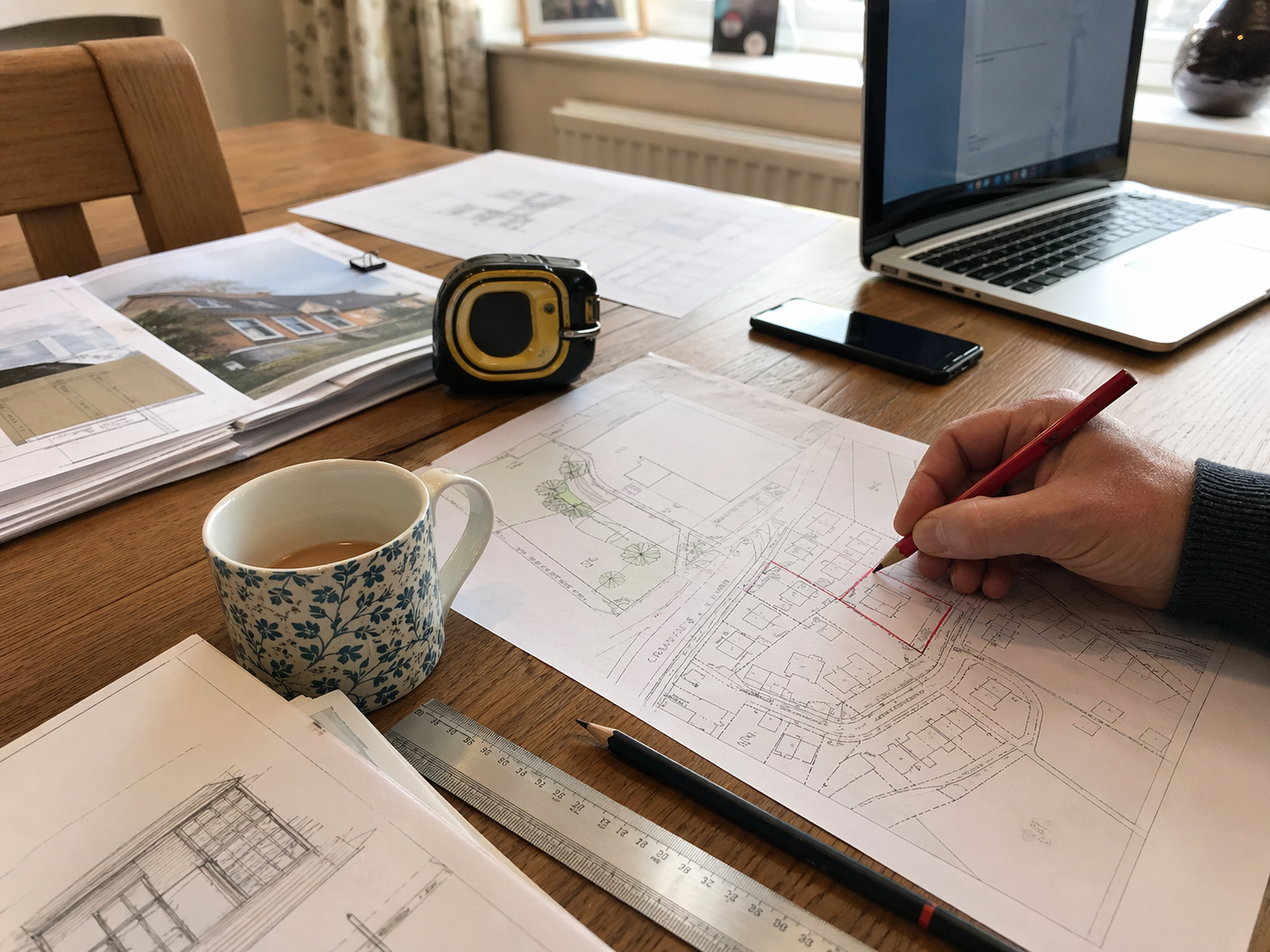
Let’s imagine a fairly normal home project.
A family wants to add a small rear extension. Nothing huge. Just enough space to make the kitchen feel less cramped and create a better dining area facing the garden.
At first, it feels straightforward. There is a bit of unused patio outside the back door. The neighbours have done something similar. The builder says it looks possible. Everyone starts getting excited.
Then the details start appearing.
- How close will the extension be to the boundary?
- Where does the drain run?
- Will the new wall affect the light to the neighbour’s window?
- Is the garden fence actually on the legal boundary?
- Has the house already been extended before?
- Will the council need a location plan or block plan?
None of these questions means the project is a bad idea. They are just part of turning a rough idea into something that can be checked, priced, and, if needed, submitted properly.
This is the bit many homeowners do not expect. You might think the first step is choosing a builder. Often, the first step is understanding the site.
Why “roughly here” is not enough
When you are standing in your own garden, it is easy to point and say, “The extension will go here.”
That works for a family conversation. It does not work as well for a planning application.
A council planning officer needs to see the property in context. They need to know where the house sits, where the boundaries are, how the site connects to the road, and where the proposed work will be.
A builder also needs clarity. So does an architect, planning consultant, or anyone helping with drawings.
If everyone is working from guesses, small misunderstandings can become expensive. One person might assume the boundary runs along the fence. Another might think it follows the hedge. Someone else may not realise there is a shared access path.
A proper planning map helps everyone start from the same place.
It does not solve every problem, but it removes a lot of confusion.
What is a planning map?
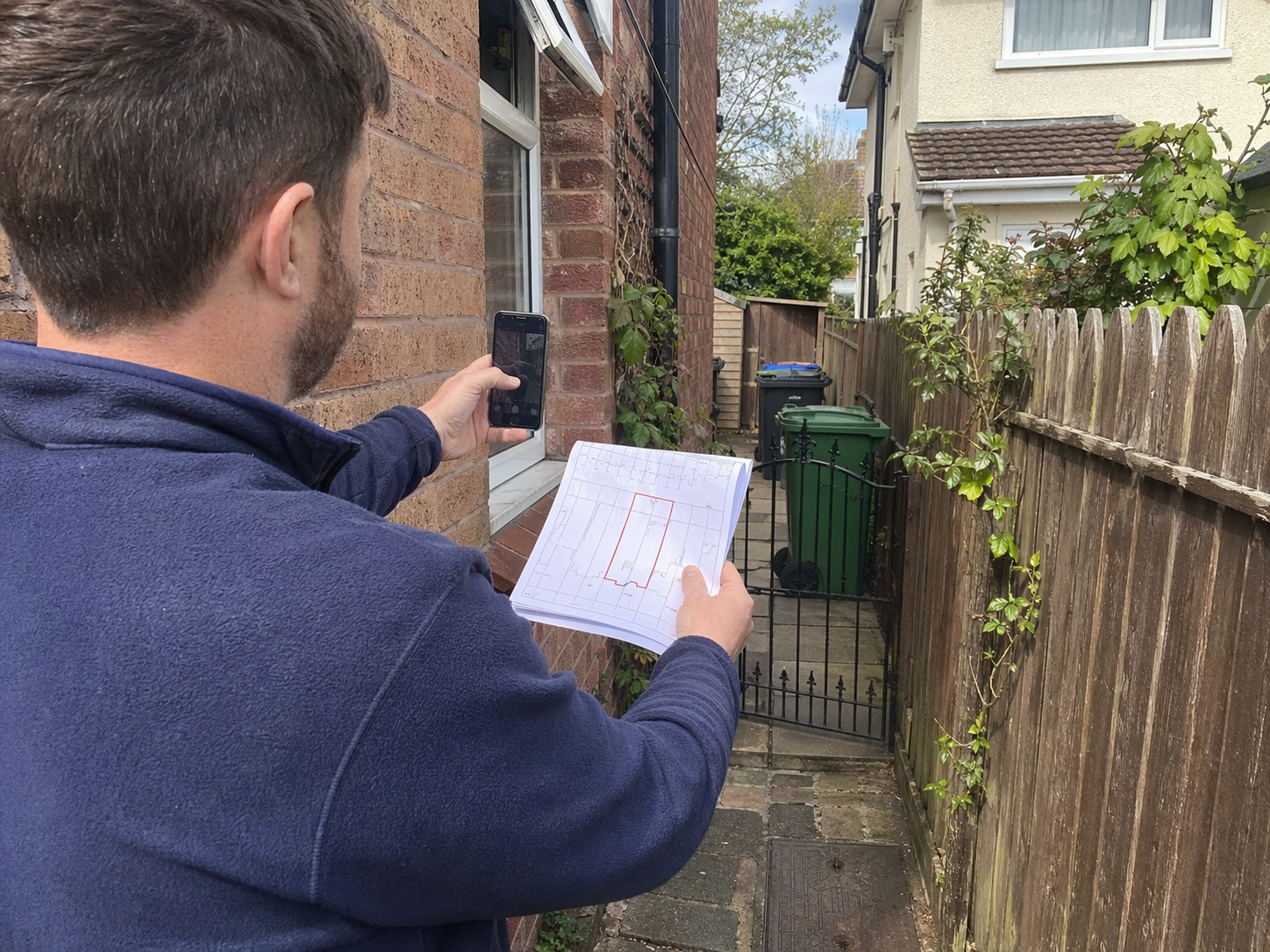
A uk planning map is a map used to support a planning application. For many home projects, you may need a location plan and a site plan, sometimes called a block plan.
A location plan usually shows the property and the surrounding area. It helps identify the site clearly. This is useful because the council needs to know exactly which piece of land the application relates to.
A site plan or block plan is more detailed. It usually shows the existing property, boundaries, nearby buildings and the proposed work. For an extension, this can help show where the new structure will sit in relation to the house, garden and neighbouring properties.
Most homeowners do not need to become experts in map scales or planning drawings. But it does help to understand the basics.
In simple terms:
- The location plan shows where your property is.
- The site plan or block plan shows what is happening on the plot.
- The red line usually marks the application site.
- The blue line may show other nearby land you own.
- The map needs to be clear, accurate and suitable for planning use.
That last point matters. A screenshot from an online map is not the same thing as a proper planning application map. An old title plan may not be right either.
For a smoother start, many people use online services that provide official Ordnance Survey-based maps. With OS Planning Maps, for example, you can search for the property, choose the right scale, mark the boundary and download the map for your planning documents.
That is much easier than trying to piece it together yourself on a Sunday evening while half-reading council guidance and wondering whether the red line should include the driveway.
The part homeowners often overlook
The planning map can feel like a small admin job, but it can shape the whole project.
Say you are planning a kitchen extension. Once you have the map in front of you, you might notice things you had not thought about properly.
- The side path is narrower than you remembered.
- The boundary is closer to the back wall than expected.
- The garage sits at a slightly awkward angle.
- The property next door has a window facing the proposed extension.
- There is less garden left over than it felt like when you were just imagining it.
This is not a bad thing. In fact, it is helpful.
It is much better to spot these issues early, while the project is still on paper, than after you have booked trades or paid for detailed plans.
A good map helps you have better conversations. It gives you something clear to show your designer or builder. It also helps you ask better questions when speaking to the council or checking local planning rules.
A practical checklist before you get carried away
Before you spend too much time looking at tiles, doors or kitchen islands, it is worth doing a few practical checks.
Here are some helpful ones.
1. Check whether planning permission is needed
Not every home extension needs a full planning application. Some projects fall under permitted development rights. Others need permission because of size, height, location or previous work done to the house.
Rules can also be different if your home is listed, in a conservation area, or subject to other restrictions.
So, before assuming either way, check your local council guidance or speak to someone who deals with planning regularly.
2. Look at the property boundaries
This sounds obvious, but boundaries are not always as clear as they seem.
Fences move. Hedges grow. Old walls get removed. Neighbours may have different memories of where the line sits.
Your planning map should help you think more carefully about the plot and what land is included in the application.
3. Notice drains, trees and access
These are the things people often forget because they are not exciting.
But drains, manholes, large trees, shared paths and narrow side access can all affect how easy a project is to design and build.
Take photos. Make notes. Do not rely on memory.
4. Think about neighbours early
You do not need to design your entire home around other people, but neighbouring properties do matter.
Will the extension overlook anyone? Could it block light? Will builders need access near a shared boundary? Will the work be visible from the road?
Thinking about these questions early can reduce stress later.
5. Keep all documents in one place
Create a folder for the project. Add your planning map, sketches, photos, quotes, notes and any council guidance you find.
This sounds boring, but it makes life easier. Especially when someone asks for “the latest version”, and you have six files called “extension plan final final new”.
Making the planning stage feel less overwhelming
One of the reasons people put off planning jobs is that they sound more complicated than they are.
Words like “site location plan”, “block plan” and “planning application map” can make the process feel formal and intimidating.
But for a normal homeowner, the goal is fairly simple. You are trying to show where your project is happening and how it relates to the land around it.
That is all.
The map is not there to make the project harder. It is there to make the project clearer.
Once you have the right map, the rest of the conversation becomes easier. You can show someone the site without needing to explain it from scratch. You can mark the proposed work. You can check the boundary. You can send it with drawings if a planning application is needed.
It turns a vague idea into something people can understand.
Do not leave it until the last minute
A common mistake is treating the planning map as something to sort right before submission.
That can work, but it is not ideal.
It is better to get the map early. Use it while you are still thinking through the project. Print it out if that helps. Scribble on it. Mark where the extension might go. Use it when talking to your builder or designer.
You may find that the first idea needs adjusting. Maybe the extension should be slightly smaller. Maybe the door position changes. Maybe the garden office works better on the other side of the plot.
Those are useful discoveries.
The earlier you make them, the less painful they are.
The dream still matters
It is easy for home improvement projects to get swallowed by forms, rules and practical details.
But the reason behind the project still matters.
You are not building an extension because you love paperwork. You are doing it because you want your home to work better.
You want somewhere easier to cook. Somewhere nicer to sit. Somewhere quieter to work. Somewhere, the family can gather without feeling like everyone is in the way.
That is the real goal.
The planning stage is just the part that helps you get there properly.
A good planning map will not choose your flooring or tell you where to put the dining table. But it will help set the project up on solid ground. It gives your idea a clear place, a clear boundary and a clearer path forward.
Start with the space, then plan the build
If you are thinking about an extension, garden office, porch, garage conversion or other home project, start by understanding the space you already have.
Walk around the property. Take photos. Check the rules. Look at the boundaries. Get the right planning map. Keep your documents tidy.
It may not feel as exciting as choosing paint colours or planning the first dinner in your new kitchen, but it is one of the most useful things you can do.
Because once the site is clear, the project feels less like a guess.
And a home project that starts clearly has a much better chance of ending well.