

Travel should be an enjoyable experience, but handling heavy luggage can make even a short trip tiring. Lifting a suitcase into a car, pulling it through a busy airport, or moving it across uneven pavements can become difficult as you get older.
The heavy luggage may also strain your shoulders, wrists, or back, especially when you need to manage several bags at once. Fortunately, choosing a suitcase with the right weight, wheels, handles, and storage capacity can make every stage of your journey easier.
You do not need to sacrifice packing space or useful features to travel comfortably. By understanding what to look for before buying, you can choose luggage that suits your needs and mobility.
Here are five practical factors to consider when selecting lightweight luggage for easier travel.
1. Choose a Suitcase That Is Light Before Packing
When comparing the best lightweight luggage for seniors, start by checking the empty weight of each suitcase. Something that would be easy to carry at a store may be a challenge when you pack clothes, shoes, toiletries, and other necessities. Thus, a lighter model will allow you to pack more without exceeding the overall weight.
For example, a 20-inch suitcase with a weight of 6.5 pounds might be simpler to carry than a bigger case with a weight of 10.5 pounds. However, the right choice depends on how much you need to carry and whether you can comfortably lift the bag into a vehicle or place it in an overhead compartment.
Also, consider the weight of the suitcase when it is fully packed. A lightweight case can also be used in case you are used to bringing along some extra clothing or souvenirs to make the overall weight manageable.
Nevertheless, it is important to remember that the weight restrictions of luggage may differ by airline, so check the regulations of your carrier before traveling.
2. Check the Wheels and Handles for Easy Movement

Even a light suitcase may prove hard to handle when its wheels become stuck, or its handle is uncomfortable. As you might have to pass through long corridors in the airport, the hotel lobbies, and busy railway stations, smooth movement should be a priority.
Find suitcases with strong, freely rotating wheels that enable you to change direction without lifting and dragging the bag. Four-wheel designs may also be effective in that a suitcase can roll beside you on the appropriate, flat surfaces. However, the performance of the wheels is affected by the floor, bag weight, and design.
Next, examine the handle. A retractable handle must be able to stretch out and be locked at a comfortable height. If it is too short, you may need to bend forward while walking. If it is too high, it will be uncomfortable to control the suitcase. Check the grip and verify if you are able to use the handle without straining.
Lastly, think of the places where you will be traveling frequently. The smooth wheels are easy to use in airports, but the rough pavements and uneven paths might need extra effort. Select luggage that is comfortable and manageable in the destinations you are likely to visit.
3. Select the Right Suitcase Size and Packing Capacity
Choosing the correct size allows you to balance space and comfort in packing. Even though a big suitcase might look convenient, it might encourage you to pack more than you need. As a result, the packed bag may become difficult to lift, even if it has wheels.
For short travels, a small carry-on suitcase can be a good option as it can fit clothing, medication, toiletries, and other necessities. For longer holidays, a medium-sized suitcase may offer a better balance between capacity and handling. A big suitcase will be useful when you need more space, but you should consider if you can carry its weight when full.
It also helps to compare suitcase size and interior capacity rather than relying on exterior dimensions alone. The internal design, lining, and compartments of a suitcase affect how much you can pack. Organized sections can make it easier to separate clothing, toiletries, and travel documents without adding extra bags.
4. Look for Practical Features That Improve Comfort
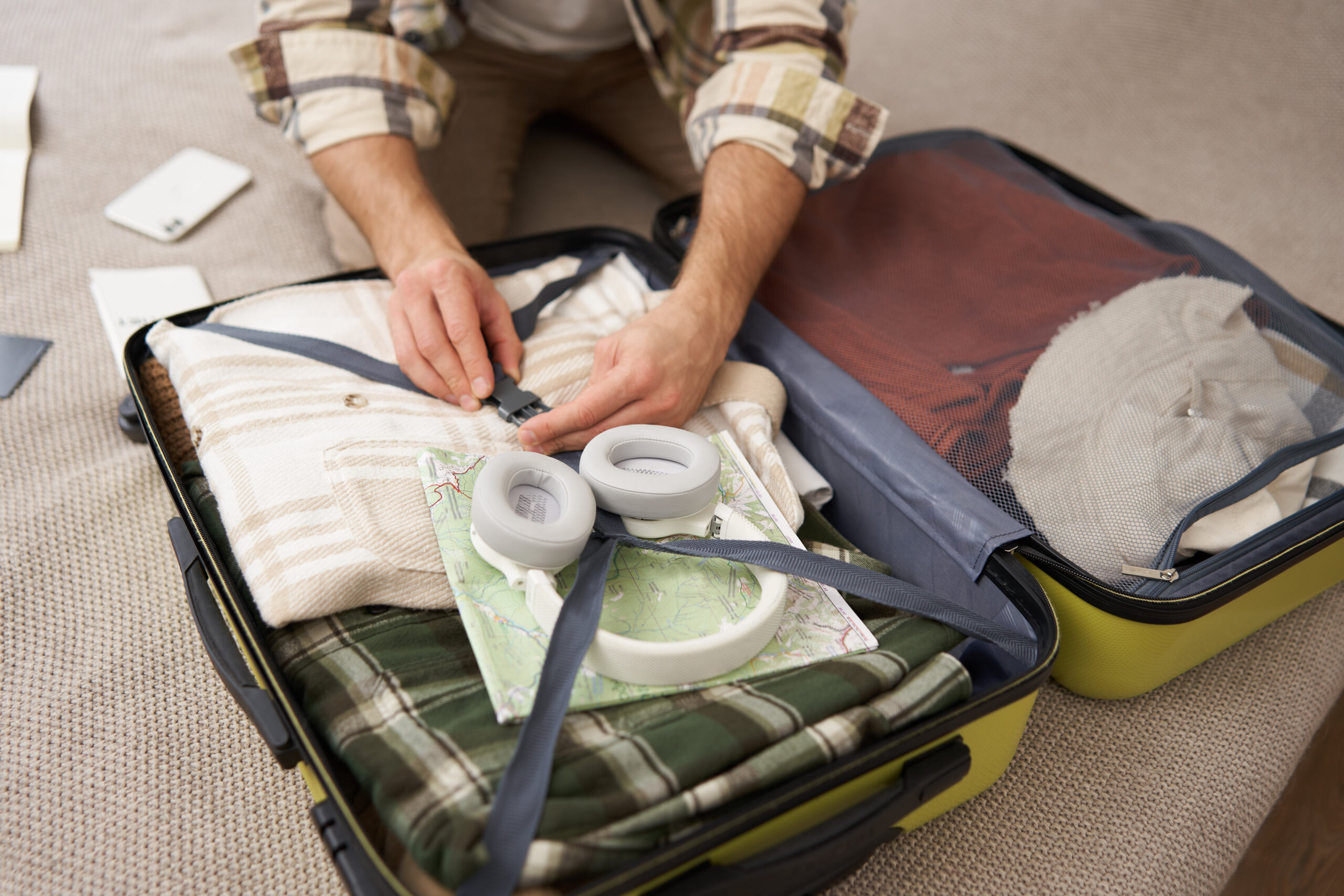
Even minor design features can help a lot during traveling. For seniors, the most useful features are those that minimize unnecessary lifting, make belongings easier to reach, and simplify daily activities.
Start with the opening and interior layout. A suitcase with a smooth opening and access to compartments can help you pack and unpack without constantly bending or searching for your belongings. Internal straps and compartments are also useful in securing items during shipping.
Next, there are security features. A built-in TSA-approved lock can be useful when traveling through airports that use TSA screening. However, read the lock instructions and ensure that you can operate it comfortably before departure.
Other conveniences may include an external water bottle holder and power bank ports. These features can help keep essential items accessible while traveling. When your luggage contains a power bank compartment, remember that generally you need to provide a compatible power bank separately, and follow airline regulations regarding carrying spare lithium batteries.
5. Consider Durability, Security, and Your Travel Needs
Lightweight luggage should still be sturdy enough to handle regular travel. A suitcase that is too fragile may crack, develop wheel problems, or require replacement sooner than expected. Therefore, consider the materials, construction, and warranty before making a purchase.
Next, consider how you normally travel. If you fly frequently, check airline baggage size and weight limits. For car journeys, choose a suitcase that fits easily in the trunk and is comfortable to lift. If you travel by train, look for luggage that moves easily through narrow aisles and fits safely in storage areas.
Warranty coverage is another useful consideration. Review what it covers, how long the protection lasts, and whether repairs or replacements require specific conditions. A warranty can provide added reassurance, but it does not replace careful handling.
Most importantly, think about your physical comfort. If lifting a packed suitcase causes pain or feels unsafe, choose a smaller bag, pack less, or arrange assistance when needed. The goal is to make travel more comfortable, not to carry more than you can manage.
Conclusion
Choosing lightweight luggage for seniors involves more than finding the lightest suitcase available. You should consider its empty weight, wheel performance, handle comfort, packing capacity, useful features, and durability.
By matching these details to your travel habits and physical needs, you can reduce unnecessary strain and move through your journey with greater confidence. Before purchasing, test the suitcase whenever possible and consider how it will feel when fully packed. The right luggage should make travel simpler, more comfortable, and easier to enjoy.