

Almost every home has one room that’s freezing in January and another that bakes in July. And the cost of fighting it isn’t shrinking: the U.S. Energy Information Administration expects the average residential rate to reach 18.2 cents per kilowatt-hour in 2026, according to its May 2026 Short-Term Energy Outlook.
You don’t need a remodel to fix that. Start with real numbers, since Electrical Estimating Services can tell you what wiring or panel work will cost before you commit. Then pick the upgrades that fit your budget. In this guide, we will share the small home upgrades that improve your home efficiency.
Why Smart Home Upgrades Improve Energy Efficiency
Think about how much energy your house burns when nobody’s paying attention. The furnace warms an empty living room. Lights stay on in the garage. A TV that’s “off” still sips power all day. Smart upgrades target that waste quietly.
Here’s what they actually do:
- Automate: Settings follow your schedule and the weather, so you don’t have to adjust things by hand.
- Measure: Usage data shows which appliance is quietly eating your budget.
- Shift: Scheduling pushes heavy loads to cheaper hours.
- Even things out: Steadier temperatures mean fewer hot and cold spots.
It matters because costs keep climbing. EIA’s May 2026 data shows the average U.S. summer bill reaching $197, up 6% from $185 in 2025.
Metric | 2025 | 2026 (forecast) | Change |
| Price (cents/kWh) | 17.51 | 18.27 | +4.3% |
| Monthly use (kWh) | 1,058 | 1,076 | +1.7% |
| Monthly bill | $185 | $197 | +6.0% |
10 Small Home Upgrades That Improve Home Efficiency
The upgrades below run roughly from lowest cost to highest. Most are weekend jobs, and none needs a full renovation.
- Seal Air Leaks Around Doors and Windows
Here’s a quick test. On a windy day, hold a lit incense stick near a window frame and watch the smoke. If it wiggles sideways, air is getting through. Outlets, attic hatches, and the gap under the back door do the same thing. Caulk the cracks that don’t move, add weatherstripping where things open and close, and put a sweep on exterior doors. One afternoon, a few bucks. You’ll feel it first in the coldest corners.
- Add Attic Insulation
Your attic is the biggest lid on the house, and in many older homes it’s thin. Walk up and look. If you can see the ceiling joists, add more. Blown-in cellulose or fiberglass fills the awkward gaps that batts miss. The U.S. Department of Energy lists a recommended R-value for each climate zone, so check yours before you buy. Seal the leaks first, then insulate on top. Done right, it helps in January and again in July.
- Install a Smart Thermostat
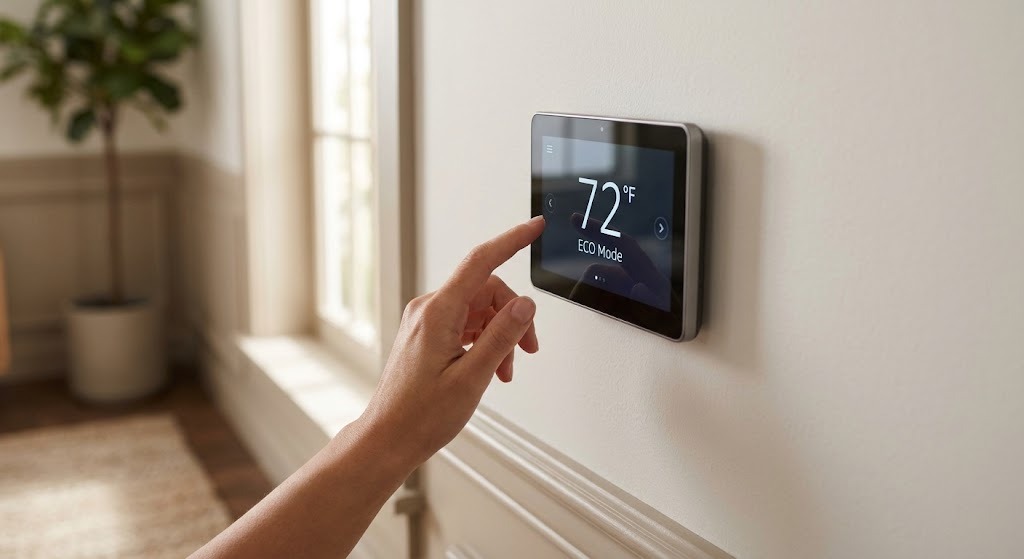
Check three things before you buy a smart thermostat.
- Check the wiring, because many models need a C-wire.
- Check whether it works with your heating and cooling type.
- Check for utility rebates, which can significantly cut the price.
Once it’s in, the thermostat learns when you leave and when you’re back, then adjusts on its own. Most come with app control and monthly usage reports. Setup takes about an hour. Set a schedule once and mostly forget about it.
- Swap In LEDs and Motion Sensors
Lighting is the laziest upgrade on this list, in a good way. Replace the bulbs you use most; start with the kitchen and living room with ENERGY STAR-certified LEDs. They use far less power than old incandescents and last much longer.
Then think about where lights get left on: bathrooms, garages, and hallways. A motion sensor switch fixes that without any effort from the family. LEDs also run cooler, so your air conditioner isn’t fighting bulb heat.
- Use Smart Power Strips and Plugs
Turn your TV off. Is it really off? Most TVs, game consoles, and cable boxes keep pulling a trickle of power in standby, often called phantom load. A smart power strip detects when the main device shuts down and cuts power to the rest, like speakers and streaming sticks.
Smart plugs handle single items and let you set on-off schedules from your phone. They’re cheap and take minutes to set up. Home offices and media centers gain the most.
- Seal and Tune Up Your Ductwork
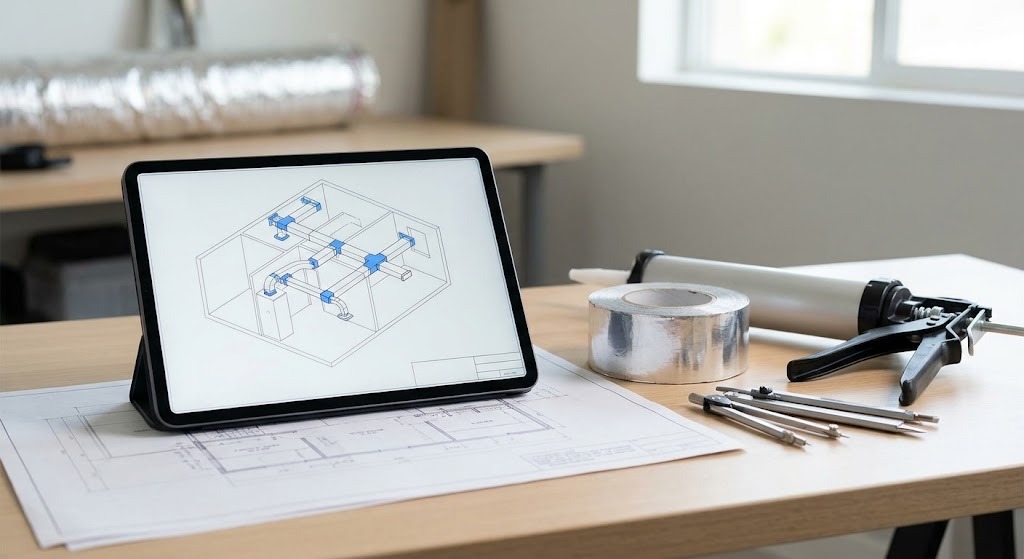
If your ducts leak, you’re heating the attic. It’s that simple. Seal visible joints with mastic or foil tape (regular duct tape dries out and fails), and wrap any runs that pass through unheated space. Planning a bigger retrofit or a new layout?
An Outsourced CAD Drafter can turn your sketches into clean duct plans your contractor can price and build from. And change the HVAC filter every one to three months, because a clogged one makes the whole system strain.
- Put Ceiling Fans to Work
Fans cool people, not rooms, so switch them off when you leave. In summer, set them to spin counterclockwise. The breeze feels several degrees cooler, and you can nudge the thermostat up. In winter, do the opposite: flip the small switch on the motor housing and run the fan clockwise on low, and it pushes trapped warm air back down. Swapping a fixture? Have an electrician confirm the box can hold a fan. Nobody wants a wobbler overhead.
- Turn Down and Wrap the Water Heater
Most water heaters are set higher than you need. Drop yours to 120°F, which is fine for daily use. Got an electric tank? A snug insulating jacket cuts standby heat loss, and wrapping the first few feet of the hot pipe does too.
Gas tanks have clearance rules, so read the manual before covering anything. If yours is near the end of its life, price out a heat pump water heater, which uses far less electricity than a standard electric tank.
- Dress Your Windows
New windows are expensive, and you may not need them. Cheaper moves go a long way. Close cellular shades on hot afternoons. On sunny winter days, open south-facing curtains to let in free warmth, then close lined curtains at dusk to hold it.
For older single-pane glass, clear plastic film kits trap a thin layer of air that blocks drafts. They cost a fraction of replacement windows and peel off in spring, which suits renters too.
- Choose ENERGY STAR Appliances at Replacement Time
No need to rip out a working fridge. But when something dies, shop smart. ENERGY STAR-certified refrigerators, dishwashers, and washers use less energy and water than standard models.
Read the yellow EnergyGuide label, which estimates yearly running costs, and match the size to your household, because bigger isn’t better. Check your utility for rebates too. If you’re replacing several appliances, start with the oldest and thirstiest. It adds up over a decade.
Quick Upgrade Comparison and Next Steps
Upgrade | Cost | Who Does It |
| Air sealing | Low | DIY |
| Attic insulation | Medium | DIY or pro |
| Smart thermostat | Low to medium | DIY or electrician |
| LEDs and sensors | Low | DIY |
| Smart power strips | Low | DIY |
| Duct sealing | Low to medium | Pro |
| Ceiling fans | Medium | Electrician |
| Water heater wrap | Low | DIY |
| Window coverings | Low | DIY |
| ENERGY STAR appliances | Higher | Retailer install |
Start cheap, then go bigger. Once the house is sealed and insulated, it’s fair to ask whether you want to generate your own power. Residential Solar Installation usually makes the most sense at that point, since a tighter home needs a smaller, cheaper system.
Final Words
You don’t need a big remodel to get a more comfortable house and a smaller bill. Seal the leaks, add attic insulation, cut standby power, and let smart controls follow your schedule. Electricity prices are still rising, so every small fix counts. Pick two or three this month, watch your usage, and add more as you go. You’ll feel it, and your bills should show it.
FAQs
Which upgrade should I do first?
Air sealing and attic insulation. They lower the load on your heating and cooling, which helps every other upgrade work better.
Do smart thermostats really save money?
They can if you use schedules. The Department of Energy says a 7 to 10°F setback for eight hours a day can save up to 10% a year.
Can I do these upgrades myself?
Most of them, yes. Sealing, LEDs, and power strips are easy to do yourself. Bring in an electrician for fan or thermostat wiring.
How long until these upgrades pay off?
Low-cost ones can pay back in a year or two. Bigger projects take longer, so check rebates first.