
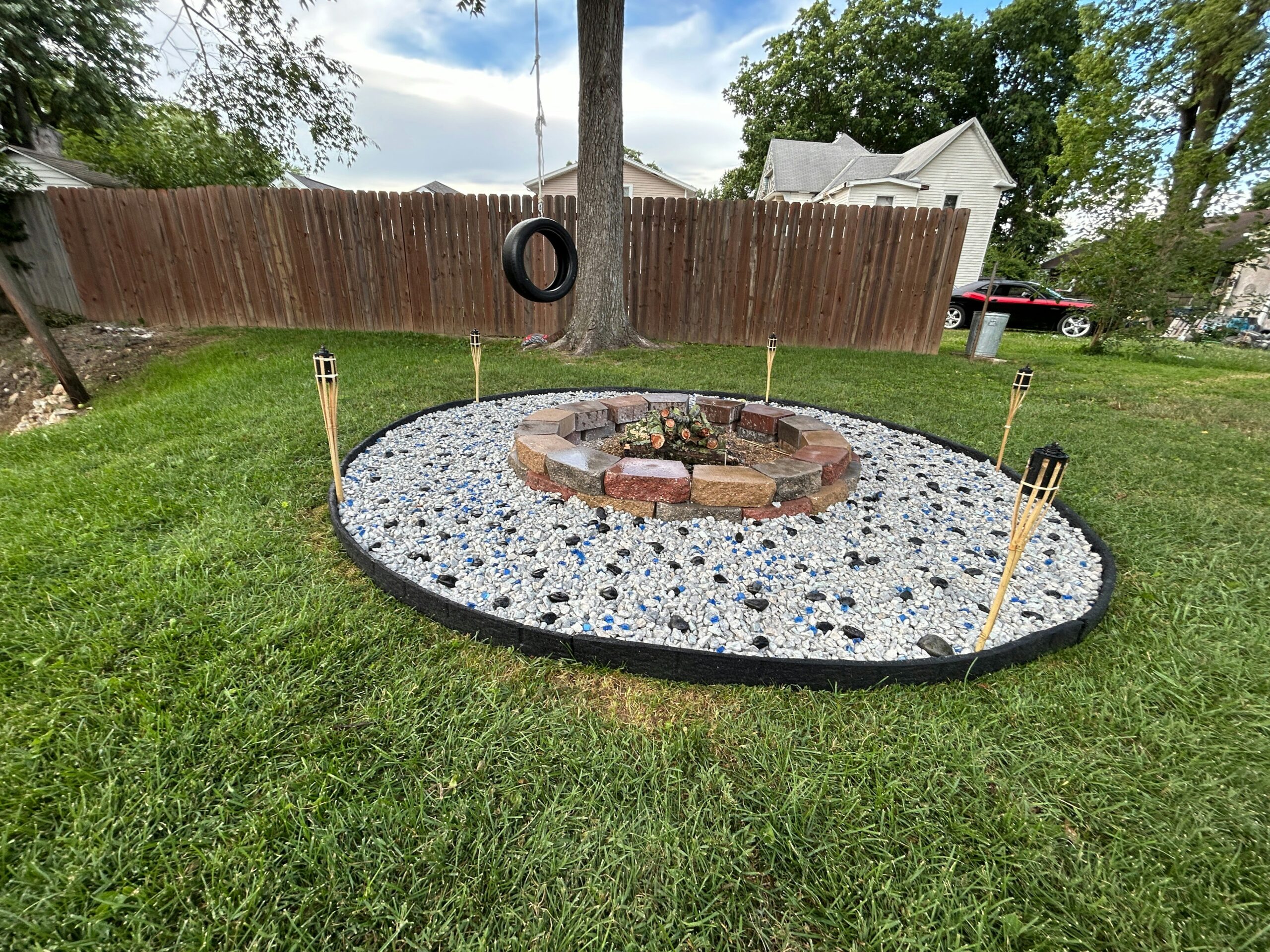
The grass has been cut. The planting beds have clean edges. There is a patio, a few established trees, maybe a path to the gate, and enough outdoor furniture to suggest that people are supposed to spend time there. Yet nobody really does. Someone carries a chair into the shade because the patio gets too hot.
The children cut across the lawn instead of using the walkway. One corner stays soggy after heavy rain. A sprinkler keeps hitting the driveway. The side gate is technically accessible, but getting a wheelbarrow through it feels like solving a puzzle. None of those problems necessarily makes a yard look unfinished. They make it feel unfinished.
A usable landscape is more than a collection of attractive plants and outdoor features. It has to account for movement, water, sunlight, maintenance, privacy, changing seasons, and the ordinary routines of the people who use the property. That is where some otherwise attractive yards go wrong. They were arranged to look complete rather than designed to work as a complete system.
Start With What Actually Happens Outside
Before changing anything, forget for a moment what the yard is supposed to be. Watch what people actually do there. Where does someone step when taking out the trash? Which door does the dog head toward? Where do guests naturally gather? Which section of the patio becomes uncomfortable in late afternoon? Where do children run?
Where do puddles appear after rain? Those details can tell you more about a landscape than a perfectly staged photograph. Penn State Extension’s Principles of Garden Design recommend planning around the needs of family and pets, including uses such as play areas and patios, while also considering changing maintenance needs. That principle applies well beyond garden beds.
A Normal Tuesday Is More Revealing Than a Garden Party
Outdoor spaces are often planned around their most appealing use: weekend entertaining, summer barbecues, or evenings around a fire. But most yards spend far more time dealing with ordinary life.
Think about bringing groceries from the driveway. Moving garbage bins. Taking a pet outside before work. Reaching a hose. Getting a mower from storage to the lawn. Walking from the house to the car during rain.
If those routine movements are awkward, decorative improvements rarely fix the underlying problem. A beautiful sitting area at the far end of the garden may sound appealing, for example. If reaching it means carrying drinks across wet grass every time, it may gradually become an expensive place nobody uses.
Pay Attention to the Spaces Everyone Avoids
Unused areas often deserve attention. People may avoid a part of a yard because it is exposed to intense afternoon sun, overlooked by neighboring windows, damp enough to attract mosquitoes, or uneven enough to make a chair wobble.
Sometimes the solution is not adding anything. It is understanding what makes the space uncomfortable in the first place.
Follow the Footsteps Before Redrawing the Landscape
A worn trail through otherwise healthy grass can look like a lawn problem. Sometimes it is actually a design clue. People often choose the most convenient route.
If everyone repeatedly ignores a curved walkway and crosses the lawn between the back door and gate, the problem may not be that people refuse to use the path. The path may simply be in the wrong place.
The Shortest Route Usually Wins
Landscape circulation sounds technical, but the idea is simple: people should be able to move naturally between places they frequently use. That includes connections between the house, driveway, gates, patio, storage areas, lawn, garden, pool, play areas, and other outdoor spaces.
A route can exist and still be inconvenient. A path may be too narrow when two people pass each other. Shrubs can gradually encroach on a walkway. Steps may interrupt a route used to move equipment. A gate may open toward an obstacle.
Individually, those issues seem minor. Repeated every day, they determine whether a yard feels effortless or irritating.
Desire Lines Tell You Something
Landscape designers sometimes pay attention to the informal routes people create through a space. You may notice the same idea around parks, campuses, and public buildings where repeated foot traffic creates an unofficial path.
A household can create its own version. Before blocking such a route or reseeding worn turf for the fifth time, ask why people keep choosing it. The wear may be identifying where a more useful connection belongs.
Shade Can Decide Where Outdoor Life Happens
A patio can occupy the perfect position on a landscape plan and still sit empty for much of the day. The sun gets a vote. A comfortable breakfast area and a comfortable late-afternoon sitting area may require very different conditions. The same is true for lawns, play spaces, vegetable gardens, ornamental plants, and trees.
Look at the Yard at More Than One Time of Day
Do not judge sunlight from a single visit outside. Walk through the yard in the morning, around midday, and again later in the afternoon. Seasonal differences matter too because sun angles change and deciduous trees gain or lose their leaves.
Colorado State University Extension’s Tree Placement: Right Plant, Right Place explains that trees can define outdoor rooms, frame or mask views, and should be selected for the growing space available at maturity.
That long-term perspective matters. A young tree placed to provide future shade may look undersized today. An established tree planted too close to a structure may create an entirely different problem years later.
Shade Should Solve a Problem
Planting a tree because “that corner needs something” is different from deciding that a particular area needs afternoon shade, screening, or spatial definition and then selecting an appropriate plant for that job.
The second approach begins with function. That does not make a landscape less attractive. Often it makes aesthetic decisions easier because every major element has a reason to be there.
Water Can Quietly Control the Whole Yard
Few things make an outdoor area harder to use than water going where it should not. A patch of lawn that remains wet for days, soil washing across a walkway, mulch repeatedly leaving a bed, or water pooling near a patio should not automatically be treated as separate cosmetic annoyances. They may all point toward how water is moving through the property.
Watch the Yard During Rain, Not Just Afterward
When possible, observe what happens during a substantial rainfall. Where does water enter the property? Which direction does it move? Does it flow away from structures? Does it collect in depressions? Does runoff from a hard surface concentrate in one location?
In its guidance on minimizing runoff from shoreland property, University of Minnesota Extension recommends evaluating slope, soil type, existing vegetation, and the routes runoff naturally follows before developing a landscape plan.
Water problems can have several causes, and the visible puddle is not necessarily the whole diagnosis. Soil conditions, grading, concentrated roof runoff, compacted areas, irrigation, hard surfaces, and neighboring drainage patterns can all contribute. That is why major drainage changes deserve more thought than simply filling the lowest spot with soil.
Irrigation Should Respond to the Landscape
Automatic irrigation is useful precisely because homeowners do not have to stand outside holding a hose. That convenience can also make problems less obvious.
A sprinkler may operate early in the morning while nobody is watching. A damaged head can send water onto pavement, and homeowners who need professional help can turn to Taylor Anthony 365 for irrigation and landscape services when the problem goes beyond a simple scheduling adjustment.
EPA WaterSense recommends inspecting irrigation systems for leaks, broken or clogged heads, keeping spray off pavement, and adjusting schedules as seasons change. It also advises grouping similar plants within irrigation zones and accounting for sun or shade exposure and plant type.
More water is not automatically better. EPA WaterSense also advises turning off a sprinkler if water begins to pool rather than continuing to apply water faster than the landscape can absorb it. The goal is not to make every sprinkler run for the same number of minutes. The goal is to supply appropriate water to the landscape that actually exists.
Put Plants Where They Have a Job to Do
It is easy to choose plants one shopping trip at a time. A shrub looks good at the nursery. A flowering perennial catches someone’s eye. There is an empty spot beside the fence. Problem solved.
For a while. Several years later, the shrub covers half the window, another plant struggles because the area is too wet, and the once-small tree is competing for space with a walkway.
Plan for the Plant You Will Have, Not the Plant You Buy
Mature size matters. Penn State Extension’s Landscaping for Wildlife: Trees, Shrubs, and Vines advises checking a plant’s mature dimensions, sun exposure, and site conditions before deciding where it belongs.
Colorado State University Extension’s Deciduous Shrubs guidance likewise recommends matching plant function and mature size to conditions such as soil, moisture, and sun or shade.
That affects more than plant health. Mature plants influence sightlines, access, shade, privacy, airflow, walkway width, maintenance, and the visual proportions of the entire property.
A landscape can feel spacious when newly installed and cramped five years later if every plant was chosen for its installation-day size.
Not Every Empty Space Needs Filling
Negative space has value outdoors just as it does indoors. A patch of lawn may provide flexible play space. An opening between plant groups can reveal a view. An uncomplicated strip beside a walkway can make maintenance easier. Open space around a patio can prevent it from feeling enclosed.
The instinct to fill every gap often creates more work without making the yard more useful. Before adding another plant, ask what function is currently missing. If there is no answer, leaving the space alone may be the better design decision.
The View From Inside Matters Too
A yard does not disappear when you close the door. For much of the year, many people experience their landscape just as often through a kitchen window, home office, dining room, or glass door as they do while standing outside. That makes interior sightlines part of landscape planning.
Decide What You Want to See
A well-positioned tree can frame a distant view. Planting can soften a fence. A focal point can draw attention away from equipment or a neighboring structure. The reverse is equally important. A beautiful specimen plant may be wasted behind a solid wall. An unsightly utility area may sit directly within the primary view from the dining table.
Walk through the house and look outward before deciding where every landscape feature belongs. The best location on a site plan may not be the best location from the places where the property is actually experienced.
Think About the Yard After Sunset
Some landscapes function beautifully until the sun goes down. Then the steps disappear into shadow, the route to the gate becomes difficult to see, and the patio light illuminates the door brilliantly while leaving everything beyond it dark. Landscape lighting works best when it begins with use.
Light the Journey Before the Decoration
First consider entrances, paths, steps, changes in elevation, gathering areas, and frequently used routes. Decorative effects can come afterward.
More light is not necessarily more useful light. Glare can reduce visibility, and fixtures aimed without regard for neighboring properties can create unnecessary annoyance.
A practical plan considers where people need to see, what should remain dark, and how the outdoor space is used after sunset. The result can still be atmospheric. It simply starts with function rather than spectacle.
Maintenance Is Part of the Design
Every landscape creates work. Someone has to mow the grass, trim edges, remove leaves, manage weeds, monitor irrigation, prune plants, and deal with whatever grows differently than expected. The question is whether the amount and type of work fit the people responsible for it.
A Beautiful Design Can Produce an Awkward Maintenance Routine
Imagine a narrow strip of grass too small for convenient mowing but large enough to require attention. Or shrubs planted so tightly against a fence that pruning the back becomes difficult. Or dozens of small bed edges that look impressive after installation but require constant trimming to remain crisp.
Those are design decisions disguised as maintenance problems. Colorado State University Extension’s Perennial Gardening guidance recommends considering available maintenance time, mature plant size, and access through larger planting areas when planning a garden.
That is an important reality check. A landscape should not be evaluated only by how it looks immediately after installation. It should also be judged by what will be required to keep it functioning several seasons later.
Low Maintenance Does Not Mean No Maintenance
Artificially simple landscapes can still create work.
Mulch needs replenishment. Irrigation needs inspection. Trees and shrubs grow. Weeds find openings. Drainage patterns can change as vegetation matures or soil settles.
A better goal is manageable maintenance. Choose materials, plants, and layouts whose upkeep matches the time, budget, and expectations available.
Leave Room for the Yard to Change
The household using a yard today may not be the household using it five years from now. Children grow out of play equipment. Pets arrive. People begin working from home. Outdoor entertaining becomes more important—or less. Mobility changes. Trees get larger.
A rigid landscape can make every lifestyle change expensive.
Build a Strong Framework and Let Some Spaces Stay Flexible
Permanent elements deserve the most careful placement. Patios, retaining walls, large trees, drainage features and major pathways are difficult or costly to move. Flexible elements such as furniture, containers, small planting areas and open lawn can adapt more easily.
That suggests a useful order of thinking: Get circulation, water movement, major structures, and long-term planting decisions right first. Then decorate. A yard does not need to answer every possible future need. It simply should not make reasonable changes unnecessarily difficult.
Fix Friction Before Adding Features
When a yard feels disappointing, adding something new is tempting. A pergola, fire feature, new bed, or larger patio may be useful, but it can also distract from the problem that already makes the yard difficult to use.
A new dining set will not make an exposed patio comfortable at the hottest time of day. More plants will not solve poor drainage. Decorative path lights will not make an inconvenient route more logical.
Before asking, “What should we add?” ask: What makes this yard difficult to use now? That question shifts the project from collecting features to solving problems.
A Useful Yard Is a System, Not a Collection of Projects
Landscape problems frequently overlap. Moving a path changes planting space. Adding shade affects what can grow beneath it. Expanding hardscape affects runoff. Changing plants may alter irrigation needs. Installing a new bed changes mowing and maintenance routines.
EPA WaterSense’s Water-Smart Landscape Design recommends a similarly holistic approach that considers landscape design, plant selection, soil health, irrigation, and ongoing maintenance. That does not mean every property needs to be redesigned from scratch. Often the better approach is to identify the few points of friction causing the most trouble.
Maybe one path needs reconsidering. Maybe afternoon shade is missing. Maybe irrigation needs adjustment rather than more watering. Maybe an overgrown planting bed needs simplification. The goal is to make the parts work together.
The Real Test Is Whether You Want to Go Outside
A finished-looking landscape can impress someone standing at the property line. A usable landscape does something harder. It makes carrying dinner outside feel easy. It gives people a comfortable place to sit when they actually want to sit there. Water moves where it should.
Plants have room to mature. Paths follow real movement. Maintenance feels manageable rather than endless. Most importantly, the yard stops behaving like scenery surrounding the house. It becomes part of daily life.
So if everything appears finished but the yard still feels awkward, resist the urge to immediately buy something new. Walk the property instead. Follow the paths people create. Notice where the sun lands.
Watch the water after rain. Look out the windows. Visit the yard after dark. Think about what has to be maintained next month and what those young plants may become several years from now. The problem may not be that the yard needs more. It may simply need to work better.