
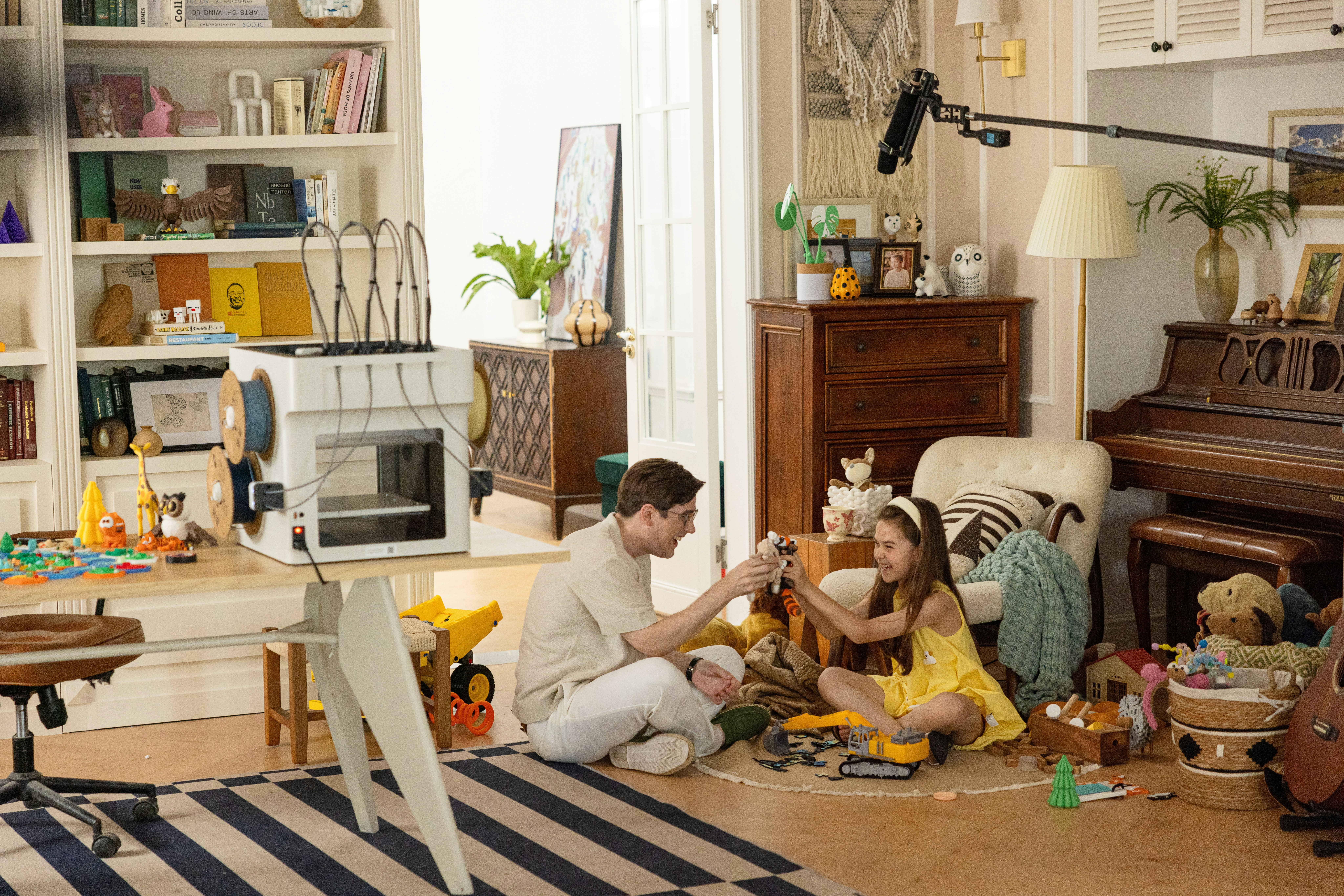
Life moves fast. Between work, school runs, and the endless list of chores, parents often feel like there is no time left for anything fun. But here is the thing — adventure does not require a ticket or a packed bag. It is hiding in your kitchen, your backyard, and yes, even your phone screen.
According to a 2023 survey by the American Psychological Association, 48% of parents report feeling too exhausted on weekdays to engage in play with their children. That number is sobering. But small, creative shifts in daily routine can change everything.

Breakfast Can Be a Science Lab
Forget cereal in silence. Turn breakfast into an experiment — let kids guess what happens when you mix baking soda and vinegar, or ask them to design the “world’s most extreme pancake.” The goal is not perfection. It is a curiosity.
Even five minutes of play-based thinking in the morning can set a positive tone for the entire day. Studies from the Lego Foundation suggest that playful learning boosts a child’s problem-solving confidence significantly more than structured instruction alone.
The Cardboard Box Is Underrated
Buying something online lately? Do not throw that box away. A large cardboard box becomes a rocket ship, a castle, a submarine — whatever a child’s imagination demands in that moment.
Research from the University of Colorado found that unstructured play with simple materials ranks among the top activities for developing creativity in children aged 3–10. Expensive toys are optional. A marker and a box? Essential.
Scavenger Hunts Cost Nothing
Write ten clues on sticky notes. Hide them around the house. Watch your children sprint from the bathroom to the laundry room with genuine, breathless excitement.
Scavenger hunts build reading skills, logic, and teamwork — all wrapped inside what feels like pure chaos. You can theme them: pirates, space explorers, detectives. The themes keep it fresh week after week.
The Micro-Moment Cheat Sheet
Mount a small whiteboard in your kitchen. List ten micro-adventures: cloud TV (just stare up), shadow puppetry, tea party for stuffed guests, living-room camping. Each activity takes under fifteen minutes. Pick one when you’re stumped. This visual menu of micro-adventures becomes a lifeline when exhaustion blocks creativity. Over time, your children will run their own fingers down the list, choosing adventures independently.
Cook Together, Even When It’s Messy
A 2022 study published in the journal Appetite found that children who help prepare meals are 76% more likely to try new foods. That stat alone is worth the flour on the floor.
Give kids a real job — not a pretend one. Let them peel, stir, measure, and taste. Cooking together is also one of the quietest ways to have big conversations. Side by side, stirring pasta, children often open up in ways they never do face to face.
Screen Time Does Not Have to Be Passive
Not all screen time is equal. The difference between a child passively watching videos and one actively creating — building a game, writing a story, designing a character — is enormous. Point them toward creative tools, not just content feeds.
Is your child bored alone or looking for something to do together? Try anonymous group chats. When we chat anonymously online, we can express our true feelings, share stories, or ask about other people’s experiences. What do you need to join a live chat session from a PC or smartphone? Just an internet connection and you’ll be able to start a video chat with strangers.
Build a “Yes Day” Into the Month
One Saturday a month: say yes to almost everything. Yes to the blanket fort that blocks the hallway. Yes to the backwards breakfast. Yes to painting rocks in the garden at 7 a.m.
A “Yes Day” gives children agency — something developmental psychologists consistently flag as critical for self-esteem. It also reminds parents that loosening the schedule occasionally does not break anything. It usually fixes things instead.
Nature Is a Free Theme Park
A walk outside is never just a walk. It is a chance to collect leaves and identify trees, to time how long a stick floats downstream, to count every red car on the street. Children do not need a destination.
The National Wildlife Federation reports that children who spend regular unstructured time outdoors show lower levels of anxiety and stronger attention spans in school. Twenty minutes. That is all it takes to start seeing results.
Small Rituals Make Life Feel Like a Story
The most powerful family adventures are often the smallest ones — a secret handshake, a made-up bedtime story that continues every night, a Friday movie tradition with homemade popcorn. Rituals give children a sense of narrative. Their life feels like it has a plot.
You do not need to overhaul your schedule. Add one small ritual this week. Just one. Then another next month. Over time, these tiny moments stack into the memories children carry for the rest of their lives.
The Bottom Line
Busy does not mean boring. The raw material for adventure is already everywhere around you — a box, a recipe, a walk, a question, a game. What children remember is not how much their parents spent or how perfectly an activity was planned.
They remember that someone showed up, got creative, and made an ordinary Tuesday feel like it mattered.