
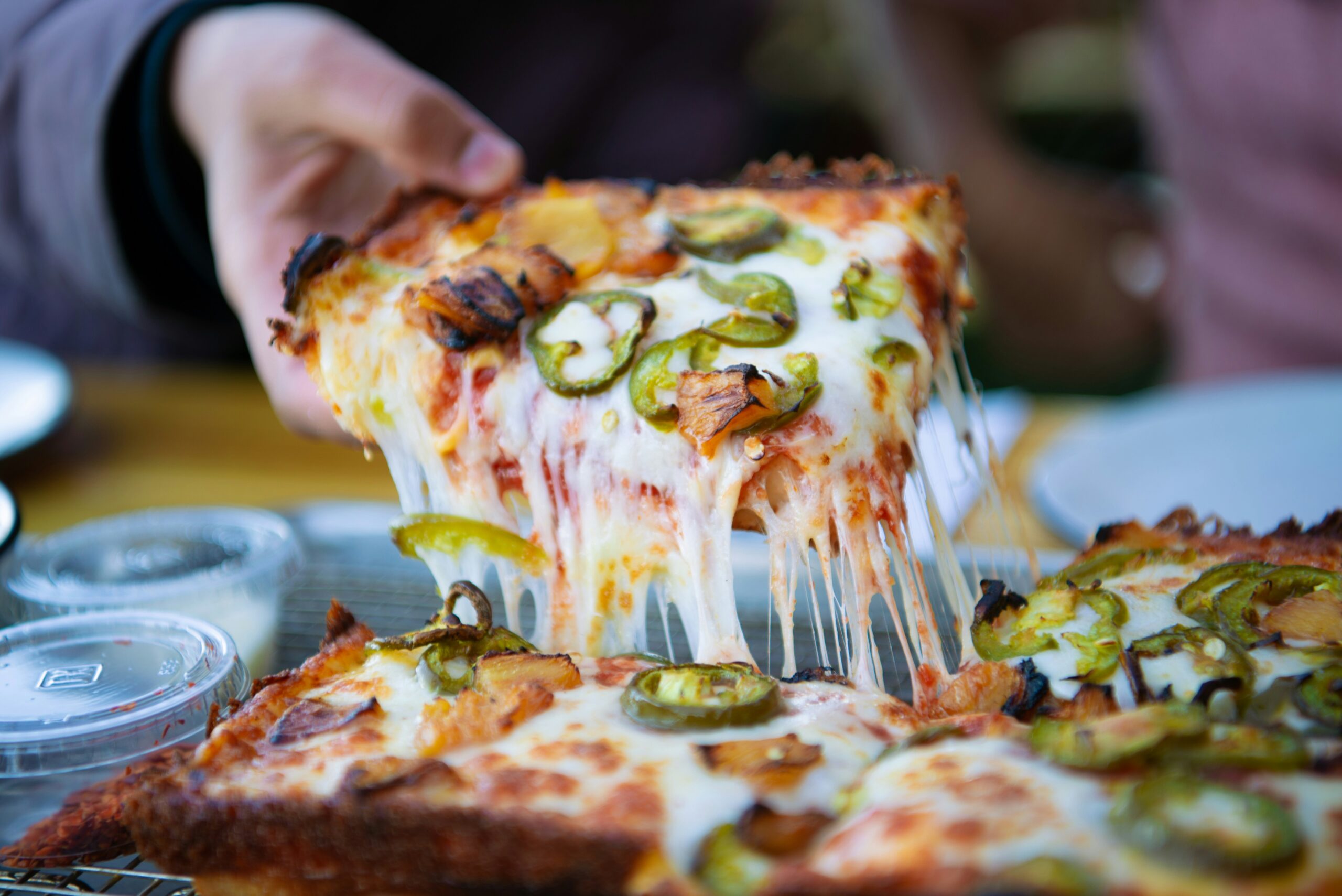
Ask someone from outside the region what makes a pizza “Ohio Valley style” and most descriptions start with the cut — square, not triangular. That’s the most visible difference, but it’s really just the first of several traits that set this regional style apart from the thin round pies most people picture by default.
A Sheet Pan, Not a Pizza Stone
Ohio Valley-style pizza is baked in a rectangular sheet pan rather than stretched onto a round stone or screen, typically at around 550°F. That pan shape is what produces the style’s signature square-cut slices, sometimes called party-cut, and it also changes the texture of the crust itself — the edges and corners bake up denser and slightly crisper than the center, since a sheet pan holds heat differently than an open stone.
The Toppings Go on in Two Stages
The detail that surprises people most isn’t the crust or the cut — it’s the order of operations. The pizza is pulled from the oven partway through baking, given an additional layer of sauce and a light scattering of cheese, then returned to finish cooking. Once it comes out fully baked, shredded provolone and toppings like pepperoni or banana peppers go on cold, uncooked. The residual heat of the pizza softens the cheese just enough to melt slightly, but the toppings themselves are never baked. It’s the reverse of how most pizza styles are built, and it’s the reason the flavor and texture read differently from a conventional pie even when the ingredient list looks similar on paper.
Sauce That Can Go Either Way
The sauce itself is typically lightly seasoned with green bell pepper, oregano, and olive oil, and can be made sweet or savory depending on the shop — there’s no single standardized recipe across the style, just a shared base approach that individual pizzerias adjust to their own taste.
Where the Style Actually Comes From
The style traces back to a specific person and year: Primo DiCarlo, a World War II veteran who developed a taste for pizza while serving in Italy, opened what’s recognized as Ohio’s first licensed pizza restaurant in Steubenville in 1945. The style picked up the nickname “the poor man’s cheesecake” not long after, a reference to the layered, cold-topped construction rather than any actual dessert. It remained concentrated in Ohio, Pennsylvania, and West Virginia — the Ohio River valley corridor the name refers to — for decades before spreading further afield in recent years as more shops outside the immediate region started adopting the technique.
Recognizing It on a Menu
None of these traits are secret, but they’re easy to miss unless a person knows to look for them: the square cut, the sheet-pan bake, and especially the cold-topping method that separates it from nearly every other regional pizza tradition in the country. A restaurant advertising best pizza newark ohio as part of this broader style lineage is one example of how the technique has traveled beyond its original Ohio River footprint into other parts of the state.
Once you know to look for the two-stage topping process, it’s hard to mistake this style for anything else — square cut or not.
Sources: