
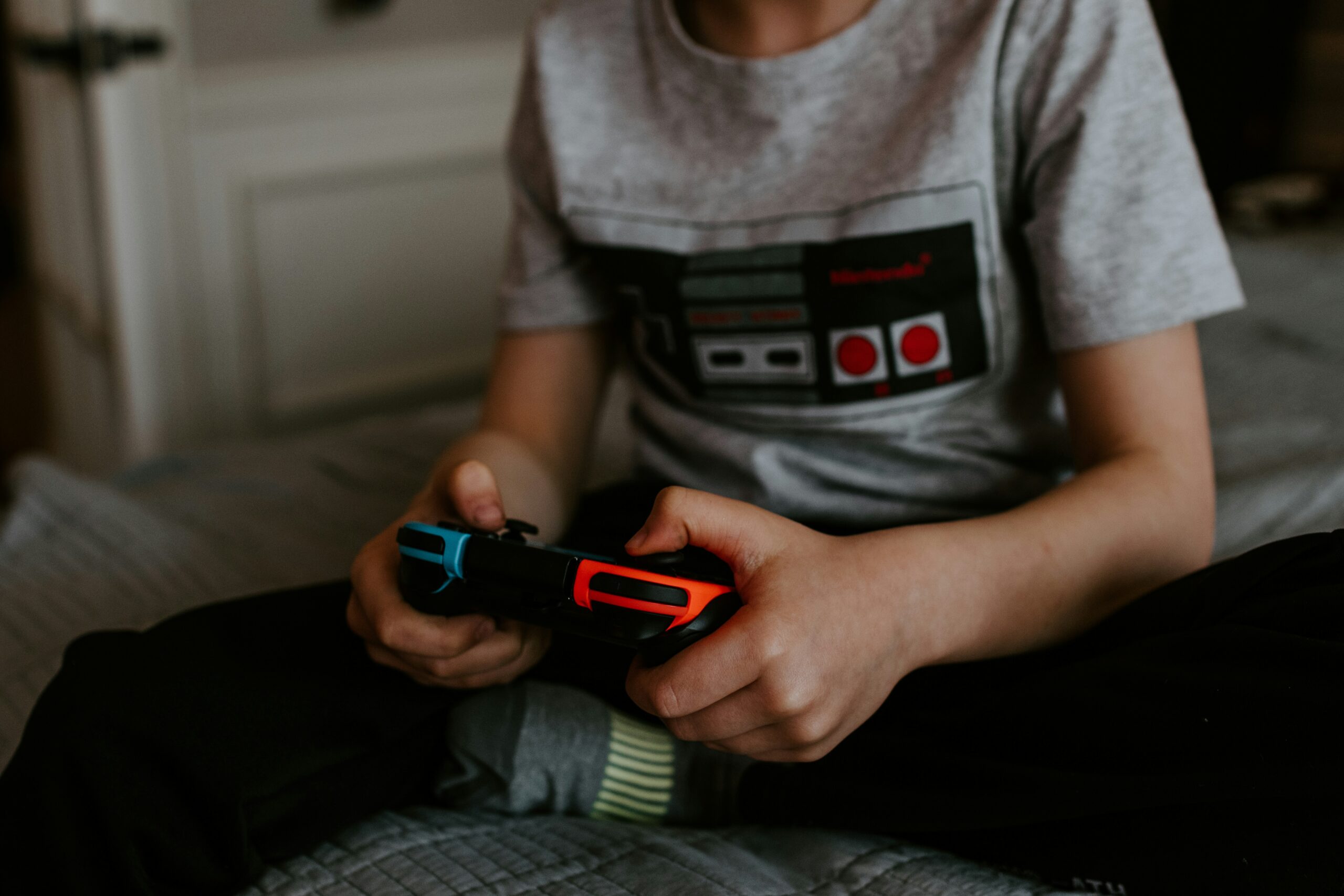
Kids’ conversations with friends while they’re playing games (e.g., Minecraft, Roblox, Fortnite) can be just as intense as their competition.
These conversations usually seem brief and temporary. But some types of conversations that start in a game can be serious enough to create real problems, legally and personally.
We spoke with three lawyers in Ontario to find out what parents need to know about their kids’ online conversations.
Gaming Chats Aren’t Always Harmless
When you’re competing in a game, you’re likely going to hear some bad language. And kids are no exception. They often say things online they wouldn’t dare say in person. Anonymity and the competitive nature of the game can cause these conversations to get worse fast.
Mostly, these exchanges aren’t going to lead to anything. However, there are times when they do. Public Safety Canada notes that cyberbullying can involve Criminal Code offences like criminal harassment, uttering threats, intimidation and sharing intimate images without consent.
Brampton criminal defence lawyer Manbir Nirwal states that parents shouldn’t assume that something said in a game doesn’t have the potential for consequences because it was said in a game. From a criminal law standpoint, the words used, the context of those words and the actions leading up to those words are all critical. It’s possible for one teenager to threaten another repeatedly while in a game vs. two friends exchanging insults while playing together.
Canada’s Department of Justice has outlined numerous Criminal Code offences that could result from severe bullying behaviour online, including criminal harassment and uttering threats.
Screenshots and Private Messages Can Be Used as Evidence
You may want to remind your kid that once they hit “send” on a private message, the recipient has a permanent copy. Another player may capture audio of the private conversation. The history of account interactions and other data can sometimes be saved. This means the quick, anger-fuelled decision made to insult another player may have to endure long past the seconds it took to write.
And this is particularly true if the message contains threats, harassment or sexually explicit content.
According to Nirwal, parents should encourage their children to seek guidance immediately if they encounter any issues in a gaming chat. While deleting all evidence immediately may seem like the obvious solution, saving evidence of problematic communications or screenshots can sometimes provide clarity as to what occurred.
Online Gaming Activity Can Have Implications on Custody Battles
In addition to online safety, gaming activity can also factor into custody battles.
Brampton family law firm Kaur Family Law’s Manjeet Kaur views online safety as only one aspect of her clients’ responsibilities as parents post-separation. When parents disagree regarding whether their children can engage in certain amounts of gaming, which games are acceptable for their children, who their children can speak to and how closely online activity will be monitored, disagreements arise.
Kaur emphasizes the importance of establishing reasonable consistency in expectations for separate homes when it comes to online gaming. A child whose parent allows them complete access to the internet at home but restricts access entirely at the other home will soon figure out how to move communication back and forth between environments.
If online activity creates a legitimate safety concern, this could impact discussions regarding parenting and what is in the best interest of the child.
Parents Need to Understand Who Their Child Is Interacting With
Games also enable children to connect with other individuals they don’t know.
The Royal Canadian Mounted Police cautions that online grooming can begin via games that permit users to communicate through messaging or voice chat. The individual initially builds a rapport with a young person through friendly conversations, then attempts to initiate conversations centred around sex-related topics, request photographs or arrange for an in-person meeting.
This doesn’t imply that parents need to freak out whenever their child plays online. It does mean parents should ask additional questions when they’re told, “I’m playing with my buddy.” Is he/she a school classmate? Cousin? Somebody they met online yesterday?
The Office of the Privacy Commissioner of Canada also pointed out privacy concerns related to children’s use of online gaming services. Depending upon the service, parents may be able to limit their child’s ability to interact with others through the use of chat functions and/or manage how their child shares personal information.
Co-Parental Conflict Over Gaming Rules May Exist
Mississauga-based Rose Family Law’s Malerie Rose points out another practical challenge: gaming policies can generate conflict between co-parents. Parents do not have to have identical household rules. Larger safety concerns related to online activity, however, tend to be more easily addressed when co-parents are communicating effectively.
If their child has received contact from an adult they’ve never communicated with prior, engaged in bullying behaviours within an online gaming environment or been encouraged/forced to disseminate objectionable materials, typically this will be viewed as a parenting issue rather than ammunition in a dispute between former partners.
Ultimately, the goal should continue to be focused on ensuring their child remains safe.
What Types of Behaviour Should Parents Pay Attention To?
Examples of cyberbullying include sending intimidating messages via an online gaming platform and purposefully excluding another user during an online gaming session, according to Ontario.
Parents can observe changes in behaviour relative to online gaming (i.e., increased secrecy about who their child is interacting with).
Additionally, if a child appears irritable after using the computer or refuses to identify who they are interacting with, parents should investigate further. Receiving gifts from unknown online contacts, relocating private conversations to alternative applications or being coerced into distributing photos/videos are all indicators that warrant a closer look.
It would also benefit parents to inform their children of the following:
- Do not share your address or school information with strangers.
- Do not send any type of photographs/videos that are intimate.
- Report threats or sexual discussions to a trusted adult immediately.
- Exercise caution when asked to move a discussion to another platform.
- Recognize that people online often use false identities.
- Preserve records of severe harassment and/or threatening behaviour.
Keep the Conversation Open
Perhaps the best thing a parent can do for their child, as far as parental controls go, is to let them feel comfortable enough with their parents to tell them when they have an experience with something strange on-line.
When children see how serious you are about your role as a parent regarding safety issues, but also realize that this concern doesn’t necessarily lead to taking away the video games or other devices, they are less likely to hesitate to come to you next time there is a problem.
Online gaming has the potential to provide many hours of enjoyment for kids and can be a great way for kids to develop social skills. It’s just as important to spend time having discussions with your child while they’re playing as it is spending quality time together.