
Eye care for myopia matters most in childhood, when short-sightedness usually begins. The first sign can be small: a child who squints at the television, sits closer to the screen or says the board at school looks blurry.
Many parents want to know whether their child’s eyesight will keep getting worse, and whether screens are to blame. Myopia cannot be undone, but glasses can correct it, and several everyday habits and treatments can slow how quickly it progresses. An eye screening for your kids can confirm whether your child is short-sighted and how strong their glasses need to be.
In this article, we will cover what childhood myopia is, what causes it, the signs to look for, whether it can be reversed, how to slow it and whether your child needs to wear glasses all the time.
What Is Childhood Myopia?
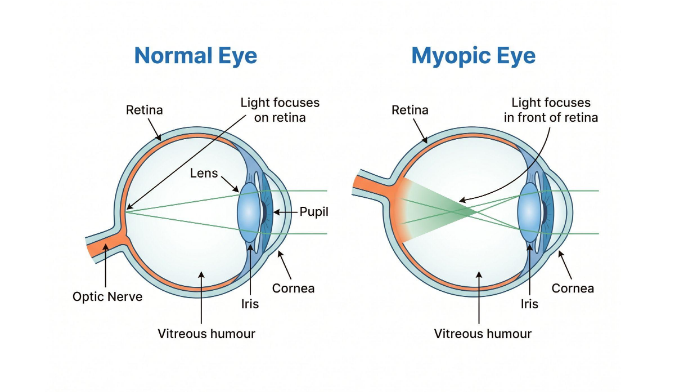
Childhood myopia, also called short-sightedness, is when a child can see close objects clearly but distant objects look blurry. It usually happens because the eyeball grows slightly too long, so light focuses in front of the retina, the light-sensitive layer at the back of the eye, instead of on it. By contrast, long-sightedness (hyperopia) makes close objects look blurry.
Myopia is a common eye condition, and it usually starts between the ages of 6 and 13. Because the eye is still growing, a child’s prescription often changes several times during their school years.
Eye care professionals measure the strength of a prescription in dioptres, the unit used for lens power. A minus sign in front of the number shows that the prescription is for myopia, and a prescription of -6.00 dioptres or more counts as high myopia.
What Causes Myopia in Children?
The exact cause of myopia in children is not fully understood, but family history and daily habits both play a part. A child is more likely to develop myopia with:
- Family history – a child with one or both parents short-sighted has a higher chance of becoming short-sighted too.
- Little time outdoors – children who spend most of the day indoors have a higher risk, while more time outdoors in natural light is linked to a lower risk.
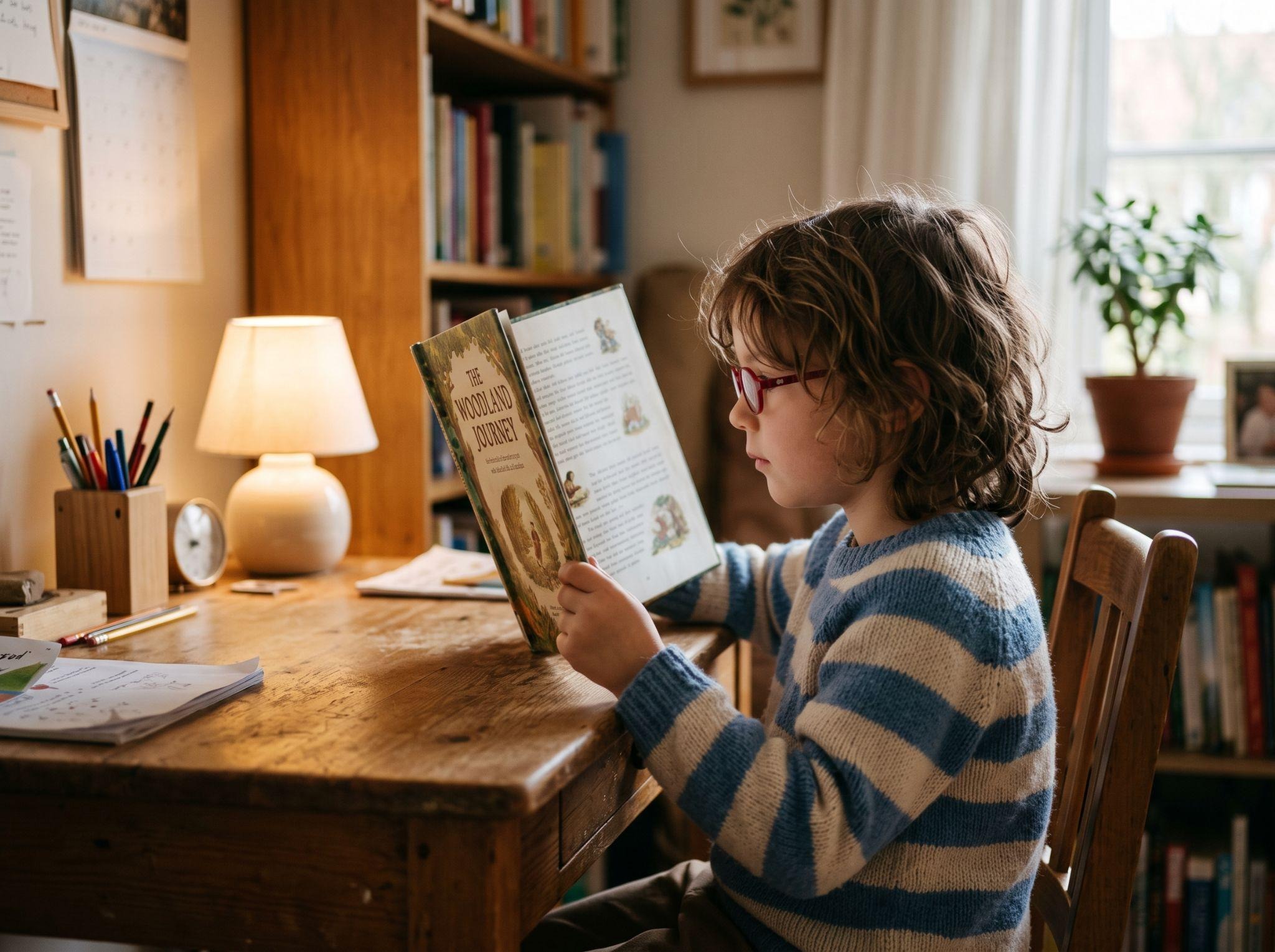
- Long reading and screen time – hours spent reading, doing homework or using a phone or tablet close to the face are linked to myopia. There is no evidence, though, that the light from a screen damages the eyes.
How Do You Know if Your Child Has Myopia?
You may notice myopia in your child when they struggle to read road signs or recognise faces across a room. But many children do not realise their eyesight is blurry, so they rarely mention it.
The most common signs of myopia in a child are:
- Sitting close to the television, or holding a phone or tablet close to their face
- Squinting or partly closing their eyes to see far away
- Headaches, tired eyes or frequent eye rubbing
Myopia can also develop without obvious signs. So regular eye tests help, because an eye test can find myopia early and measure how strong your child’s glasses need to be.
Can Myopia in Children Be Reversed?
Myopia in children cannot be reversed, because the eye has already grown longer than usual and does not return to its earlier length. Most children do not outgrow it either. Instead, myopia tends to increase through childhood. It stops getting worse once the eye stops growing, at around the age of 20.
Eye exercises, vitamins and supplements are sometimes promoted as a cure, but there is no scientific evidence that they prevent or cure myopia. Glasses or contact lenses correct the blurred vision, however, and the steps in the next section can help slow its progress.
How to Slow Myopia in Children
You can help slow myopia in children with more time outdoors, regular breaks from reading and screens and, in some cases, treatment.
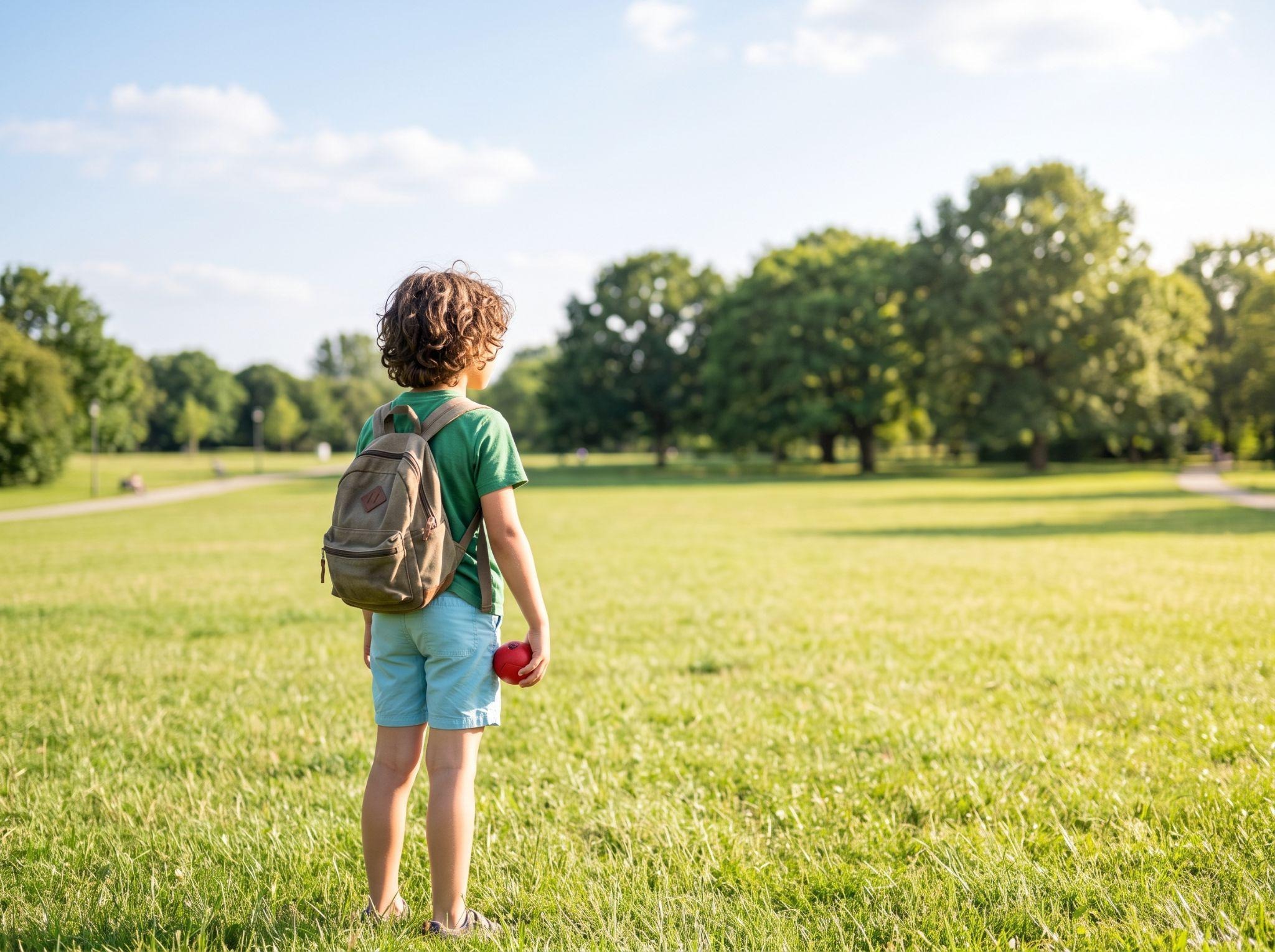
- Spend time outdoors – aim for at least two hours outside each day, which studies link to a lower risk of developing myopia. Its effect on myopia that has already started is less clear.
- Take regular breaks – during reading, homework or screen time, looking up at a window or across the room gives the eyes a rest from focusing close up.
- Seek treatment – an optometrist or eye doctor may suggest glasses or contact lenses designed to control myopia, or low-dose atropine eye drops used once a day. These treatments can slow how quickly myopia gets worse, and the right one depends on your child’s age and prescription.
Slowing myopia matters because high myopia raises the risk of eye conditions later in life. These include retinal detachment, where the retina pulls away from the back of the eye, and glaucoma, which damages the nerve that connects the eye to the brain.
Should a Child With Myopia Wear Glasses All the Time?
A child with myopia may need to wear glasses all the time or only for distance, depending on how strong their prescription is. With mild myopia, glasses for the board at school and the television are often enough. But a stronger prescription usually means wearing them all day.
Glasses at the correct prescription do not make myopia worse. Because myopia usually increases through childhood whether or not a child wears glasses, it helps to follow the optometrist’s advice on when to wear them and how often to have their eyes checked. Letting your child choose their own frames can also make them more willing to wear their glasses.
Looking Ahead: Clearer Vision as Your Child Grows
Myopia is common in children, and most short-sighted children see clearly with the right glasses. Time outdoors, breaks from reading and screens, and treatments such as myopia control lenses can also slow how quickly it progresses.
Regular eye tests give you a clear starting point and let you see how your child’s eyes change as they grow. With the right care, your child can enjoy clear vision at school, at play and in the years ahead.
Very informative article. Myopia is becoming a common concern among children, and early eye check-ups can help identify vision changes before they affect school and daily activities. I appreciate how clearly you’ve explained the signs parents should watch for.