
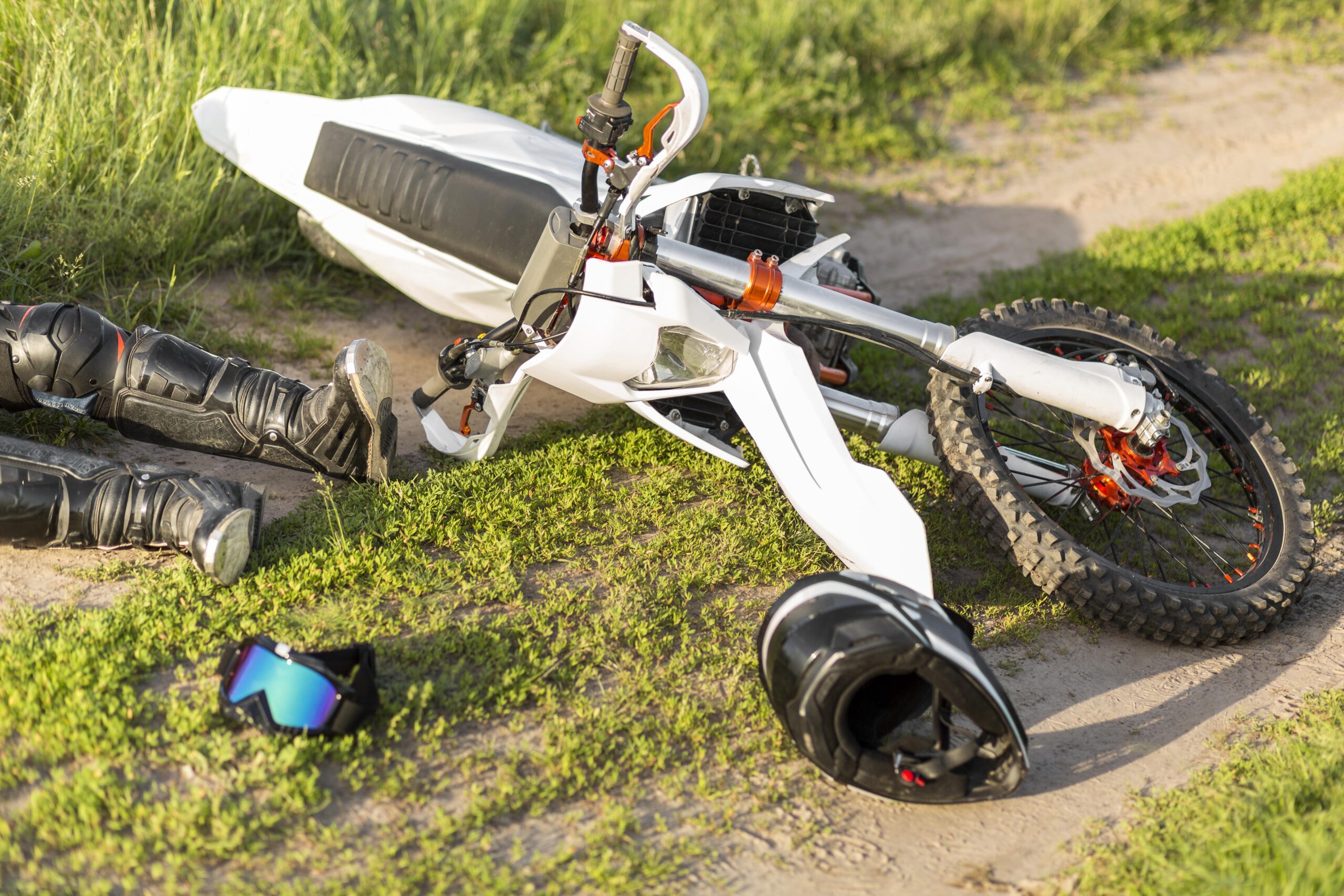
Insurance adjusters treat the Georgia Motor Vehicle Crash Report as an undeniable truth even when the responding officer makes glaring errors. In Duluth, GA, a single unchecked box by a fatigued officer on Pleasant Hill Road gives insurers the exact ammunition they need to challenge a legitimate claim. Riders often assume the narrative accurately reflects the collision physics.
Officers arrive post-collision and synthesize fragmented witness statements into a highly condensed summary. Insurers use this initial summary to construct their fault distribution arguments before you even reach the hospital. Correcting a flawed report demands aggressive intervention before insurers solidify their initial liability determinations based on incomplete field observations.
Deciphering The Narrative And Diagram
The second page of the report contains the officer’s written narrative and a visual sketch of the impact sequence. Adjusters scrutinize this section to find inconsistencies between the physical evidence left on Peachtree Industrial Boulevard and the rider’s recorded statements. The diagram illustrates vehicle trajectories and skid mark measurements observed at the scene.
Peter Jaraysi, a Duluth motorcycle accident lawyer, notes, “Clients often assume that the officer’s diagram perfectly reflects reality; adjusters will often try to use this specific tactic to assign partial blame to the rider simply because the drawing misrepresents the angle of impact.”
Think of the report as a blueprint for a commercial building project. If the foundation lines get drawn incorrectly by the architect, every subsequent wall leans sideways. The state’s official crash diagramming manual is that exact baseline. An incorrect code on page one forces the entire claim to build upon a flawed assumption of liability.
The Anatomy Of A Collision Document
Officers responding to collisions near the Gwinnett Place Mall or along Buford Highway utilize a standardized state form. The state form forces complex crash dynamics, from road hazards to driver error, into rigid numeric codes. The accuracy of these codes heavily influences the initial liability assessment made by insurance carriers.
An error in the coding section often goes unnoticed by the involved parties but signals immediate fault to the claims adjuster. Victims seeking a Duluth motorcycle accident lawyer, such as professionals working at Slam Dunk Attorney, a firm with a 5-star rating on Yelp and Glassdoor, frequently discover that the initial police documentation dictates the entire trajectory of their financial recovery. Correcting these administrative mistakes requires formal amendment requests submitted directly to the Duluth Police Department records division.
With the state tracking thousands of motorcycle wrecks annually, responding officers face a crushing, fast-paced paperwork burden. This high volume of incidents underscores the immense paperwork burden officers manage daily.
How Citations Dictate Civil Liability
An officer issuing a citation to the automobile driver establishes a strong foundation for a negligence claim. However, receiving a citation doesn’t automatically guarantee financial recovery for the injured rider.
Impact Of Moving Violations
If the responding agency issues a ticket for failure to yield at the intersection of Sugarloaf Parkway and Meadow Church Road, the insurance carrier faces a steeper hurdle in denying fault. The National Highway Traffic Safety Administration notes that intersection collisions account for roughly fifty percent of all motorcycle crashes, making accurate citation records highly relevant. The traffic court disposition of that ticket significantly impacts the civil claim leverage. Data shows there were a total of 101,212 cases of motorcycle accidents reported in 2023.
Non-Causation Infractions
Riders cited for expired tags face entirely different challenges. While these infractions violate local ordinances, they don’t intrinsically cause a collision. Insurers frequently attempt to conflate these administrative violations with operational negligence to reduce settlement valuations based on comparative fault principles.
For assistance with a crash report, you can contact Slam Dunk Attorney’s Duluth office, located at 2250 Satellite Blvd, Ste., 4.5 miles from Publix Super Market, 2750 Buford Hwy. You can call (678) 329-9750 to consult their team.
Amending Inaccurate Field Reports
Officers writing reports outside Northside Hospital Gwinnett, while victims receive emergency care, often rely entirely on the uninjured automobile driver. This one-sided data collection results in reports that unfairly penalize the rider. Correcting these errors requires swift action and undeniable proof.
Submitting supplemental evidence to the original reporting officer can sometimes initiate a formal amendment. This evidence might include timestamped footage from nearby commercial security cameras. The Governor’s Office of Highway Safety highlights that rider visibility plays a major role in collisions. Providing proof of headlight functionality directly contradicts an inaccurate narrative.
The Role Of Supplemental Crash Investigations
When the standard document falls short, securing an independent accident reconstruction becomes necessary. Specialized investigators measure gouge marks on the asphalt and analyze vehicle crush damage to determine precise impact speeds. This scientific approach bypasses the subjective limitations of the standard municipal report.
Data extracted from the engine control module offers objective telemetry that overrides an officer’s visual estimate. The Centers for Disease Control and Prevention reports that motorcycle incidents generate over one billion dollars in high medical costs annually. Presenting this technical data compels insurers to re-evaluate liability beyond the basic police form.
Dealing With Uninsured Motorist Scenarios
The report explicitly lists the insurance carriers and policy numbers for all involved parties. Discovering an at-fault driver lacks coverage turns the claim into a first-party action against the rider’s own policy. The responding officer verifies these credentials through state insurance databases at the scene.
Uninsured motorist coverage requires strict adherence to notification timelines dictated by the policy language. The Insurance Information Institute states that roughly twelve percent of drivers operate vehicles without mandatory coverage. A police document confirming the absence of valid insurance activates these supplementary policy provisions.
Preserving Evidence Before It Disappears
Relying solely on the police document to preserve the scene proves exceptionally risky. Skid marks fade rapidly on busy thoroughfares like State Route 120. Gathering independent documentation immediately following the crash establishes a secondary baseline of facts.
Municipal traffic cameras often overwrite their footage every few days. National Highway Traffic Safety Administration data is brutal: motorcyclists are twenty-eight times more likely to die in a crash than passenger vehicle occupants. Capturing images of obscured stop signs provides context that the responding officer might omit from the final crash summary.

The Limitations Of Officer Testimony
Even the most detailed report remains technically hearsay in a courtroom setting if the officer didn’t witness the collision occur. The document primarily refreshes the officer’s memory during a deposition rather than standing as standalone proof of fault. The Georgia court system requires firsthand accounts for admissibility.
Cross-examining an officer often reveals the limitations of their field investigation. Defense attorneys exploit these gaps to introduce doubt regarding the motorcycle speed or lane position. A comprehensive legal strategy anticipates these attacks and builds independent evidentiary support.
Questions About Motorcycle Crash Documentation
How long does acquiring the official report take?
The Duluth Police Department typically finalizes and releases crash reports within three to five business days through the official records portal.
Can an officer determine fault definitively?
Officers assess contributing factors and issue citations based on field observations. Civil liability is determined through insurance negotiations or judicial proceedings.
What happens if the report omits a witness?
Involved parties can submit supplemental witness statements directly to the insurance carrier to bypass incomplete municipal documentation and establish a clearer factual timeline.
Does a citation ruin the compensation claim?
Receiving a citation for an administrative violation rarely defeats a claim if independent evidence proves the automobile driver’s negligence caused the actual collision.